

The crypto industry is expanding at a rapid pace, but with this growth comes an equally fast rise in fraudulent activity. One of the most alarming trends in recent months is the surge of fake airdrop schemes targeting XRP holders. Ripple’s Chief Technology Officer David Schwartz has issued a strong XRP airdrop scams warning, urging users to stay alert as scammers increasingly exploit the XRP ecosystem.
These fraudulent campaigns are designed to appear legitimate, often imitating Ripple branding and official communications. Their goal is simple: trick users into revealing private wallet information or sending funds under false promises of free XRP rewards. As XRP adoption continues to grow worldwide, attackers are becoming more sophisticated and harder to detect.
The XRP Airdrop Scams Warning in Detail
The core message behind the XRP airdrop scams warning is that legitimate XRP distributions do not require users to send money or disclose private keys. Any claim suggesting otherwise should be treated as suspicious.
David Schwartz has made it clear that Ripple does not conduct random promotional airdrops that ask users to “verify eligibility” by sending XRP. Scammers exploit this misconception by creating urgency and promising quick rewards, which leads many users into financial loss. XRP’s popularity makes it especially attractive to attackers. With millions of holders globally, even a small success rate for scammers can generate significant illegal profits.
How XRP Airdrop Scams Actually Work
Fake XRP airdrop schemes typically begin with social media posts or direct messages that appear to come from Ripple or well-known crypto figures. These messages claim that users are eligible for a limited-time XRP reward event.
Victims are then directed to fake websites that closely resemble official platforms. These sites often request wallet connections or private key entries. Once entered, the attacker gains full control over the wallet and can immediately drain funds.
In other cases, users are asked to send a small amount of XRP as a so-called verification step. This is simply a trick to extract money, as no reward is ever returned. Some scams go further by encouraging users to download software or browser extensions that secretly install malware designed to steal crypto credentials.
Ripple CTO David Schwartz’s Official Warning
David Schwartz has consistently reinforced that Ripple does not request XRP transfers in exchange for rewards. His statements align strongly with the XRP airdrop scams warning, emphasizing that any such claim is fraudulent.
He has also highlighted that users should only trust official Ripple channels for announcements. Any communication outside verified sources should be treated as potentially dangerous. Schwartz’s warning reflects a broader security principle in the crypto industry: private keys must never be shared under any circumstances.
Why Fake Airdrop Scams Are Increasing Rapidly
The rise in XRP-related scams is driven by several interconnected factors. First, global crypto adoption has brought millions of new users into the market who may not fully understand security risks. This creates a large pool of potential victims. Second, market volatility plays a role, as users often become more receptive to opportunities that promise quick gains during uncertain price movements. Scammers exploit this emotional vulnerability.
Third, the use of artificial intelligence has made scams more convincing than ever. Fraudsters now generate professional-looking websites, fake videos, and automated messages that closely resemble legitimate announcements. Finally, the general popularity of airdrops across the crypto industry conditions users to expect free token distributions, which scammers exploit specifically in the XRP ecosystem.
Warning Signs of XRP Airdrop Scams
Recognizing red flags is essential for understanding the XRP airdrop scams warning in practice. One of the strongest indicators of fraud is any request for private keys or seed phrases, as no legitimate platform will ever ask for them.
Another warning sign is urgency, where users are pressured to act immediately or risk missing out. Fake websites with slightly altered URLs are also commonly used to mimic official Ripple platforms. Low-quality social media accounts with little engagement or recently created profiles are another indicator of fraudulent activity. Additionally, promises of guaranteed or unusually high XRP rewards should always be treated with suspicion.
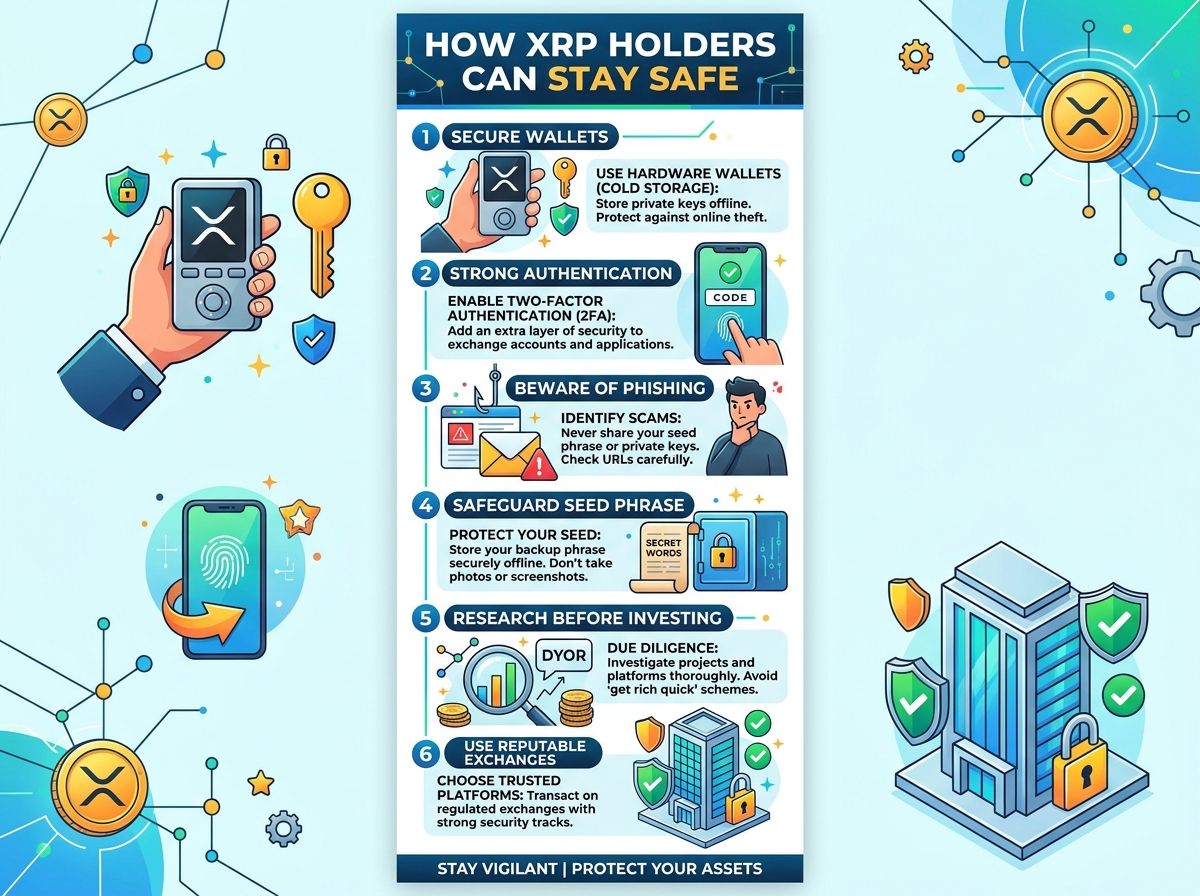
Security in crypto largely depends on user behavior and awareness. The most important step is to always rely on official Ripple communication channels and verified announcements. Any information outside these sources should be independently verified.
Users must never share private keys or recovery phrases under any circumstance, as doing so grants full access to their wallets. Using hardware wallets is strongly recommended because they store private keys offline and reduce exposure to phishing attacks.
It is also important to carefully check website URLs before interacting with any crypto platform, as scammers often use subtle variations to deceive users. Avoiding unsolicited messages and unknown links significantly reduces the risk of falling victim to fraud.
Psychological Tactics Used by Scammers
The effectiveness of fake XRP airdrop schemes is not only based on technology but also psychology. Scammers rely heavily on emotional triggers such as fear of missing out, excitement over potential free rewards, and trust in well-known crypto brands.
Many victims act impulsively when they believe they are receiving a limited opportunity. This emotional manipulation is a key part of why the XRP airdrop scams warning is so important. Understanding these psychological tactics helps users pause and evaluate situations more critically before taking action.
Ripple’s Efforts to Combat Fraud
Ripple continues to take active measures to reduce scams within the XRP ecosystem. These include monitoring and reporting fake accounts, issuing public warnings, and collaborating with cybersecurity experts to identify fraudulent activity. The company also focuses heavily on educating users about safe practices and common scam patterns. However, even with these efforts, the responsibility ultimately lies with individual users to remain cautious and informed.
What to Do If You Have Been Targeted
If a user suspects they have interacted with a fake XRP airdrop, immediate action is crucial. The affected wallet should be disconnected from suspicious platforms, and remaining funds should be transferred to a secure wallet. It is also important to report the scam to relevant platforms and continue monitoring wallet activity for unauthorized transactions. Sharing information about the scam can also help prevent others from becoming victims.
Future Outlook of XRP Security
The increasing sophistication of scams means that XRP holders must remain more vigilant than ever. However, the industry is also evolving with stronger security tools, better authentication systems, and improved fraud detection technologies.
As awareness grows through ongoing XRP airdrop scams warning campaigns, users are becoming better equipped to identify and avoid fraudulent schemes. Over time, education and technology combined will significantly reduce the effectiveness of such scams.
Conclusion
The warning issued by Ripple’s CTO highlights a serious and growing threat within the crypto space. Fake XRP airdrops are becoming more advanced, deceptive, and widespread, targeting both new and experienced users.
The XRP airdrop scams warning serves as a critical reminder that security in cryptocurrency is not automatic—it depends on user awareness and caution. By verifying information, avoiding unsolicited offers, and never sharing sensitive wallet data, XRP holders can significantly reduce their risk of loss..
