


This significant price movement has triggered substantial gains across cryptocurrency-related stocks, with Coinbase emerging as a clear leader among digital asset companies. The catalyst behind this impressive rally extends beyond pure market sentiment—it centers on meaningful progress toward establishing clearer regulatory frameworks through advancing legislative initiatives.
The dynamics driving this market movement requires examining multiple interconnected factors. The achievement of Bitcoin at $82,000 represents more than a simple price milestone. It reflects growing institutional confidence in cryptocurrency as an asset class and signals strengthening demand from both professional and retail investors. Simultaneously, progress on the Clarity Act and related regulatory initiatives suggests that cryptocurrency is transitioning from a speculative asset surrounded by regulatory uncertainty into a recognized financial instrument with transparent governance structures.
This article explores the implications of these developments, examining what drives Bitcoin’s continued appreciation, analyzing why Coinbase and other crypto stocks are capturing investor interest, and investigating how regulatory clarity catalyzes market expansion. Whether you’re an institutional investor evaluating cryptocurrency exposure, a retail trader seeking understanding of market drivers, or someone simply curious about cryptocurrency’s evolving role in finance, comprehending these developments is essential.
Bitcoin’s Ascent to $82,000
The Path to This Historic Price Level
Bitcoin’s journey to $82,000 represents a significant milestone in the leading cryptocurrency’s history. Bitcoin’s price movements carry outsized importance in the broader cryptocurrency market, as this dominant digital asset frequently sets the tone for the entire sector. When Bitcoin advances substantially, it typically creates a positive environment for alternative cryptocurrencies and cryptocurrency-related equities.
The ascent to this price level didn’t occur in isolation. Rather, it reflects cumulative developments over weeks and months, including strengthening institutional demand, improving macroeconomic conditions that favor hard assets, and growing recognition among traditional financial institutions that cryptocurrency deserves a place in diversified portfolios.
Several technical factors have supported Bitcoin’s advance. The cryptocurrency has been maintaining positions above key moving averages, suggesting consistent buying pressure. Volume patterns indicate that price advances are supported by genuine buying interest rather than speculative momentum without underlying demand. These technical patterns suggest that Bitcoin’s move to $82,000 may represent the beginning of a broader advance rather than a temporary spike.
Institutional Adoption and Market Maturation
One of the most significant developments supporting Bitcoin’s appreciation has been expanding institutional adoption. Major corporations have added Bitcoin to their balance sheets. Institutional investors have established dedicated cryptocurrency divisions. Traditional financial firms have launched cryptocurrency investment products.
This institutional participation fundamentally changes market dynamics. When institutional investors enter a market, they bring substantial capital, longer-term perspectives, and sophisticated risk management frameworks. Their participation reduces volatility over longer periods and increases market depth, meaning that large buy or sell orders don’t swing prices as dramatically.
The appearance of Bitcoin spot exchange-traded funds (ETFs) in major markets represented a watershed moment for institutional adoption. These investment vehicles allow traditional investors to gain Bitcoin exposure through familiar mechanisms integrated into existing brokerage accounts and retirement portfolios. This accessibility has driven significant capital inflows into the cryptocurrency market.
Market Sentiment and Fear-Greed Dynamics
Cryptocurrency markets are particularly sensitive to sentiment shifts. The fear-greed index, which measures market sentiment based on social media activity, search trends, and market volatility, has been shifting toward greed as Bitcoin advances. This sentiment shift reflects growing confidence that the cryptocurrency market is entering a positive phase.
However, experienced cryptocurrency investors recognize that extreme greed can precede market corrections. Nevertheless, moderate levels of positive sentiment support continued appreciation as more investors become willing to allocate capital to the space.
Coinbase’s Emergence as the Crypto Stock Leader
Why Coinbase Benefits Disproportionately From Bitcoin’s Rise
Coinbase, the largest and most recognized cryptocurrency exchange in the United States, has experienced substantial stock appreciation alongside Bitcoin’s advance to $82,000. This isn’t coincidental. Coinbase’s financial performance is tightly correlated with cryptocurrency market activity, particularly Bitcoin trading volume.
When Bitcoin rises significantly, trading volume typically increases as existing holders consider taking profits, new investors seek exposure, and traders respond to technical signals. This elevated trading activity generates transaction fees that directly flow to Coinbase’s bottom line. Additionally, Bitcoin’s appreciation increases the total value of assets held on Coinbase platforms encouraging more users to transact on the exchange.
Coinbase’s position as the leading regulated cryptocurrency exchange in the United States provides additional advantages during periods of regulatory uncertainty. As regulatory frameworks become clearer through initiatives like the Clarity Act, investors increasingly prefer platforms with established compliance histories and regulatory relationships. This preference channels trading volume toward Coinbase disproportionately.
Competitive Advantages in a Maturing Market
Coinbase operates from a position of significant competitive advantage within the cryptocurrency exchange market. The company maintains relationships with major financial institutions, has established clearing systems compatible with traditional banking infrastructure, and carries a brand recognized among both retail and institutional investors.
As the cryptocurrency market matures and regulatory requirements become more stringent, these advantages strengthen. Smaller, less compliant exchanges face higher barriers to operation, potentially channeling market participants toward established platforms like Coinbase.
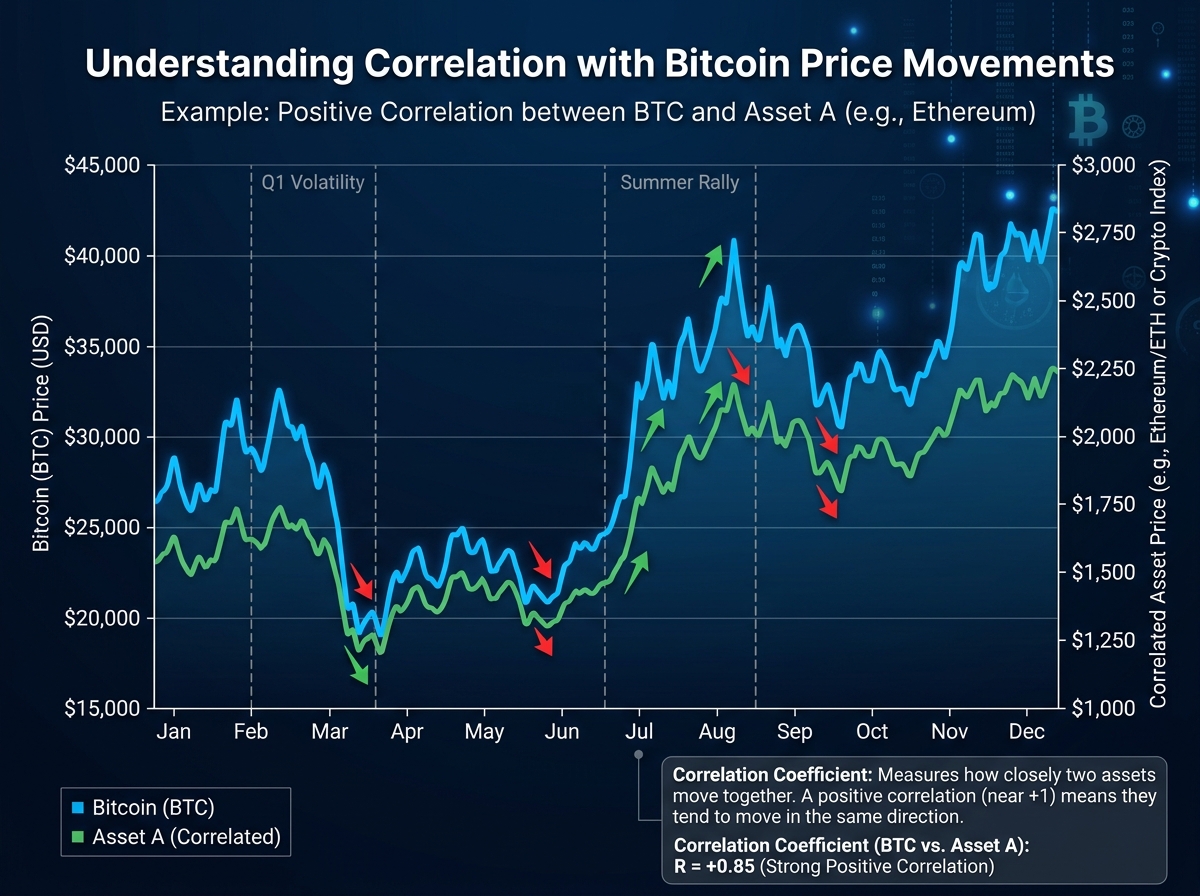
The correlation between Coinbase stock performance and Bitcoin price movements remains exceptionally strong. When Bitcoin appreciates, Coinbase stock typically gains even more than the percentage increase in Bitcoin’s price—a phenomenon called operating leverage. Conversely, Bitcoin declines often trigger sharper percentage losses in Coinbase stock.
This amplified relationship reflects the fact that Bitcoin appreciation improves Coinbase’s profitability through multiple channels simultaneously: increased trading volume, higher asset values creating more engagement, and expanded margins as the company achieves greater scale.
The Clarity Act: Regulatory Framework That’s Changing Everything
The Legislative Initiative
The Clarity Act represents a significant legislative effort to establish coherent regulatory frameworks for cryptocurrency and digital assets. Rather than leaving cryptocurrency regulation fragmented across multiple agencies and inconsistent state regulations, the Clarity Act aims to define clearly which federal agencies regulate which aspects of cryptocurrency, establish consistent rules, and reduce uncertainty.
This regulatory clarity addresses one of the cryptocurrency market’s primary headwinds. For years, regulatory uncertainty has deterred institutional investors from significant cryptocurrency allocation. The lack of clear rules has created compliance challenges for companies seeking to serve cryptocurrency customers responsibly. The Clarity Act begins addressing these issues by establishing transparent, predictable regulatory standards.
How Clarity Removes Market Barriers
Regulatory clarity functions like removing barriers to market entry and expansion. When rules are clear and predictable, companies can make confident investment decisions about building cryptocurrency services. When regulations are uncertain, companies must either accept substantial legal risk or avoid the market entirely.
The advancement of the Clarity Act signals that cryptocurrency is transitioning from a regulatory gray zone into clearly defined territory. This transition has immediate implications for companies like Coinbase that operate in this space. Rather than navigating ambiguous requirements, these companies can now plan based on defined regulatory expectations.
Institutional investors similarly benefit from clarity. When regulations are transparent, institutional compliance officers can comfortably approve cryptocurrency allocations. When regulatory requirements are unclear, institutional boards of directors typically reject cryptocurrency investments as carrying unacceptable legal and regulatory risk.
The Domino Effect on Market Expansion
Legislative progress toward regulatory clarity creates a domino effect. As clarity increases, institutional investors become more comfortable allocating capital to cryptocurrency. This capital inflow drives Bitcoin’s price higher, which attracts media attention, which encourages retail participation, which further expands the market.
Media coverage of regulatory advancement generates positive sentiment by validating cryptocurrency as a legitimate financial asset class worthy of regulatory attention. This validation attracts investors who were previously skeptical about whether they should allocate capital to cryptocurrency.
Market Dynamics: Connecting the Pieces
The Relationship Between Bitcoin Price and Crypto Stocks
Bitcoin’s role as the cryptocurrency market’s bellwether asset means that Bitcoin price movements typically precede broader cryptocurrency market movements. When Bitcoin advances significantly, alternative cryptocurrencies often appreciate even more substantially on a percentage basis, expanding the overall market cap.
This broader cryptocurrency market expansion benefits companies like Coinbase that derive revenue from the entire ecosystem rather than just Bitcoin trading. A rising tide of cryptocurrency market enthusiasm lifts all market participants simultaneously.
Sentiment Shifts From Regulatory Progress
The advancement of initiatives like the Clarity Act shifts market sentiment in subtle but important ways. Rather than viewing cryptocurrency as a speculative, barely-legal asset, progress toward regulation signals maturation. This narrative shift attracts investors who previously dismissed cryptocurrency as too risky or illegitimate.
Institutional investors in particular respond strongly to regulatory clarity. Many institutional investment policies explicitly prohibit allocations to unregulated or ambiguously-regulated assets. As regulatory frameworks materialize, these policies increasingly permit cryptocurrency allocation, unlocking billions in potential institutional capital.
Macro Trends Supporting Cryptocurrency Adoption
Beyond regulatory developments, broader macroeconomic trends support cryptocurrency adoption and appreciation. Persistent inflation, currency debasement concerns, geopolitical uncertainty, and economic instability all increase demand for alternative assets that aren’t controlled by any single government or central bank.
Bitcoin specifically appeals to investors seeking hard assets with limited supply. Unlike fiat currencies that central banks can print in unlimited quantities, Bitcoin has a fixed maximum supply of 21 million coins. This scarcity creates fundamental value that appeals to investors concerned about currency debasement.
The Broader Cryptocurrency Market Implications
Alternative Cryptocurrencies and Market Expansion
While this article focuses on Bitcoin at $82,000 and Coinbase, the implications extend throughout the cryptocurrency ecosystem. When Bitcoin advances meaningfully, alternative cryptocurrencies typically experience even more substantial gains. This pattern, called “altseason,” creates opportunities across the cryptocurrency market.
Projects in emerging sectors like decentralized finance (DeFi), layer-2 scaling solutions, and blockchain infrastructure often outpace Bitcoin’s gains during periods of broad cryptocurrency appreciation. This dynamic encourages participation across the entire digital asset space rather than concentrating interest solely on Bitcoin.
Increased Mainstream Adoption
Bitcoin at $82,000 generates significant mainstream media coverage. Financial news outlets, technology publications, and business magazines run stories about the cryptocurrency’s surge. This media attention educates broader audiences about cryptocurrency’s existence and potential, driving retail participation that previously would have occurred only through dedicated cryptocurrency communities.
As mainstream audiences become more comfortable with cryptocurrency concepts and prices reach historically high levels, adoption barriers lower. Individuals who might have dismissed cryptocurrency as too complicated or too risky become willing to allocate small portions of their portfolios to digital assets.
Enterprise and Corporate Interest
Companies increasingly recognize that operating in the cryptocurrency space creates business opportunities. Traditional financial institutions are launching cryptocurrency trading desks, investment products, and custody services. Technology companies are integrating cryptocurrency payments into their platforms. This corporate interest validates cryptocurrency as a legitimate business sector.
When major corporations make cryptocurrency commitments, it signals that cryptocurrency has moved beyond fringe financial experimentation into mainstream business strategy. This institutional validation attracts both investor capital and talented employees to cryptocurrency companies.
Investment Implications and Market Outlook
Positioning for Regulatory Clarity Gains
Investors who correctly anticipate regulatory clarity typically benefit substantially. Companies positioned to benefit from clear rules—established, well-capitalized exchanges like Coinbase, cryptocurrency custody providers, and compliant service providers—often experience significant stock appreciation as regulatory clarity emerges.
The advancement of the Clarity Act suggests that investors favoring established cryptocurrency companies over speculative projects are making increasingly intelligent allocation decisions. The regulatory environment is shifting toward favoring established, compliant operators.
Risk Management in Volatile Markets
Despite the optimistic developments driving Bitcoin to $82,000, cryptocurrency markets remain volatile. Investors allocating capital to cryptocurrency or cryptocurrency-related stocks should do so with realistic expectations about volatility and risk. Proper portfolio diversification and position sizing remain essential.
Cryptocurrency can serve as a small allocation within broader diversified portfolios, providing exposure to emerging asset classes without jeopardizing overall financial stability. Individuals cannot afford losses should avoid cryptocurrency entirely.
Long-Term Structural Trends
The advancement toward regulatory clarity, institutional adoption, and mainstream recognition suggests that cryptocurrency’s long-term trajectory points toward greater integration into traditional finance. This secular trend supports continued appreciation over extended timeframes, even as cyclical corrections occur periodically.
Investors with long-term perspectives may find that allocating a modest percentage of portfolios to cryptocurrency exposure makes sense as a hedge against currency debasement and as exposure to emerging financial infrastructure.
Market Cycles and Corrections

Historical Bitcoin Patterns
Bitcoin’s history includes multiple cycles of extraordinary appreciation followed by sharp corrections. Each cycle has featured periods where prices advance 50%, 100%, or even more, followed by corrections of 20-40% or greater. Understanding these historical patterns helps investors maintain perspective during both rallies and declines.
The current advance toward $82,000 follows several years of relative consolidation. This pattern of extended consolidation followed by strong appreciation aligns with historical Bitcoin cycles, suggesting that current momentum may have further room to run.
Technical Support Levels
Technical analysts monitoring Bitcoin have identified key support levels that would indicate whether current momentum can be sustained. If Bitcoin breaks below certain levels, it might indicate weakness requiring caution. Conversely, if Bitcoin establishes support above current levels even after temporary declines, it would signal continuing strength.
Investors using technical analysis for market timing should recognize both the utility and limitations of these tools. Technical analysis can identify key levels worth monitoring but doesn’t predict future price movements with certainty.
The Future of Cryptocurrency Regulation and Markets
International Regulatory Harmonization
The advancement of regulatory clarity in the United States through initiatives like the Clarity Act will likely influence regulatory approaches globally. Countries seeking to attract cryptocurrency innovation and investment often align their regulatory frameworks with leading markets like the United States.
This harmonization of international regulations would dramatically expand cryptocurrency market potential by eliminating regulatory arbitrage and creating consistent standards across jurisdictions.
Evolution of Financial Markets
The long-term trajectory suggests that cryptocurrency will become increasingly integrated into traditional financial systems rather than remaining separate. This integration will likely involve cryptocurrency serving specific functions within broader financial systems—some primarily as stores of value, others as transaction mediums, others as infrastructure for decentralized applications.
This functional differentiation will likely be reflected in regulatory frameworks, with different cryptocurrency types subject to different regulatory approaches based on their intended purposes and risks.
Innovation and New Market Opportunities
Regulatory clarity creates environments where innovation accelerates. As entrepreneurs gain confidence about regulatory requirements, new companies and applications emerge. The cryptocurrency ecosystem will likely diversify substantially as these regulatory frameworks take effect, creating new investment opportunities and market applications.
Conclusion
Bitcoin hitting $82,000 represents far more than a simple price milestone for a digital asset. It reflects a convergence of positive developments—institutional adoption, regulatory progress, macroeconomic trends, and mainstream acceptance—that collectively signal cryptocurrency’s transition toward greater maturity and integration into traditional financial systems.
Coinbase’s emergence as a clear leader among cryptocurrency stocks reflects the company’s positioning to benefit from these secular trends. As regulatory clarity advances and institutional capital flows into cryptocurrency, established, compliant cryptocurrency platforms capture disproportionate benefits. Coinbase’s stock gains reflect investor recognition of this advantageous positioning.
The trajectory is clear: cryptocurrency is evolving from speculative experimentation into recognized financial infrastructure. Bitcoin at $82,000 and Coinbase’s leadership among crypto stocks represent steps along this longer-term journey toward cryptocurrency’s greater integration into traditional finance. Investors who understand these dynamics and position accordingly may benefit substantially from this transition.
