


Few voices in the crypto space draw as much attention as Tom Lee, co-founder and head of research at Fundstrat Global Advisors. Known for his long-standing bullish stance on Bitcoin, Lee has repeatedly made headlines with ambitious Bitcoin price predictions that project the leading cryptocurrency far beyond its previous all-time highs. In recent interviews and research notes, he has again argued that Bitcoin (BTC) could climb toward the $200,000–$250,000 range by 2025, with even higher prices possible over the longer term.
What makes the current moment especially interesting is that Tom Lee’s Bitcoin forecast no longer stands alone. Alongside his conviction that BTC will benefit from halving dynamics, spot ETF adoption and a friendlier regulatory climate, he has also been increasingly vocal about the role of altcoin investments. In particular, his team has highlighted Ethereum (ETH) and Solana (SOL) as promising ways to “move out the risk curve” once Bitcoin has led the initial leg of the cycle and the market rotates into altcoin season.
This combination of a strong Bitcoin outlook and a clear pathway for altcoin investments ahead has important implications for traders and long-term investors. It suggests a phased approach to the crypto market cycle: Bitcoin drives the early rally as institutional capital flows in; then liquidity and risk appetite gradually shift toward high-quality altcoins that can outperform during the expansion phase.
In this article, we will explore who Tom Lee is, what exactly his latest Bitcoin forecast entails, how he views the next wave of altcoin opportunities, and what investors can reasonably take away from his outlook. The goal is not to blindly accept his predictions, but to understand the logic behind them and the potential opportunities and risks they create for a modern crypto portfolio.
Who is Tom Lee and why his Bitcoin forecast matters
Fundstrat, Wall Street and a crypto reputation
Tom Lee is a veteran market strategist who spent years at major Wall Street firms before co-founding Fundstrat Global Advisors, an independent research and advisory firm. Over time, he developed a reputation for combining macro analysis, equity research and digital asset insights into a unified framework. As one of the earliest mainstream strategists to treat Bitcoin as a serious asset class rather than a speculative fad, he has become a familiar presence on financial media and crypto podcasts.
Because he operates at the intersection of traditional finance and cryptocurrency, his outlook influences not only retail traders but also institutional allocators exploring Bitcoin exposure and altcoin diversification. When Tom Lee’s Bitcoin forecast calls for a six-figure BTC and highlights select altcoins, it can shape how family offices, hedge funds and high-net-worth investors think about their own digital asset strategies.
From macro research to crypto conviction
Lee’s bullish stance on Bitcoin is grounded in a few recurring themes. He often points to Bitcoin’s fixed supply, halving schedule and emerging status as “digital gold” as core structural drivers. At the same time, he emphasizes the role of regulation, spot Bitcoin ETFs, and the integration of BTC into the broader financial system as catalysts for sustained adoption.
This macro-plus-crypto framework is what makes his forecasts more than simple price guesses. For Lee, a strong Bitcoin price prediction is tied to expectations about inflation, monetary policy, equity market cycles and the appetite for alternative stores of value. As these forces align, he argues, Bitcoin can experience powerful upside moves that pull the rest of the crypto market higher.
Tom Lee’s latest Bitcoin forecast in detail
The path toward $200,000–$250,000 Bitcoin
In recent commentary, Tom Lee has reiterated that Bitcoin could still climb toward the $200,000–$250,000 region by the end of 2025, even after periods of volatility and sharp corrections. He has framed this target as ambitious but achievable, especially if macro conditions cooperate and institutional demand continues to build through regulated vehicles like spot ETFs and corporate treasuries.
Lee’s argument rests on several pillars. First, he believes that Bitcoin remains undervalued relative to its potential role as a store of value compared to gold, particularly if BTC captures a larger share of the global wealth that seeks protection from monetary debasement. Second, he sees the Bitcoin halving as a crucial mechanism that reduces new supply and intensifies the impact of fresh buying. Third, he expects a favorable regulatory and political backdrop, with more supportive policies encouraging mainstream adoption rather than suppressing it.
In this context, Tom Lee’s Bitcoin forecast is not a short-term trading call, but a directional thesis: in his view, the path of least resistance for Bitcoin over the next cycle is higher, and that path could take BTC well into the six-figure area.
Long-term projections and structural drivers
Beyond 2025, Lee has even floated long-term Bitcoin price targets in the one to three million dollar range, framing them as potential valuations if Bitcoin matures into a widely adopted store of value and macro hedge. These long-range targets are obviously speculative, but they highlight the depth of his conviction.
He imagines a world where Bitcoin’s market cap rivals or surpasses that of gold, backed by institutional custody, regulatory clarity, integration with payment systems and a global user base that treats BTC less as a speculative trade and more as a strategic asset. For investors, the key takeaway is not the exact number, but the directional message. Lee expects Bitcoin’s structural trajectory to remain upward over the long term, even if the journey is volatile. And importantly, he believes this trajectory sets the stage for significant altcoin opportunities as capital filters through the broader ecosystem.
Why Tom Lee believes altcoin investments are next
From Bitcoin leadership to altcoin season
In several interviews, Tom Lee and Fundstrat have suggested that the crypto market is moving toward a phase where altcoins begin to outperform Bitcoin, a period commonly known as altcoin season. He has explained that once Bitcoin has established leadership, drawn institutional attention and absorbed initial inflows, market participants often start to look further along the risk curve for higher potential returns.

This rotation typically begins with larger, more established altcoins and then spreads to smaller, more speculative names. According to Lee, investors who position thoughtfully in high-quality altcoins at the right point in the market cycle can capture additional upside beyond what Bitcoin offers, while still benefiting from the tailwind of a strong BTC trend.
Ethereum as the programmable base layer
A central theme in Lee’s view of altcoin investments ahead is his emphasis on Ethereum (ETH). He has repeatedly described Ethereum as a core building block for programmable money, tokenization, stablecoins and decentralized applications. In his view, major institutions and platforms choosing Ethereum as their base layer—such as banks issuing stablecoins or fintech firms tokenizing assets—reinforce ETH’s long-term relevance.
Because of this, Lee and Fundstrat have highlighted Ethereum as a leading altcoin investment for clients who are comfortable stepping beyond Bitcoin. In their framework, Bitcoin often acts as the “reserve asset” of the crypto world, while Ethereum operates as the “settlement and application layer” where much of the innovation, DeFi activity and token issuance takes place. That combination makes ETH a logical second stop for capital rotating out of pure BTC exposure.
Solana and the search for high-beta opportunities
In addition to Ethereum, Lee has pointed to Solana (SOL) and other scalable layer-one blockchains as promising alternatives for investors seeking higher growth potential. While he continues to champion Ethereum’s institutional traction, he acknowledges that faster chains like Solana have captured attention due to lower fees, high throughput and growing ecosystems of decentralized apps and NFTs.
Fundstrat’s research has suggested that clients who are comfortable with additional volatility may allocate a portion of their altcoin portfolio to networks like Solana, which can benefit disproportionately during phases of risk-on behavior and speculative enthusiasm. In Lee’s view, such assets sit further out on the risk spectrum, but they also offer the potential for outperformance if the broader crypto bull market gains momentum.
How Tom Lee’s forecast shapes altcoin strategies
Building around Bitcoin as the anchor
One of the subtle but important aspects of Tom Lee’s Bitcoin forecast is the way it frames BTC as the anchor of a broader digital asset strategy. Rather than abandoning Bitcoin in favor of altcoins, Lee typically argues for a layered approach in which Bitcoin remains the core holding. The idea is that BTC benefits most directly from macro narratives around inflation, monetary debasement and institutional adoption, making it a relatively more established piece of a crypto portfolio.
From that base, investors can then look outward to Ethereum, Solana and other altcoins as vehicles for incremental growth and innovation exposure. According to Fundstrat’s commentary, this structure allows market participants to participate in the upside of altcoin season without losing sight of Bitcoin’s role as the primary store-of-value asset in the digital realm.
Targeting themes rather than random coins
Another implicit lesson in Lee’s outlook is the importance of focusing on themes rather than chasing individual speculative tokens at random. When he discusses altcoin investments ahead, he rarely talks about obscure microcaps. Instead, he gravitates toward clear narratives such as smart contract platforms, tokenized finance, stablecoin infrastructure and high-throughput base layers.
For investors, this suggests a more strategic approach to altcoin exposure. Rather than trying to guess which meme coin might spike next, Lee’s framework encourages focusing on networks that are actually being used for DeFi, tokenization, payments, gaming or on-chain applications. In that context, assets like ETH and SOL stand out because they sit at the center of vibrant and growing ecosystems.
Risks and criticisms of Tom Lee’s Bitcoin and altcoin outlook
Volatility, macro shocks and regulatory surprises
While Tom Lee’s Bitcoin forecast is undeniably optimistic, it is not without risks. Bitcoin and altcoins remain volatile, and even strong long-term uptrends can include sharp drawdowns triggered by macro shocks, liquidity crises or policy changes. For example, unexpected interest rate moves, adverse court rulings or sudden regulatory crackdowns can temporarily derail bullish narratives and drive rapid corrections.
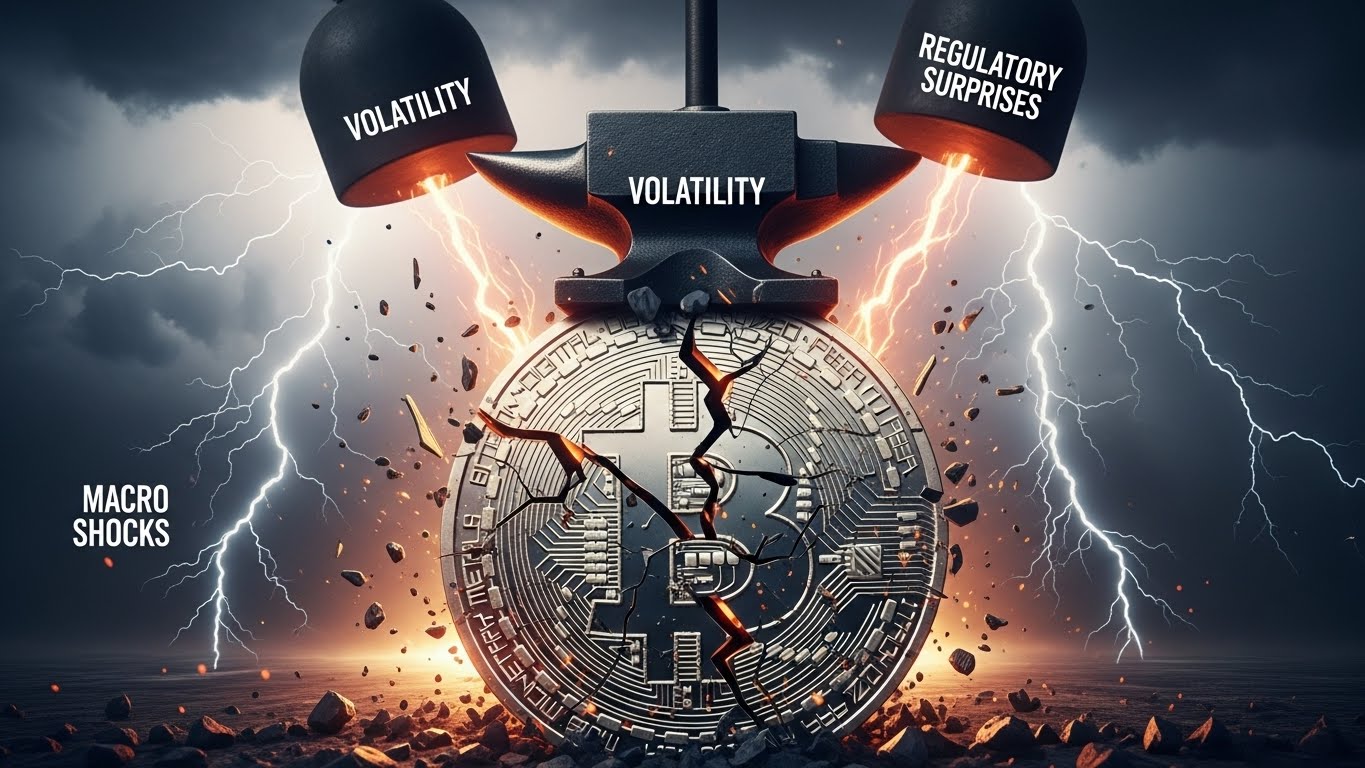
Altcoins are particularly sensitive to these shocks. Because they sit further out on the risk curve, assets like Ethereum, Solana and smaller tokens can experience larger percentage swings than Bitcoin during market stress. This means that while altcoin investments may offer higher upside during boom periods, they also introduce additional downside risk that investors must be prepared to tolerate.
The challenge of forecasting and over-optimism
Critics of Lee’s approach often point out that precise price targets, especially extreme ones, can create unrealistic expectations. Bitcoin has indeed delivered spectacular returns over the years, but it has also repeatedly humbled forecasters who attempted to pinpoint exact levels and dates. Some of Lee’s earlier calls have taken longer to play out than expected or have required adjustment as market conditions changed.
This does not necessarily invalidate his broader thesis, but it does highlight the need for humility. Treating Tom Lee’s Bitcoin forecast as a directional guide—rather than a guaranteed roadmap—allows investors to benefit from his insight without assuming that markets will follow a straight path to his targets. The same caution applies to altcoin season narratives: rotations can occur, but their timing, intensity and winners are never certain.
Practical takeaways for investors from Tom Lee’s forecast
For long-term believers in Bitcoin
For investors who already believe in Bitcoin’s long-term potential, Lee’s outlook reinforces the idea that BTC may still be early in its adoption curve. His thesis that Bitcoin could eventually trade at multiples of its current price is built on structural trends like institutional allocation, increased regulatory clarity and growing acceptance of BTC as a macro hedge.
From this perspective, the most practical takeaway is the value of maintaining a disciplined, long-term approach. Rather than trying to trade every fluctuation, many investors may prefer to treat Bitcoin as a strategic asset—allocating a portion of their portfolio to BTC and revisiting that decision as their financial situation and risk tolerance evolve.
For altcoin investors searching for the next wave
For those more focused on altcoin investments ahead, Tom Lee’s framework offers a structured way to think about the next phase of the crypto market cycle. In his view, Bitcoin leadership is the first stage. Once BTC establishes a strong uptrend and draws institutional capital, liquidity tends to spill over into other layers of the ecosystem, with Ethereum, Solana and other quality altcoins benefiting as investors seek higher returns and broader exposure.
The core message for altcoin investors is that timing, quality and risk management matter. Rather than blindly chasing every token during moments of hype, Lee’s roadmap encourages focusing on credible projects with real usage, robust developer communities and clear roles within the Web3 and DeFi landscape. Within that universe, Ethereum often serves as the foundational programmable layer, while Solana and similar chains provide high-beta exposure to emerging activity.
Conclusion
Tom Lee’s Bitcoin forecast: altcoin investments ahead is more than a catchy headline. It reflects a coherent view of how the crypto market tends to evolve across cycles. In his framework, Bitcoin leads as the flagship asset, benefiting from macro tailwinds, halving effects and institutional adoption. As that process unfolds, capital gradually moves outward to Ethereum, Solana and other altcoins, driving periods where altcoin season takes center stage and select projects dramatically outperform.
At the same time, Lee’s outlook comes with caveats. Volatility, macro uncertainty and regulatory shifts can challenge even the most carefully constructed forecasts. Investors who choose to follow his roadmap must do so with an awareness of these risks, a realistic understanding that no prediction is guaranteed, and a clear grasp of their own risk tolerance.
Ultimately, the value of Tom Lee’s Bitcoin forecast lies less in the exact numbers he cites and more in the structure it offers: a way to think about Bitcoin as a core asset, altcoins as high-potential satellites, and the entire digital asset space as part of a broader transformation in how value, ownership and finance work in a digital world. For those willing to engage thoughtfully with that transformation, his emphasis on both Bitcoin’s upside and altcoin investments ahead can serve as a useful lens through which to view the next chapter of the crypto story.
