

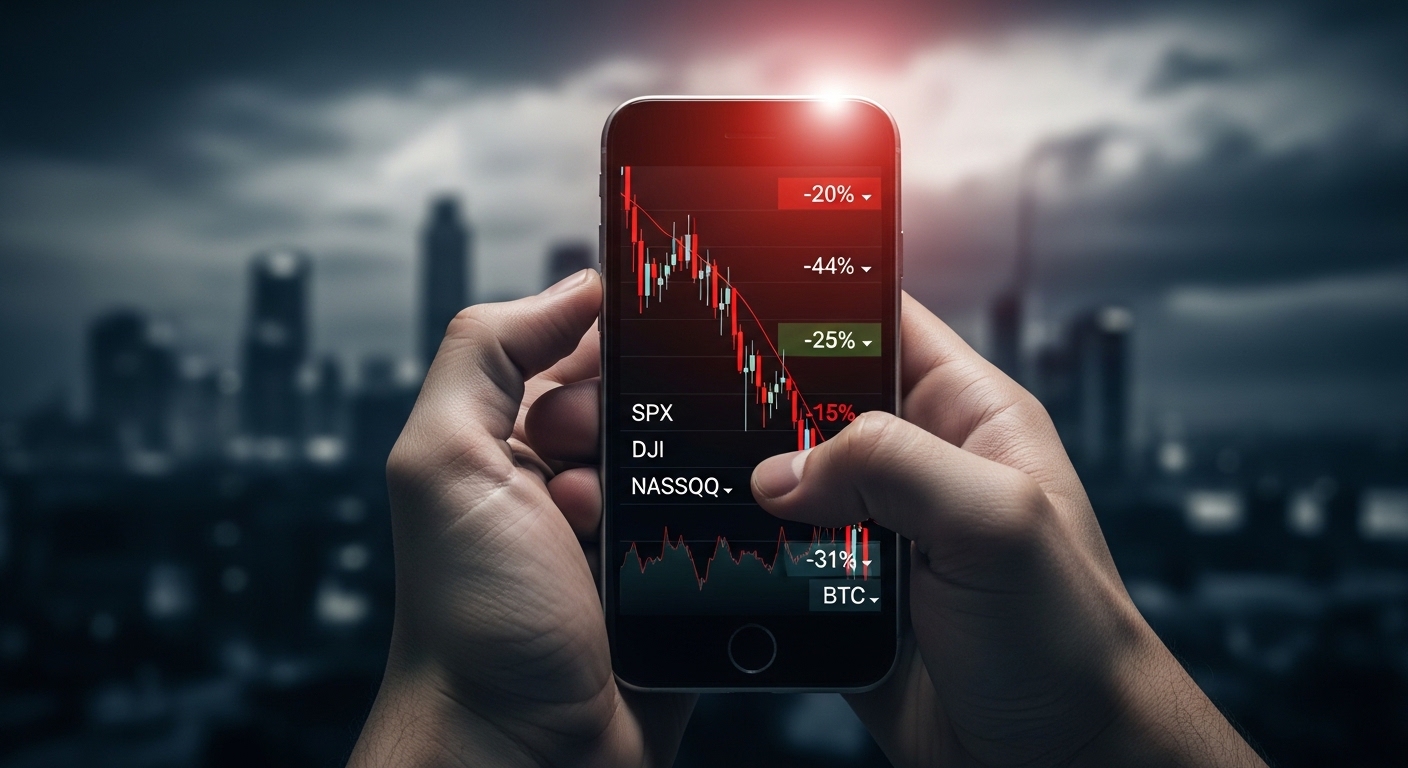
Global financial markets have entered a tense phase as stocks and bitcoin sink simultaneously, signaling a broader shift in investor sentiment. What initially appeared to be a routine market correction has evolved into a deeper reassessment of risk, growth, and future profitability. At the center of this selloff lies a sharp decline in software company shares, as investors question whether traditional software business models can withstand rapid technological disruption and tighter financial conditions.
The synchronized decline of stocks and bitcoin is not coincidental. It reflects a growing unease about valuations, earnings sustainability, and the pace at which artificial intelligence is reshaping entire industries. Software stocks—long considered reliable engines of growth—have become a focal point of fear as investors worry that AI-powered alternatives could undermine pricing power, reduce customer stickiness, and compress margins. As confidence fades, capital is flowing out of high-growth assets and into perceived safety, pulling down both equity markets and digital assets in the process.
This environment highlights a critical truth about modern markets: when uncertainty rises, correlations increase. Assets that are normally viewed as distinct begin to move together as investors prioritize liquidity and capital preservation over long-term narratives. Understanding why stocks and bitcoin sink as investors dump software company shares requires examining the intersection of market psychology, technological disruption, and macroeconomic pressure.
Why stocks and bitcoin are falling together

The joint decline of equities and cryptocurrencies underscores a broader risk-off market environment. While stocks and bitcoin differ fundamentally, they often respond similarly to shifts in sentiment, especially during periods of elevated volatility.
Risk appetite is shrinking across markets
When investors feel confident about economic growth and innovation, they are willing to allocate capital to assets with higher volatility and long-term upside. Software stocks and bitcoin thrive in these conditions. However, when uncertainty increases—whether due to earnings concerns, geopolitical tension, or technological disruption—investors tend to retreat.
As risk appetite contracts, stocks and bitcoin sink together because both are widely viewed as growth-oriented assets. This does not mean their fundamentals are identical, but it does mean they compete for capital within the same risk budgets.
Liquidity drives selling pressure
Another key factor is liquidity. Large-cap software stocks and bitcoin are among the most liquid assets in their respective markets. During periods of stress, investors often sell what they can sell quickly. This “sell liquidity first” behavior accelerates declines and reinforces correlations.
As selling pressure intensifies, algorithmic trading systems and volatility-targeting funds may automatically reduce exposure, amplifying downward momentum. This dynamic helps explain why stocks and bitcoin can drop sharply even without a single catastrophic headline.
Growth assets are sensitive to future expectations
Both software equities and bitcoin are heavily influenced by expectations about the future. Software valuations depend on projected earnings growth, while bitcoin’s value is closely tied to adoption, scarcity narratives, and long-term utility. When investors become less confident about the future, they demand a higher risk premium, pushing prices lower across growth-oriented assets.
Why investors are dumping software company shares
The selloff in software stocks is not random. It reflects a fundamental reassessment of how software companies generate value in an era of accelerating innovation and economic uncertainty.
Artificial intelligence is changing the competitive landscape
One of the biggest concerns weighing on software stocks is the rapid advancement of artificial intelligence. While AI offers enormous potential, it also threatens to commoditize many software functions that were once considered unique or defensible.
Investors are increasingly asking whether customers will continue paying premium subscription fees when AI tools can replicate similar capabilities at lower cost. This fear has led to aggressive selling, particularly in software companies whose products lack strong differentiation or network effects.
Valuations leave little room for error
For years, software stocks benefited from high valuations driven by low interest rates and strong growth expectations. Many companies were priced for near-perfect execution. In the current environment, even small disappointments in earnings or guidance can trigger outsized reactions.
As investors reassess how much they are willing to pay for future growth, software valuations are compressing. This repricing process is painful but necessary, and it has contributed significantly to the broader decline as stocks and bitcoin sink.
Budget pressure and slower enterprise spending
Another factor driving the selloff is concern about enterprise spending. Companies facing higher costs and economic uncertainty may delay software upgrades, reduce seat counts, or negotiate harder on pricing. Even modest changes in customer behavior can have an outsized impact on software companies that rely on predictable recurring revenue. This uncertainty around demand has made investors more cautious, prompting them to exit positions until clearer trends emerge.
How software weakness spills into bitcoin markets
Although software earnings and cryptocurrency networks operate in different domains, their prices are often connected through investor behavior and market structure.
Institutional investors link asset movements
As digital assets have become more integrated into traditional finance, institutional investors now hold both equities and cryptocurrencies within the same portfolios. When these investors reduce risk, they often trim exposure across multiple asset classes at once.
This behavior helps explain why stocks and bitcoin sink together during periods of stress. It is not necessarily a reflection of shared fundamentals, but rather shared ownership and risk management practices.
Sentiment contagion across asset classes
Market sentiment can spread quickly. When investors lose confidence in one high-growth sector, that anxiety can bleed into other areas perceived as speculative or volatile. The selloff in software stocks has reinforced a broader narrative that growth assets may be more vulnerable than previously thought. As this narrative takes hold, bitcoin can be swept into the same wave of selling, particularly among traders who view it as part of the broader technology and innovation trade.
Crypto-linked equities amplify volatility
Certain publicly traded companies have strong exposure to bitcoin through their business models or balance sheets. When bitcoin prices fall, these stocks often decline even more sharply, reinforcing negative sentiment and contributing to the perception that stocks and bitcoin are tightly linked.
What this selloff reveals about market psychology
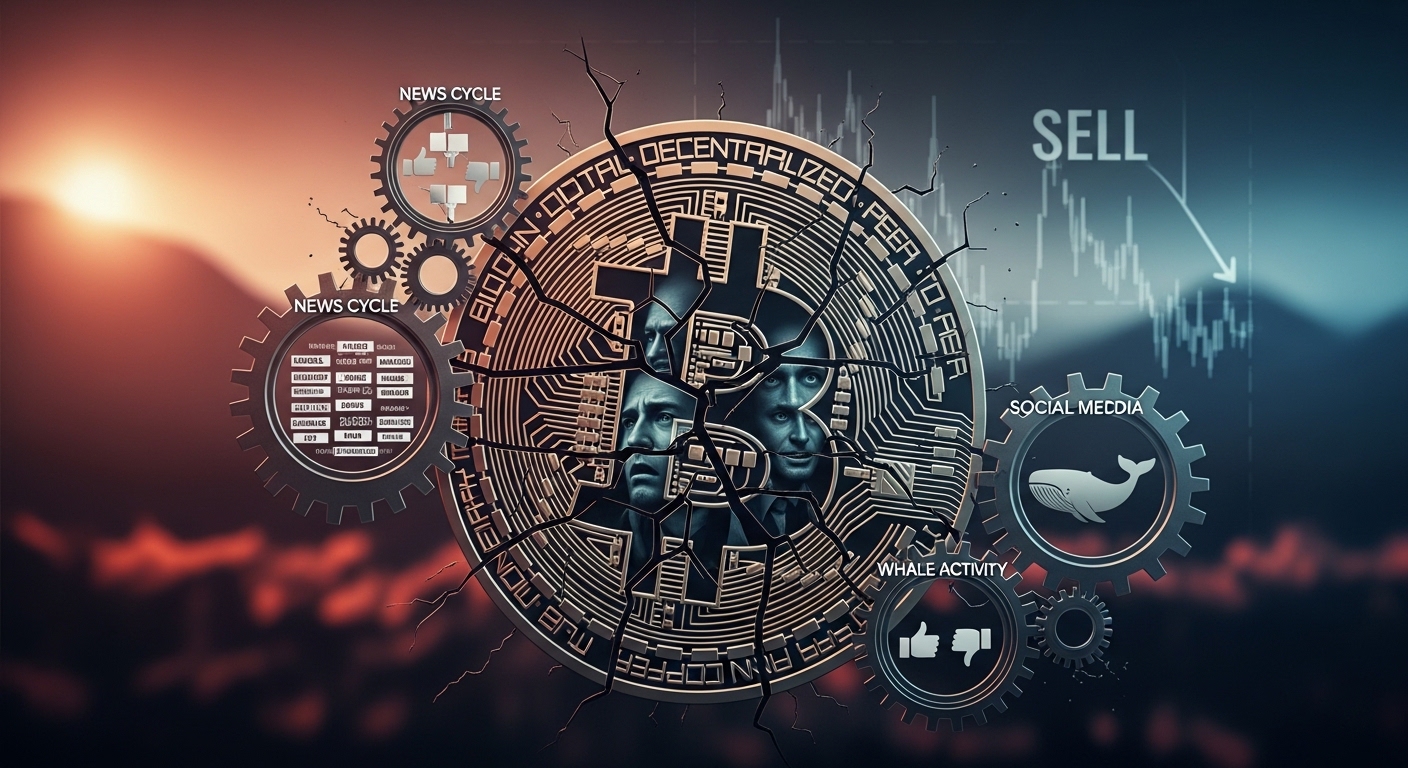
Periods when stocks and bitcoin sink simultaneously provide valuable insight into how investors think under pressure.
Confidence matters more than narratives
In bullish markets, compelling stories can drive prices higher even in the absence of immediate profits. In cautious markets, investors demand proof. They want clear evidence of sustainable cash flow, durable competitive advantages, and realistic growth paths. The current selloff suggests that investors are less willing to rely on optimistic projections. Instead, they are prioritizing resilience and visibility.
Fear accelerates decision-making
When uncertainty rises, decision-making speeds up. Investors may sell first to avoid deeper losses, planning to reassess later. This behavior can create sharp, short-term declines that overshoot fundamental value. Such moves can feel alarming, but they often reflect emotion rather than long-term deterioration. Understanding this helps investors remain rational when stocks and bitcoin sink sharply.
Markets are repricing technological change
AI is not just another trend—it represents a structural shift. Markets are struggling to price its impact accurately. Until there is greater clarity on winners and losers, volatility is likely to remain elevated, especially in software stocks.
Signals to watch going forward
To determine whether the current decline is temporary or part of a longer trend, investors should monitor several key indicators.
Earnings clarity from software companies
Clear, confident earnings reports can stabilize sentiment. Investors are looking for evidence that software companies can maintain pricing power, retain customers, and monetize AI effectively. Positive surprises in these areas could help restore confidence and slow the decline as stocks and bitcoin attempt to find a floor.
Interest rates and monetary policy expectations
Interest rates play a crucial role in valuing future growth. If inflation expectations stabilize and rate pressures ease, growth assets may regain favor. Conversely, higher rates could prolong the selloff.
Market liquidity and volatility trends
Spikes in volatility often coincide with forced selling. As volatility subsides and liquidity improves, markets may become more orderly, allowing investors to re-enter positions selectively.
How investors can navigate the downturn
Periods when stocks and bitcoin sink test patience and discipline. A thoughtful approach can help investors avoid costly mistakes.
Reassess assumptions, not emotions
Rather than reacting to price moves, investors should revisit their original investment theses. Have the fundamentals changed, or has sentiment shifted temporarily? Distinguishing between the two is critical.
Manage risk proactively
Diversification, position sizing, and avoiding excessive leverage are especially important during volatile periods. Risk management does not eliminate losses, but it can prevent small setbacks from becoming catastrophic.
Focus on quality and resilience
Companies with strong balance sheets, loyal customers, and clear paths to profitability are better positioned to weather uncertainty. In crypto, understanding why you own an asset—beyond short-term price action—helps maintain perspective.
What could trigger a recovery
Markets rarely move in one direction forever. Several developments could help reverse the current trend.
Clear AI monetization success
If software companies demonstrate that AI can enhance revenue rather than erode it, investor confidence may return quickly. Proof of sustainable monetization would ease fears and support higher valuations.
Improved economic outlook
Signs of stable growth and easing inflation would reduce pressure on risk assets. In such an environment, stocks and bitcoin could rebound together as confidence improves.
Exhaustion of selling pressure
Once forced selling subsides, markets often stabilize even before positive news emerges. Reduced volatility can create opportunities for patient investors.
Conclusion
The phrase “stocks and bitcoin sink as investors dump software company shares” captures more than a market headline—it reflects a moment of reassessment. Investors are grappling with rapid technological change, valuation uncertainty, and shifting economic conditions. Software stocks have borne the brunt of this anxiety due to fears of AI-driven disruption, while bitcoin has moved in tandem as part of a broader risk-off shift.
While the current environment is challenging, it is also clarifying. Markets are demanding stronger fundamentals, clearer strategies, and more disciplined growth. For investors, the key lies in understanding what has truly changed and responding with patience rather than panic. Periods like this often lay the groundwork for the next phase of opportunity.
Frequently Asked Questions
Q: Why do stocks and bitcoin fall at the same time?
They often fall together during risk-off periods when investors reduce exposure to volatile assets and prioritize liquidity and capital preservation.
Q: Why are software stocks declining more sharply?
Software companies face valuation pressure, AI disruption fears, and uncertainty around future demand, making them particularly sensitive to shifts in sentiment.
Q: Does AI threaten the software industry?
AI poses both risks and opportunities. It can commoditize some features while enhancing others. Investors are currently uncertain about which companies will benefit most.
Q: Is bitcoin still a long-term investment if it drops with stocks?
Bitcoin’s long-term thesis may remain intact, but in the short term it can behave like a risk asset and move in line with broader market sentiment.
Q: What should investors focus on during market downturns?
Investors should focus on fundamentals, risk management, and long-term goals rather than reacting emotionally to short-term price movements.
Also Read: Bitcoin Hashrate Falls 12% After US Winter Storms
