

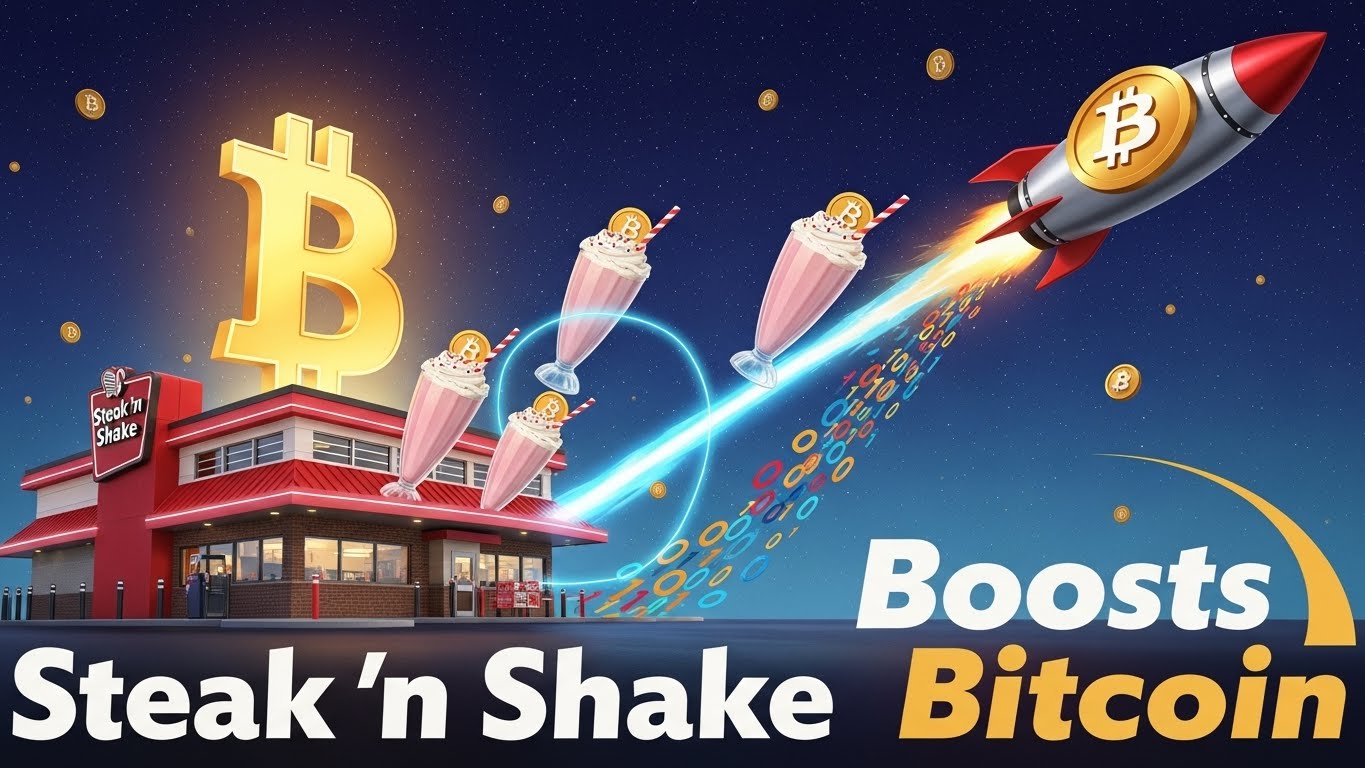
Steak Shake has long been a classic American diner brand known for steakburgers, shoestring fries, and thick milkshakes. But in an era where brands fight for attention across social feeds and payment apps, the company is also becoming known for something far less traditional: Bitcoin. The latest headline says it all—Bitcoin-loving burger joint Steak ‘n Shake adds $10m to crypto treasury—marking a serious expansion of its Bitcoin treasury strategy and placing the restaurant chain in the middle of a broader conversation about how mainstream companies may use Bitcoin as both a payment tool and a reserve asset.
This isn’t just a quirky tech experiment. When a consumer-facing chain adds $10 million worth of Bitcoin to its corporate reserves, it signals a deliberate stance on money, payments, and long-term brand identity. The move suggests Steak ’n Shake is not only comfortable letting customers spend Bitcoin at the counter, but is also willing to hold Bitcoin on the balance sheet as part of a structured crypto treasury approach. For supporters, that’s a vote of confidence in Bitcoin as “digital gold” and as an emerging payments rail. For critics, it raises questions about volatility, risk management, and whether a restaurant business should be exposed to price swings.
Either way, the story is bigger than one purchase. It’s about how Bitcoin moves from the edges of the internet into everyday life: ordering a burger, paying in BTC, and watching a household name treat Bitcoin like a legitimate treasury asset. Steak ’n Shake’s decision reframes Bitcoin adoption from something that happens in trading apps to something that can happen at lunch.
Why Steak ’n Shake is building a crypto treasury
A crypto treasury is essentially a corporate strategy that allocates part of a company’s reserves into cryptocurrencies—most commonly Bitcoin—instead of keeping everything in cash, money market funds, or short-term bonds. For Steak ’n Shake, adding $10 million in Bitcoin implies the company sees BTC as more than a marketing slogan. It suggests the company is treating Bitcoin as a meaningful component of corporate finance.
There are several reasons a brand might do this. Some companies view Bitcoin as a long-term hedge against currency debasement, especially in a world where inflation narratives can influence consumer and investor behavior. Others treat Bitcoin as a high-upside asset that can outperform traditional cash equivalents over longer cycles. But a consumer brand has an additional motivation: differentiation. A restaurant chain that embraces Bitcoin can become memorable in a crowded industry where menus and discounts are easily copied.
Steak ’n Shake’s decision also aligns with a cultural reality: Bitcoin has one of the most loyal communities in modern finance. Turning that community into repeat customers—and potential advocates—can be a powerful brand lever. When a company says it has a growing Bitcoin treasury, it signals to Bitcoiners that the brand “gets it,” and that can translate into real-world spending and social buzz.
The difference between accepting Bitcoin and holding Bitcoin
It’s important to separate two ideas that many people lump together. Accepting Bitcoin is a payments decision. Holding Bitcoin is a treasury decision. A company can accept Bitcoin and instantly convert it to dollars behind the scenes, avoiding volatility but still appealing to crypto users. A company can also buy Bitcoin for its reserves without accepting it at checkout, treating BTC like an investment asset.
Steak ’n Shake is notable because it is linking both. By expanding its crypto treasury while leaning into Bitcoin payments, the chain is attempting a more cohesive strategy: commerce on the front end, reserve allocation on the back end, and a consistent message in between.
Why a $10M Bitcoin treasury addition matters
In the world of global finance, $10 million may not sound enormous. But in the restaurant business—where cost control, inventory management, and cash flow stability matter—adding $10 million of Bitcoin is a meaningful signal. It implies the company believes the potential benefits outweigh the risks, and that it is willing to weather volatility as part of a longer-term plan.
The amount is also “sized” for credibility. It’s large enough to show commitment, but not so large that it suggests the company is betting the business on Bitcoin. That balance can be strategically smart, especially for a consumer brand that must protect operational resilience while experimenting with innovation.
The brand strategy behind “Bitcoin-loving burger joint”
The phrase “Bitcoin-loving burger joint” isn’t accidental. It frames Steak ’n Shake as more than a restaurant; it becomes a cultural brand with a specific identity. In a digital environment, identity travels faster than product details. People share stories, not ingredient lists. A chain associated with Bitcoin becomes a story people repeat.
From a marketing perspective, there’s a clear advantage: Bitcoin is a built-in conversation starter. It invites debate, curiosity, and community engagement. It also positions Steak ’n Shake at the intersection of two massive audiences: everyday fast-casual diners and tech-forward consumers who care deeply about payment freedom, decentralization, and the future of money.
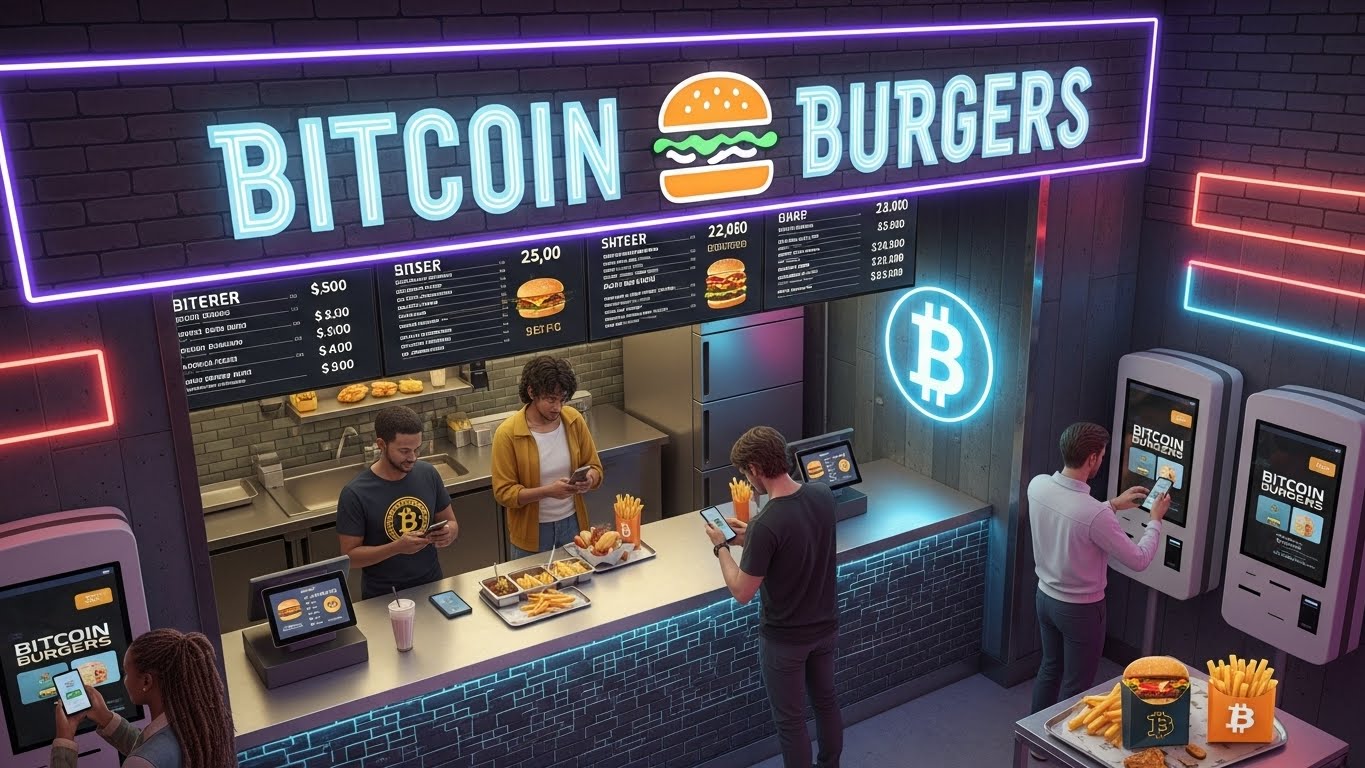
But brand strategy is fragile if it doesn’t match execution. If Bitcoin payments are slow, confusing, or unreliable, the “Bitcoin-loving” identity can backfire. To make this identity work, the payment experience must feel smooth, and the messaging must feel authentic rather than opportunistic.
How Bitcoin culture benefits consumer brands
Bitcoin culture rewards consistency. Many Bitcoiners distrust brands that “tourist” into crypto during hype cycles and vanish when markets cool. By adding to a Bitcoin treasury, Steak ’n Shake is signaling that it intends to stay in the conversation beyond short-term trends.
This matters because loyal communities are rare, and Bitcoin is one of the few financial movements that has evolved into a lifestyle for many supporters. When that lifestyle intersects with daily habits—like grabbing food—adoption becomes effortless. Steak ’n Shake is effectively trying to turn Bitcoin from a purely digital asset into something that shows up in real routines.
How Bitcoin payments support a crypto treasury narrative
A Bitcoin treasury can be funded in multiple ways. A company can buy BTC directly from the market, or it can retain some portion of incoming Bitcoin from customers instead of converting it all to fiat. When a brand supports Bitcoin payments, it opens the possibility of turning everyday transactions into a slow but steady treasury pipeline.
This creates a compelling “flywheel.” Customers pay with Bitcoin. The brand gains attention and loyalty. Some of that inflow can remain as BTC. The growing crypto treasury becomes another headline that attracts more interest. When executed carefully, the strategy can compound in both marketing value and asset accumulation.
The role of the Lightning Network in real-world Bitcoin use
For Bitcoin to function in a fast-paced restaurant environment, the payment experience must be quick. That’s why the Lightning Network is often discussed as a practical layer for smaller purchases. Instead of waiting for on-chain confirmations, Lightning payments can be near-instant, which is crucial when customers expect to tap, pay, and move on.
A fast Lightning experience also shapes perception. It makes Bitcoin feel usable, not theoretical. For many consumers, the biggest barrier to spending Bitcoin is friction. If a burger purchase becomes as simple as scanning a code and confirming a payment, it reduces hesitation and increases confidence.
Why payment rails matter to business economics
Traditional payment systems can carry fees that add up, especially for high-volume, lower-ticket transactions. While no payment method is “free,” Bitcoin payments—particularly when routed efficiently—can offer a different fee structure than card networks. Even if the primary motivation is brand positioning, any meaningful cost improvement can strengthen the business case over time.
That said, businesses must also account for operational complexity: point-of-sale integration, staff training, customer support, and potential volatility if the company keeps BTC instead of converting immediately. A successful crypto treasury strategy requires more than enthusiasm; it requires process.
Corporate treasury basics: why companies hold Bitcoin
A corporate treasury exists to keep a business stable. It funds payroll, rent, suppliers, and expansion plans. Traditionally, treasuries prioritize liquidity and capital preservation. Bitcoin introduces a new profile: high volatility but potentially high long-term upside, plus a narrative about scarcity and decentralization.
Companies that hold Bitcoin often describe it as a long-term reserve asset. The core idea is that BTC’s fixed supply and global liquidity may make it attractive as a hedge-like asset in certain macro environments. Whether one agrees or not, the rationale matters: it suggests the company is thinking beyond quarters and into multi-year cycles.
For Steak ’n Shake, the decision to add $10 million in Bitcoin implies it has weighed those considerations. The brand is effectively saying, “We believe Bitcoin will matter, and we want exposure.”
Treasury diversification and strategic reserve thinking
A crypto treasury doesn’t have to mean “all in.” It often means diversification. By holding some Bitcoin alongside cash and other assets, a company spreads exposure across different risk types. In theory, this can strengthen resilience if managed carefully.
The “strategic reserve” framing also changes the conversation. It positions Bitcoin as something the company intends to hold through cycles, rather than trade. That long-term posture can be important for credibility, especially when customers and observers are watching whether the brand’s crypto stance is genuine.
The volatility challenge: what businesses must manage
The biggest risk is obvious: Bitcoin can drop sharply. A restaurant chain must ensure its Bitcoin treasury allocation doesn’t impair daily operations. That means maintaining sufficient liquidity in traditional forms and setting risk controls around how much BTC is held, how it’s stored, and how it’s reported.
There’s also reputational volatility. When Bitcoin rises, the brand may be praised as visionary. When Bitcoin falls, critics may call it reckless. A durable strategy requires clear communication: why the company holds BTC, what portion of reserves it represents, and how risk is managed.
What Steak ’n Shake’s move means for mainstream Bitcoin adoption
Mainstream adoption is often discussed in abstract terms—institutions, ETFs, regulation, and macro narratives. But adoption becomes real when it shows up in everyday behavior. A burger chain embracing Bitcoin moves the conversation from “investing” to “using.”
If customers can spend Bitcoin easily, they begin to see it as money-like, not just asset-like. And if a recognizable brand holds Bitcoin as part of its crypto treasury, it signals that BTC is not just for tech startups and traders. It becomes part of normal corporate life.
Fast food as a stress test for crypto payments
Restaurants are high-pressure environments for payments. People want speed, clarity, and reliability. If Bitcoin works at a restaurant counter—especially during peak times—it proves something important: the tech can handle real commerce, not just theory.
That makes Steak ’n Shake’s approach significant. It is, in effect, using its stores as a live lab for Bitcoin usability, while its Bitcoin treasury decision acts as a public commitment to the long-term relevance of BTC.
Consumer psychology: spending Bitcoin versus holding Bitcoin
Many people prefer to hold Bitcoin rather than spend it, especially if they believe it will appreciate over time. Yet spending is what creates day-to-day utility. Steak ’n Shake’s strategy may help bridge that psychological gap by making spending feel purposeful and community-driven. A customer might feel that paying in Bitcoin supports a business that shares their values, which can reduce the reluctance to part with BTC.
In a subtle way, this can reinforce Bitcoin as both a store of value and a medium of exchange—two roles that often compete in people’s minds.
Potential ripple effects across restaurants and retail
When one recognizable chain leans into Bitcoin, competitors pay attention. Not every brand will follow, but the experiment itself can shift what feels “normal.” Payment options that once seemed niche can become expected—especially among younger consumers and tech-forward urban markets.

If Steak ’n Shake demonstrates that Bitcoin payments can be smooth and that a crypto treasury can be managed responsibly, other consumer businesses may explore similar steps. If the experiment fails or creates operational headaches, it may slow adoption in the sector. Either way, it provides valuable data.
What other brands should copy—and what they shouldn’t
The most copyable idea is not “buy Bitcoin.” It’s building a coherent strategy. That means aligning checkout experience, messaging, customer education, and treasury policy. It also means not overexposing the business. A Bitcoin treasury allocation should be sized so that a downturn doesn’t threaten operations.
Brands should also avoid treating Bitcoin as a gimmick. Consumers—especially crypto-native consumers—can spot superficial campaigns. Authenticity comes from consistency, transparency, and a clear explanation of why Bitcoin fits the business.
Regulatory and operational considerations
Even without getting lost in legal complexity, it’s clear that businesses must consider compliance, accounting, custody, and security. A serious crypto treasury strategy involves secure storage, internal controls, and an understanding of how holdings are tracked and reported.
Operationally, staff training matters too. A payment method is only as good as the person helping the customer use it. For Bitcoin to feel mainstream, it must be comfortable for both customers and employees.
Conclusion
The headline “Bitcoin-loving burger joint Steak ‘n Shake adds $10m to crypto treasury” captures a shift that’s easy to underestimate. Steak ’n Shake is not simply experimenting with a trendy payment option; it is building a recognizable identity around Bitcoin while also treating Bitcoin as a real treasury asset. By adding $10 million to its Bitcoin treasury, the company is signaling long-term commitment, not short-term hype.
The move will be judged on execution: whether Bitcoin payments remain smooth, whether the crypto treasury is managed responsibly, and whether the brand can navigate volatility without losing focus on what it sells—great burgers and shakes. But as a case study in mainstream Bitcoin adoption, it’s already influential. It shows how a consumer business can connect everyday commerce to a bigger financial narrative, and it hints at a future where paying with Bitcoin might feel as normal as tapping a card.
FAQs
Q: Why is Steak ’n Shake adding Bitcoin to its crypto treasury?
Steak ’n Shake is treating Bitcoin as a strategic reserve asset, aiming to diversify treasury holdings and reinforce its Bitcoin-forward brand identity while engaging crypto-native customers.
Q: Does accepting Bitcoin mean Steak ’n Shake automatically holds Bitcoin?
Not necessarily. A business can accept Bitcoin and convert it to dollars immediately. A Bitcoin treasury strategy means the company intentionally holds BTC as part of its reserves.
Q: What does the Lightning Network have to do with buying burgers using Bitcoin?
The Lightning Network helps Bitcoin payments settle quickly and with lower friction for small purchases, making it more practical for real-world checkout experiences like restaurant orders.
Q: What are the biggest risks of a corporate Bitcoin treasury?
The main risks are Bitcoin price volatility, operational complexity, and reputational swings during market downturns. Strong treasury controls and clear policies help manage these risks.
Q: Will more restaurants add Bitcoin to their crypto treasuries?
Some may, especially if Steak ’n Shake shows clear benefits in customer engagement and payment efficiency. However, adoption will depend on each brand’s risk tolerance, customer base, and operational readiness.
Also More: Bitcoin Correlates Strongly With Institutional Demand After 7% Rise
