

Ethereum is back in a familiar position: widely used, heavily discussed, and yet—according to Santiment—still priced as if the market hasn’t fully caught up to what’s happening under the hood. When analysts say Ethereum undervalued, they’re not claiming that price must immediately surge tomorrow. They’re pointing to a growing gap between adoption signals and market mood, a disconnect that often shows up when investors are cautious, capital rotates slowly, or traders focus on short-term headlines instead of longer-term network realities.
What makes this moment more interesting is the context. Santiment’s read suggests Bitcoin and XRP are sitting closer to “neutral,” meaning sentiment isn’t overly euphoric or deeply fearful. Neutral sentiment can be a sign of consolidation—when markets pause, reassess, and wait for a catalyst. But Ethereum is also its own economic network—home to smart contracts, DeFi, tokenization experiments, and an expanding layer-2 scaling universe. That’s why an “Ethereum undervalued” narrative matters: it’s less about hype and more about relative valuation versus network utility, developer activity, and shifting investor positioning.
In this article, we’ll unpack what Santiment-style sentiment and on-chain insights typically indicate, why Bitcoin and XRP near neutral is notable, and how Ethereum’s fundamentals and structure can support the argument that Ethereum undervalued remains a credible thesis. We’ll also explore what could invalidate that view, because real investing is about scenarios—not certainty.
Santiment’s “Undervalued” Signal
When Santiment is cited in market commentary, the core idea often revolves around market sentiment blended with on-chain data signals—how people talk, how they behave, and what the network shows in activity and holder patterns. The phrase Ethereum undervalued usually arises when sentiment lags behind measurable adoption or when fear, boredom, or indecision keeps pricing muted despite improving conditions.
Sentiment Isn’t Price, but It Often Leads Price
Sentiment data tracks how traders and investors feel, not just what they do. Social chatter, fear/greed swings, and crowd positioning can create extremes. When sentiment is extremely bullish, buyers can get “used up,” leaving fewer marginal buyers to push price higher. When sentiment is very bearish, the opposite can happen: selling exhausts, and price becomes more sensitive to any positive catalyst.
So if Santiment suggests Bitcoin and XRP are near neutral, it implies the crowd is not leaning too far in either direction. In that environment, assets with stronger “quiet fundamentals” can look Ethereum undervalued because they have potential to surprise on the upside if attention rotates.
“Undervalued” in Crypto Often Means “Mispriced Relative to Use”
Traditional finance might define undervaluation via cash flows. Crypto is messier. For Ethereum, the closest parallels are network effects, fee dynamics, usage intensity, and security demand. Ethereum’s base layer is a settlement system for value and data, while layer-2 networks extend throughput and reduce costs. When the market focuses on short-term volatility rather than these structural roles, the argument that Ethereum undervalued becomes more compelling.
Why Bitcoin and XRP Near Neutral Matters
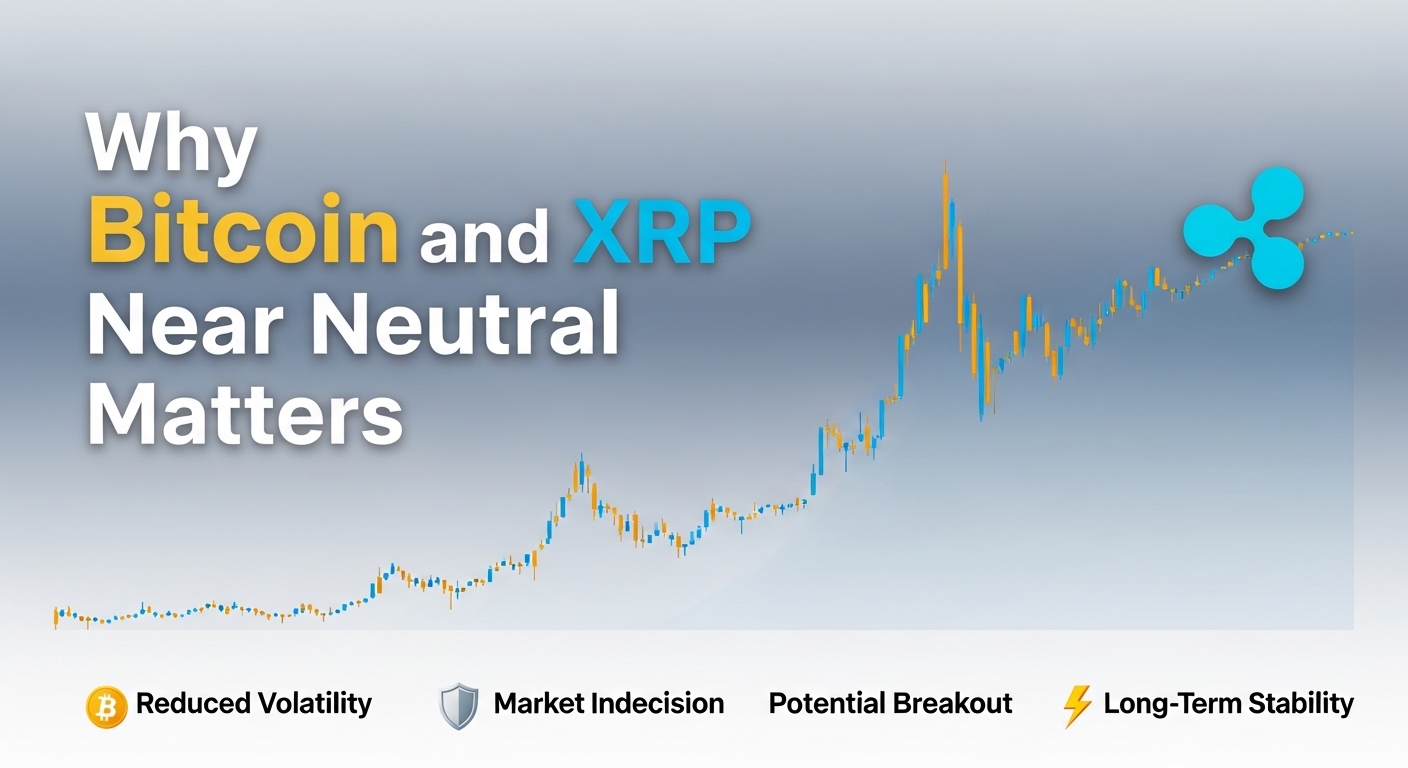
A neutral read on Bitcoin sentiment matters because Bitcoin typically sets the tone for crypto. When Bitcoin is overheated, altcoins can pump—but those moves can be fragile. When Bitcoin is fearful, altcoins often suffer. Neutral sentiment can suggest equilibrium, where markets are receptive to narratives that aren’t purely momentum-driven.
Bitcoin as the Liquidity Anchor
Bitcoin often functions as the crypto market’s macro proxy—highly sensitive to liquidity, rates, ETF flows (where applicable), and risk appetite. If Bitcoin sits near neutral, traders may be waiting for direction. That “waiting period” is exactly when the market sometimes rediscovers assets that look Ethereum undervalued, because Ethereum has a distinct utility layer that Bitcoin does not try to replicate.
XRP’s Neutrality Signals Rotation, Not Capitulation
XRP tends to move on its own catalysts, community narratives, and broader altcoin flows. If XRP is near neutral, it can indicate that speculative enthusiasm isn’t dominating the tape. That can benefit Ethereum because Ethereum’s investment case can lean more on institutional adoption, real settlement demand, and its position as infrastructure—making Ethereum undervalued feel less like a meme and more like a measured call.
The Fundamental Case for Ethereum Still Being Undervalued
To understand why Ethereum undervalued keeps resurfacing, you have to look at Ethereum not only as a coin, but as a platform economy. Ethereum is the base ledger for an ecosystem that includes exchanges, lending protocols, stablecoins, tokenized assets, games, and identity experiments. Even when narratives change, Ethereum often remains the default execution environment for complex crypto activity.
Ethereum’s Role as a Settlement Layer
A major misconception is that Ethereum’s value depends solely on cheap transactions. In reality, Ethereum’s base layer is increasingly positioned as a high-security settlement and data availability layer, while cheaper execution migrates to layer-2 scaling solutions. That architectural shift can still support the Ethereum undervalued idea because the market sometimes misreads lower base-layer transaction counts as “declining usage,” even when activity is simply moving to rollups that ultimately anchor back to Ethereum.
Staking and the Security Premium
Ethereum’s transition to proof-of-stake created a direct link between ETH ownership and network security participation via staking. In many investor frameworks, staking yield becomes part of ETH’s attractiveness, not as a guaranteed return, but as a structural incentive for long-term holding. If network usage grows and fee dynamics remain meaningful, the “security premium” can expand—another reason analysts label Ethereum undervalued when price doesn’t reflect the network’s centrality.
Developer Gravity and Ecosystem Stickiness
One of Ethereum’s most enduring strengths is developer mindshare. New chains appear constantly, but Ethereum retains gravity because composability and network liquidity create stickiness. Builders go where users and capital are. That loop is hard to replicate, and it’s a key reason the Ethereum undervalued thesis can persist through multiple cycles.
On-Chain and Behavioral Clues That Support “Ethereum Undervalued”
Even without relying on a single metric, the combination of behavior and network signals can paint a picture. Santiment-style framing often emphasizes “crowd mood” versus actual network reality.
Holder Conviction and Supply Dynamics
When long-term holders accumulate during uncertain phases, it can suggest that informed capital sees Ethereum undervalued despite price stagnation. In crypto, supply moving off exchanges (often interpreted as reduced near-term sell pressure) can support that narrative—though it should never be treated as a one-way signal.
Network Fees, Burn Mechanics, and Demand
Ethereum’s fee market is sometimes criticized during high congestion, but fees also signal demand for block space. Depending on the fee regime and burn mechanics, parts of transaction fees can reduce net issuance. Investors frequently translate that into an evolving monetary profile, which can strengthen the Ethereum undervalued argument when demand rises but price fails to respond.
Social Sentiment vs. Actual Usage
Crowds can be bored during consolidation, and boredom is often when an asset looks Ethereum undervalued—not because it’s invisible, but because attention is elsewhere. If the same period shows steady stablecoin settlement, DeFi volume resilience, or growing rollup adoption, the mismatch becomes clearer.
Ethereum’s Competitive Landscape and Why “Undervalued” Is Not Guaranteed
Calling Ethereum undervalued is not the same as proving it. Ethereum faces real competition, both from alternative layer-1s and from its own layer-2 ecosystem, which can fragment narratives and confuse investors who just want a simple story.
Layer-2 Growth Is a Strength, but It Can Blur Value Capture

Layer-2 scaling is widely considered essential for Ethereum’s long-term throughput and user experience. But it can raise questions: if activity happens on layer-2, does ETH still capture value? Many models argue yes—through data availability demand, settlement finality, and the security anchor—yet markets can be slow to price complex system dynamics. This uncertainty can keep ETH priced as Ethereum undervalued, especially during periods when traders prefer simpler “one chain, one token” narratives.
Regulation and Institutional Narratives
Ethereum’s institutional pathway is shaped by custody infrastructure, market structure, and evolving regulations. Sometimes institutional flows favor Bitcoin first because it’s simpler. If that happens, Ethereum can remain Ethereum undervalued longer than expected, not because fundamentals are weak, but because capital allocation follows a sequence.
Macro Liquidity Still Rules
No matter how strong Ethereum’s network is, crypto remains a risk-on asset class. If global liquidity tightens, correlations rise and even quality assets can underperform. In those periods, Ethereum undervalued can be true in a relative sense but still not produce immediate gains. Timing matters.
What Could Move Ethereum Out of “Undervalued” Territory?
If the market accepts the idea that Ethereum undervalued, the next question is what flips perception. Repricing typically needs catalysts that are easy to understand and hard to ignore.
A Clear Demand Narrative
Ethereum tends to rally when the market sees a coherent demand story—growth in stablecoin settlement, tokenization momentum, renewed DeFi activity, or an application wave that genuinely needs Ethereum-grade security. When demand becomes obvious, “Ethereum undervalued” shifts from a niche take into mainstream consensus, and price can move faster than expected.
A Broader Altcoin Re-rating
When Bitcoin is neutral and then turns constructive, markets often broaden. That broadening can lift top infrastructure plays first. If a rotation begins, the phrase Ethereum undervalued can become a rallying point, especially when traders compare Ethereum’s position to assets that have already run.
Reduced Narrative Noise
Sometimes the biggest catalyst is simply time. When hype cycles fade, survivors with real usage stand out. Ethereum’s strength is that it can endure narrative churn. That endurance is why analysts continue to argue Ethereum undervalued even after multiple market phases.
How to Think About Bitcoin, XRP, and Ethereum Together
If Bitcoin and XRP sit near neutral while Ethereum appears Ethereum undervalued, it suggests a market that is not panicking and not euphoric. That’s often a thinking market—a market where positioning can shift based on data, not just emotion.
Bitcoin can remain the primary trend driver. XRP can remain a catalyst-driven alt. Ethereum can be the infrastructure bet that benefits when the market transitions from speculation to utility. In that trio, the Ethereum undervalued thesis is essentially a bet on the market remembering what Ethereum actually does: power smart contracts, anchor DeFi, support tokenized assets, and provide a base security layer for a growing rollup ecosystem.
Conclusion
Santiment’s framing that Ethereum is still Ethereum undervalued while Bitcoin and XRP hover near neutral captures a classic crypto moment: consolidation on the surface, quiet structural change underneath. Neutral sentiment in major assets often creates space for relative value narratives, and Ethereum’s mix of network utility, staking-driven security, ecosystem gravity, and expanding layer-2 adoption gives that narrative substance.
Still, Ethereum undervalued is not a guarantee of immediate upside. Macro liquidity, competitive chains, and shifting investor attention can delay repricing. The more useful takeaway is this: when sentiment is neutral and the crowd is undecided, the market becomes more sensitive to fundamentals. In that environment, Ethereum’s role as a settlement and security layer can matter more—especially if adoption signals continue to firm up while price remains hesitant. That’s exactly the gap the “Ethereum undervalued” idea is pointing to.
FAQs
Q: What does it mean when Santiment says Ethereum is undervalued?
It typically means sentiment and positioning appear weaker than the network’s underlying signals—such as on-chain data, ecosystem activity, or long-term holder behavior—implying Ethereum may be mispriced relative to its fundamentals.
Q: Why is “neutral” sentiment for Bitcoin important for Ethereum?
Bitcoin sets the tone for risk appetite in crypto. When Bitcoin is neutral, markets often consolidate rather than trend sharply, which can make investors more open to relative-value opportunities like Ethereum undervalued setups.
Q: Can Ethereum be undervalued even if its price doesn’t rise soon?
Yes. Ethereum undervalued can describe a valuation gap that persists for weeks or months, especially in tighter liquidity environments. Markets can stay “wrong” longer than traders expect, even when fundamentals improve.
Q: Do layer-2 networks reduce Ethereum’s value?
Not necessarily. Layer-2 scaling can shift activity away from the base layer for cheaper execution, but many designs still rely on Ethereum for security and settlement. The debate is about how clearly markets price that value capture.
Q: What’s the biggest risk to the Ethereum undervalued thesis?
The main risks include macro tightening (hurting risk-on assets), stronger-than-expected competition, regulatory uncertainty, or a prolonged period where market attention prioritizes other narratives—keeping Ethereum priced as Ethereum undervalued longer than expected.
See More: Ethereum Drops Below $2,800 Should Investors Worry?
