


Ethereum bounces are rarely “just” bounces. When Ethereum snaps higher after a rough stretch, it can spark a familiar cocktail of relief, FOMO, and confident calls that the bottom is in. But the market has a habit of rewarding certainty right up until it punishes it. This is why traders obsess over one question every time Ethereum bounces: is this the start of a sustainable reversal, or the early stage of a bull trap that lures buyers before a sharp drop?
Right now, the most important detail isn’t how fast Ethereum bounced, or how green the candles look. The real story is where that bounce is happening in relation to a single, critical level—an area that acts like a gate between “recovery” and “rejection.” In many cycles, Ethereum can rally convincingly while still sitting beneath that gate, and that’s where the trap forms. Price lifts optimism, liquidity appears, long positions stack up, and then the market pulls the floor—often with enough force to produce a 15%–20% slide that feels “impossible” moments earlier.
This article breaks down what it means when Ethereum bounces under a key threshold, why a 20% trap is plausible, and what to watch across price structure, support and resistance, volume, derivatives, and on-chain data. You’ll also learn how to interpret common reversal signals versus fakeouts, how liquidity hunts work, and how to protect yourself with smarter risk management—without overreacting to every wick. By the end, you’ll have a clear framework for deciding whether the Ethereum bounce is real strength—or simply a trap forming beneath one critical level.
The “Critical Level” That Decides Everything
When analysts talk about a “critical level,” they usually mean a zone that has repeatedly flipped roles in the past—what used to be strong support becomes heavy resistance after a breakdown. For Ethereum, this typically shows up as a cluster where multiple signals overlap: prior consolidation highs, an important moving average, and a psychological price area that traders remember. The exact number changes across cycles, but the behavior is consistent.
This “gate” matters because it’s where market participants agree—consciously or subconsciously—on whether the trend has actually changed. Below the gate, rallies are often treated as counter-trend moves. Above it, rallies can become trend-following moves, attracting larger flows and longer time horizons.
A common version of this gate is the zone around the 200-day moving average or a prior breakdown shelf that price repeatedly retests. If Ethereum bounces but fails to reclaim that zone, sellers gain confidence. They don’t need to guess the top; they can simply defend the gate and let buyers exhaust themselves. That exhaustion becomes the fuel for a drop—sometimes close to 20%—as trapped longs scramble to exit.
Why This Level Creates “Trap Mechanics”
A trap doesn’t require conspiracy. It happens because markets are built on positioning. When Ethereum pushes up into a well-known resistance area, many traders buy the bounce expecting a breakout. Others short the level expecting rejection. The decisive move comes from which side gets forced to close.
If Ethereum bounces into resistance and stalls, late buyers often keep adding because the recent green candles feel like “confirmation.” Meanwhile, short sellers can remain calm because they’re leaning on a defined invalidation point above the gate. Once price fails and rolls over, late buyers realize they’re wrong at the same time—creating a cascade of selling and liquidations that can turn a mild pullback into a sharp, fast drawdown.
Ethereum Bounces: Reversal or Relief Rally?
An Ethereum bounce can mean two very different things. In a true reversal, price breaks key resistance, holds it on retest, and begins building higher lows. In a relief rally, price rises mainly because selling pressure pauses—not because demand has taken control. The difference shows up in structure, volume, and follow-through.
In a reversal, you usually see higher highs and higher lows forming across multiple timeframes. Pullbacks are shallow and get bought quickly. In a relief rally, the bounce is steep at first, then choppy. Each push higher feels harder. Momentum cools, volume fades, and price begins to compress right under the critical level—exactly where traps love to form.
The most dangerous moment is when Ethereum bounces strongly enough to look “obvious,” but not strongly enough to reclaim the gate. That’s when traders stop being cautious and start being convinced.
The Psychology Behind the Bounce
After a decline, the first strong Ethereum bounce feels like a turning point because it breaks the emotional rhythm of red candles. Traders who hesitated during the drop suddenly feel safe. The story shifts from “protect capital” to “don’t miss the bottom.” That shift is powerful—and often premature.
Markets frequently exploit that emotional pivot by allowing Ethereum to rally just enough to restore confidence, then reversing before the crowd gets the confirmation they’re waiting for. If you’ve ever thought, “It can’t go back down after this,” you’ve met the psychology that traps are built on.
The 20% Trap Scenario: How It Typically Forms
A 20% trap isn’t random. It tends to form through a recognizable sequence where Ethereum bounces, fails to clear the gate, and then unwinds positioning rapidly. Understanding the sequence helps you spot the early warning signs instead of reacting late.
First, Ethereum rallies from a local low and prints strong candles. Social chatter flips bullish. Traders begin calling for a breakout above the critical level. Second, price reaches that level and starts to hesitate. It may wick above it briefly, or grind sideways beneath it, creating the illusion of accumulation. Third, momentum wanes, and price begins making lower highs on lower timeframes. Fourth, the breakdown starts—often triggered by a sweep of liquidity that punishes both impatient shorts and late longs.
Once the reversal begins, the drop can accelerate quickly due to derivatives positioning. Longs that entered late often have tight liquidation buffers. A sharp move down triggers forced selling, which pushes price further down, which triggers more forced selling. That feedback loop is how a 6% dip becomes a 12% slide—and then flirts with the 20% territory.
Liquidity Sweeps and Why They Matter
If you want one concept that explains many fakeouts, it’s liquidity. Stops and liquidations are pools of liquidity. When Ethereum bounces into a key level, there’s usually a large cluster of stop orders above resistance and another cluster below recent swing lows. Markets often move to harvest those clusters because they represent available order flow.
A classic trap pattern is a brief breakout above the critical level that triggers buy stops and breakout entries—then an immediate reversal that dumps back below the level. That move leaves new buyers “trapped” at poor prices, and their exits become fuel for the downside.
What Price Structure Must Show for the Bounce to Be Real
To judge whether Ethereum bounces with real strength, focus on structure more than headlines. Structure answers one question: are buyers actually defending higher levels?
A healthy reversal typically includes a clean break above the critical level, followed by a pullback that respects it as new support. That pullback should hold without dramatic wicks and should attract meaningful buying volume. If Ethereum can do that, it suggests the market has accepted higher prices and is willing to defend them.
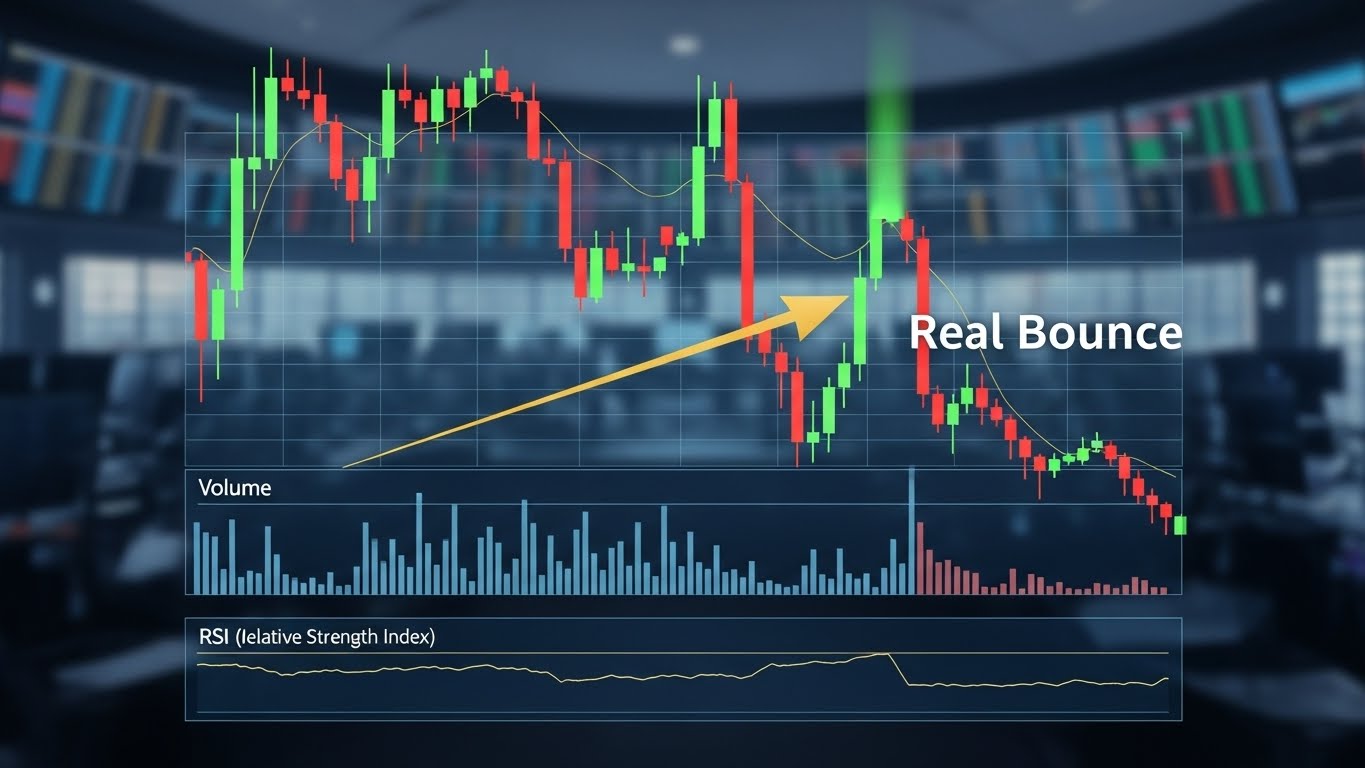
If, instead, Ethereum bounces into the level and repeatedly gets rejected, the structure is weak. Multiple failed attempts often signal distribution rather than accumulation. The market is saying, “This is where supply overwhelms demand.”
Key Candlestick Behaviors to Watch
Candles tell you whether the level is being defended. Frequent long upper wicks near resistance often indicate selling pressure. Repeated closes below the gate suggest the market is not accepting higher pricing yet. Strong daily closes above the level, followed by stable consolidation, lean more bullish.
The goal isn’t to predict every candle. It’s to observe whether Ethereum is building acceptance above the critical level—or repeatedly getting slapped back beneath it.
Volume, Momentum, and the “Energy” of the Move
Volume is the difference between a bounce that’s merely price movement and a bounce that’s supported by conviction. When Ethereum bounces on rising volume and holds gains, it indicates active demand. When volume spikes on the initial rally but then fades during the approach to resistance, it often signals exhaustion.
Momentum indicators can help, but they’re secondary to structure. A momentum reading can look bullish even when Ethereum is approaching a wall of supply. The more useful question is whether the market can sustain buying pressure through that wall.
A trap often forms when momentum looks strong early, then quietly deteriorates as price continues to hover near the critical level. That divergence—higher price with weaker momentum—frequently appears before sharper pullbacks.
Derivatives Clues: Funding, Open Interest, and Liquidations
Because Ethereum is heavily traded with leverage, derivatives data often reveals whether a bounce is fragile. When Ethereum bounces and open interest rises aggressively, it means traders are adding positions, often leveraged. That can be bullish if the breakout is real—but dangerous if price is still below the critical level.
Funding rates can also hint at crowding. When funding turns notably positive during a bounce, it suggests longs are paying a premium to hold positions. That’s not inherently bad, but it increases the risk of a downside flush because so many participants are leaning the same way.
A 20% trap becomes more likely when a bounce coincides with crowded long positioning under resistance. In that setup, it doesn’t take much selling to start a liquidation chain.
The “Perfect Trap” Derivatives Setup
The classic trap setup looks like this: Ethereum bounce + rising open interest + improving sentiment + price stalling below the critical level. If a sudden drop begins, leveraged longs become forced sellers. That forced selling can intensify the move, creating the kind of fast drawdown people associate with “unexpected” crashes—despite the warning signs being visible.
On-Chain and Sentiment Signals That Add Context
Price tells the final truth, but on-chain data and sentiment can provide context. For example, if Ethereum is bouncing while long-term holders are sending large amounts to exchanges, it can imply distribution. If exchange balances are declining and activity suggests accumulation, the bounce may have stronger footing.
That said, on-chain metrics are rarely perfect timing tools. They’re better used to confirm whether the broader environment is supportive or risky. If Ethereum bounces in a context of rising speculative behavior, euphoric sentiment, and crowded leverage, the odds of a trap rise. If sentiment is cautious and leverage is modest, a bounce can climb walls of worry.
LSI phrases worth paying attention to include whale activity, exchange inflows, network activity, and staking dynamics. None of these alone “predict” the next move, but together they help you assess whether the bounce is built on solid ground or shaky positioning.
Macro Conditions and Why They Can Flip the Script
Even the cleanest chart setup can fail if macro conditions tighten. Risk assets often move together when liquidity conditions change. If broader markets sour, Ethereum can struggle to reclaim the critical level even if the local chart looks constructive.
This is why traps often form around key resistance. The market gives just enough bullish structure to keep traders hopeful, but macro uncertainty prevents sustained follow-through. In those conditions, Ethereum bounces are more likely to be sold into, and the path of least resistance can turn down quickly.
How to Navigate the Bounce Without Getting Trapped
If you want to trade a volatile Ethereum bounce without being the liquidity, the first rule is to respect the critical level. Treat it like a decision point, not a guarantee.
A practical approach is to wait for confirmation: a decisive break above the level and a hold on retest. That doesn’t mean chasing at any price. It means letting the market prove acceptance before you assume continuation. If you prefer earlier entries, you can still do that—but your risk controls need to be tighter, and you need to accept that early entries have a higher failure rate.
The second rule is to avoid letting narrative override structure. When Ethereum bounces, the story machine gets loud. Your job is to stay anchored to what price is doing at the gate.
The third rule is to plan exits before entries. A trap hurts most when traders improvise risk decisions mid-move. Define what invalidation looks like. Define where you’ll reduce exposure if the level fails. Good risk management is less about being right and more about staying solvent and clear-headed.
What Bulls Need to See Next
For bulls, the roadmap is straightforward but not easy. Ethereum needs to reclaim the critical level convincingly, then build support above it. Ideally, the move is accompanied by sustained volume, stable pullbacks, and controlled volatility rather than chaotic wicks.
If Ethereum bounces but remains pinned under the gate, bulls should be cautious about assuming the next leg up is inevitable. Under resistance, every rally can still be a selling opportunity for larger players.
The most bullish outcome is not a single explosive candle. It’s a sequence: reclaim, hold, and then trend. That sequence reduces the chance that the move is a 20% trap and increases the probability that the bounce is a real reversal.
What Bears Are Watching for a 20% Move
Bears generally focus on rejection signals and breakdown triggers. If Ethereum repeatedly fails at the gate, bears look for lower-timeframe structure to roll over. They watch for a break of local support levels, because that’s where the first wave of stops sits. If that support breaks, the market can accelerate quickly as momentum flips and leveraged longs unwind.
A 20% drop often requires more than simple selling; it requires forced selling. That’s why bears pay attention to leverage signals, crowded positioning, and sudden volatility expansions. When those align with a failure at the critical level, a sharp move down becomes much more plausible.
Conclusion
An Ethereum bounce can be the start of something big—or a carefully structured fakeout. The difference is whether Ethereum can reclaim and hold one critical level that acts as the gate between recovery and rejection. Below that level, rallies are vulnerable to stalling, liquidity sweeps, and leveraged unwind events that can produce a fast 15%–20% drawdown. Above that level, the market has a better chance of building a durable uptrend.
If you remember one thing, make it this: when Ethereum bounces, don’t fall in love with the bounce itself. Fall in love with confirmation. Watch the gate, watch the retest, watch the structure. That’s how you reduce the odds of getting trapped—and increase the odds of participating in the move that actually lasts.
FAQs
Q: What does “Ethereum bounces” mean in trading terms?
“Ethereum bounces” typically refers to Ethereum price rebounding from a local low or a support zone after selling pressure weakens. The key question is whether the bounce is a temporary relief rally or the beginning of a sustained reversal.
2) What is a 20% bull trap, and why can it happen so fast?
A bull trap occurs when price moves up and convinces traders a breakout is underway, then reverses sharply. The “20%” part can happen quickly because leveraged positions get liquidated during a drop, creating forced selling that accelerates downside momentum.
Q: What is the “critical level” for Ethereum, and how do I find it?
The critical level is usually a major support and resistance zone that has flipped roles in the past, often overlapping with key moving averages like the 200-day moving average or a prior breakdown shelf. You can identify it by looking for areas where price repeatedly reacted strongly across history.
Q: Which indicators help confirm whether the Ethereum bounce is real?
The most reliable confirmation comes from price structure: a break above the critical level and a successful retest as support. Supporting signals include healthy volume, controlled pullbacks, and derivatives data that doesn’t show overly crowded long positioning (such as extreme funding).
Q: How can I avoid getting trapped when Ethereum bounces under resistance?
To avoid the trap, prioritize confirmation over excitement. Wait for Ethereum to reclaim the critical level and hold it, define your invalidation point, and practice disciplined risk management so a failed bounce becomes a small loss rather than a portfolio-level hit.
Also More: Ethereum DeFi TVL Hits $99B Milestone
