

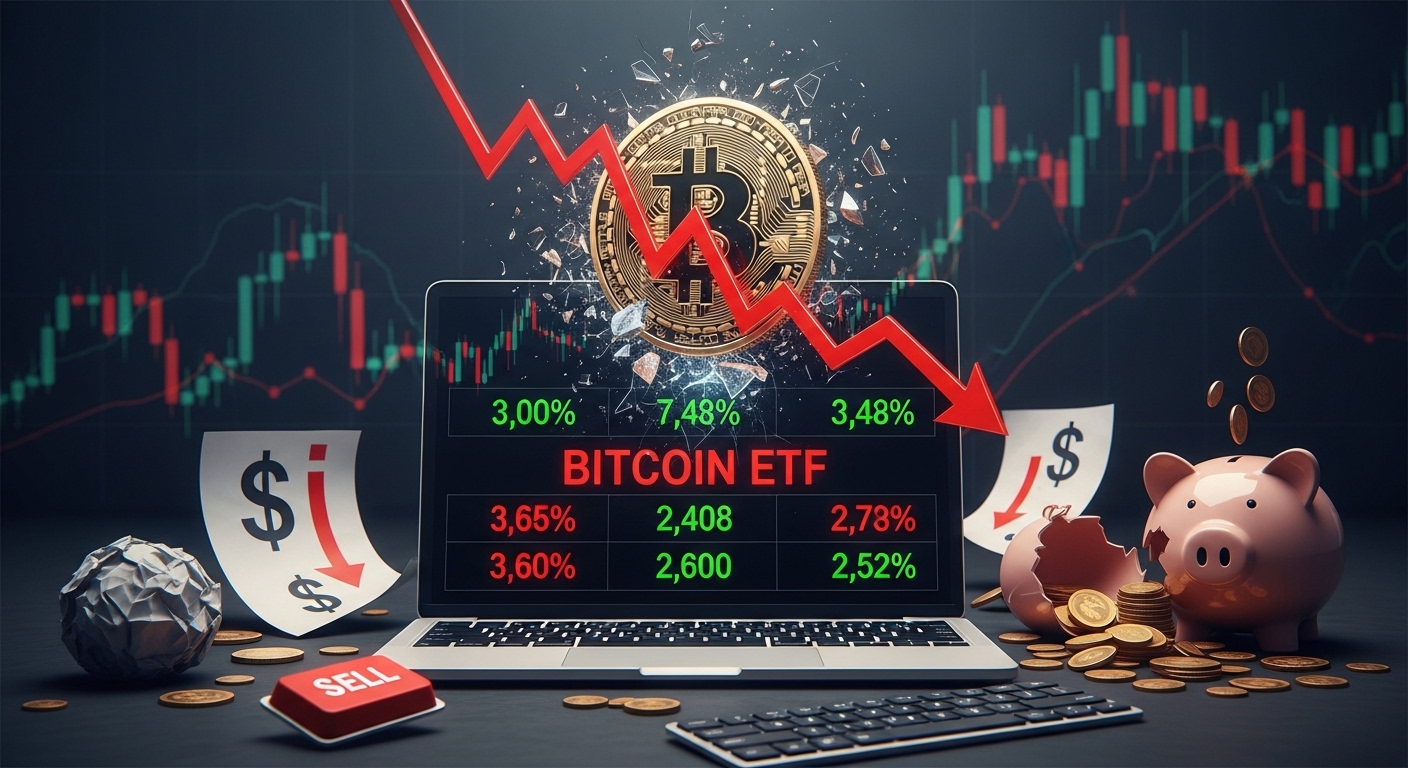
Bitcoin price plummet hits the charts, the same narrative resurfaces: “Crypto winter is back.” Red candles dominate screens, volatility spikes, and investors begin searching for signs of capitulation. One of the most closely watched signals in today’s market is ETF activity. With the rise of spot Bitcoin ETFs, institutional capital now flows in and out of the asset through regulated vehicles, making ETF flows a key sentiment indicator.
Recently, ETF flows have been down during this bitcoin price plummet. But declining inflows—or even periods of net outflows—do not automatically signal full-scale investor panic. Markets are more complex than a single metric, and ETF data must be interpreted in context. A temporary slowdown in inflows may reflect tactical repositioning, macro risk adjustments, or profit-taking rather than a systemic loss of confidence.
To understand whether this bitcoin price plummet signals a new crypto winter or simply a correction within a broader cycle, we need to examine ETF behavior, liquidity trends, market structure, macroeconomic conditions, and investor psychology together. Only then can we separate fear-driven headlines from measurable reality.
Bitcoin Price Plummet in Context
A bitcoin price plummet rarely occurs in isolation. In today’s interconnected financial system, digital assets are deeply influenced by macroeconomic forces such as interest rates, equity market performance, and global liquidity conditions. When stocks fall sharply or bond yields rise unexpectedly, high-volatility assets like Bitcoin often experience outsized moves.
This broader context matters because it reframes the meaning of declining ETF flows. If traditional markets are in a risk-off phase, asset managers may reduce exposure across the board. Bitcoin, viewed by many institutions as a high-beta risk asset, can experience outflows as part of routine portfolio rebalancing rather than panic liquidation.
Additionally, Bitcoin’s volatility profile has historically included deep corrections even within long-term bullish cycles. A bitcoin price plummet of 20%–30% has occurred multiple times in prior bull markets without transitioning into a prolonged crypto winter. The distinction lies not in the size of the drop, but in whether long-term participation collapses.
What “ETF Flows Are Down” Really Means
When headlines say ETF flows are down during a bitcoin price plummet, it can mean several different things. Daily net inflows may have slowed. Weekly totals could show negative numbers. Or cumulative inflows may be weaker than previous months. Each interpretation carries different implications.
Daily flows are volatile and can be driven by large single transactions. One institutional investor reducing exposure can skew the data for an entire session. Weekly trends offer more clarity, but even those can be influenced by short-term macro events or options expiry cycles.
Cumulative flows provide the broader picture. If net inflows remain positive over longer periods, even with intermittent outflows, it suggests that structural interest in Bitcoin persists. A true signal of crypto winter panic would require sustained, heavy redemptions over an extended period combined with collapsing trading activity and diminished market participation. In this bitcoin price plummet, ETF flows being “down” appears more consistent with caution than capitulation. The absence of aggressive inflows does not equate to mass abandonment.
ETF Outflows vs. Investor Capitulation
Investor capitulation has distinct characteristics. It typically involves emotional selling, forced liquidations, and widespread disengagement. Trading volumes spike initially as fear peaks, followed by prolonged inactivity. New investor participation declines sharply, and optimism disappears for months.
ETF outflows alone do not confirm that pattern. Institutional investors often adjust allocations incrementally. They may reduce exposure during volatility spikes and re-enter once markets stabilize. This measured behavior contrasts sharply with panic-driven exits. In fact, some periods within this bitcoin price plummet have shown stabilization in ETF activity rather than accelerating redemptions. That stabilization indicates a market searching for equilibrium—not spiraling into chaos.
Why ETF Flows Can Decline Without Signaling Crypto Winter
There are several reasons ETF flows may weaken during a bitcoin price plummet without indicating systemic panic. First, volatility management plays a major role. Institutional portfolios are frequently governed by volatility targets. When Bitcoin’s volatility rises, allocations are trimmed mechanically to maintain risk thresholds.
Second, correlation spikes during risk-off events. If equities fall sharply, Bitcoin often moves in tandem. Portfolio managers reducing overall risk exposure may trim crypto holdings as part of a broader adjustment strategy. Third, profit-taking occurs even in corrections. Investors who accumulated at lower prices may sell portions of their holdings into weakness to lock in gains or rebalance portfolios.
Fourth, capital rotation can temporarily reduce spot ETF demand. Investors may shift exposure toward derivatives, structured products, or alternative digital assets without exiting the crypto market entirely. These dynamics demonstrate why declining ETF flows during a bitcoin price plummet should not be automatically interpreted as panic.
Market Structure Signals Beyond ETF Flows\
To determine whether this bitcoin price plummet represents a correction or the beginning of crypto winter, it is important to analyze broader market structure indicators.
Liquidity Conditions
Liquidity determines how easily large transactions can be absorbed without dramatically impacting price. During periods of reduced ETF inflows, market depth can thin, making price swings more pronounced. Thin liquidity amplifies volatility but does not necessarily imply structural weakness. If liquidity stabilizes and order books deepen, it suggests that buyers remain present—even if they are waiting for more attractive entry points.
Derivatives and Leverage
Many bitcoin price plummet events are exacerbated by leverage in futures and perpetual swap markets. When prices fall, leveraged positions are liquidated, triggering cascading sell pressure. Once excessive leverage is flushed from the system, markets often stabilize. Monitoring funding rates, open interest, and liquidation volumes can provide more insight into panic conditions than ETF flows alone.
Long-Term Holder Behavior
Long-term holders are often the backbone of market resilience. If on-chain data shows that long-term investors are not aggressively selling into this bitcoin price plummet, the probability of sustained winter conditions declines. Historically, crypto winter periods involve eventual capitulation from long-term holders after prolonged downturns. The absence of that behavior suggests the current environment may still be cyclical rather than structural.
Macro Environment and Risk Appetite
Macro conditions play a powerful role in shaping ETF flows and price trends. Rising interest rates, geopolitical uncertainty, and equity market drawdowns can reduce appetite for speculative assets. When macro pressure drives a bitcoin price plummet, ETF flows may decline simply because capital is rotating toward safer assets. In such cases, Bitcoin is reacting to external forces rather than internal structural flaws.
If macro conditions stabilize—through easing inflation, policy shifts, or improved economic data—risk appetite often returns. ETF inflows can resume even if price has not fully recovered. Understanding this macro overlay is crucial to avoiding overreaction to short-term ETF flow data.
Is This a Correction or a Crypto Winter?
The difference between a correction and a crypto winter lies in duration, participation, and structural engagement. A correction typically involves sharp price declines followed by volatile consolidation. Institutional and retail participation continues, albeit cautiously. Infrastructure development, regulatory progress, and adoption trends remain intact. A crypto winter involves prolonged stagnation. Trading volumes shrink dramatically. Development slows. Investor enthusiasm disappears for extended periods.
In this bitcoin price plummet, the evidence so far points toward a correction rather than systemic winter conditions. ETF flows are down, but not collapsing. Institutional products remain active. Market infrastructure continues to function smoothly. That does not guarantee immediate recovery, but it suggests resilience rather than retreat.
Psychological Impact of a Bitcoin Price Plummet
Investor psychology often amplifies market narratives. Fear spreads faster than nuance. Headlines emphasizing outflows can intensify anxiety, even if underlying data remains moderate. Behavioral finance research shows that investors are more sensitive to losses than gains. A bitcoin price plummet can trigger loss aversion, leading to reactive decisions. However, experienced investors often interpret volatility differently. Rather than equating falling prices with failure, they assess structural signals and liquidity conditions. Understanding this psychological layer helps explain why ETF flows may fluctuate without signaling systemic panic.
What to Watch Going Forward
Looking ahead, several indicators can clarify whether this bitcoin price plummet evolves into something more serious. Stabilizing volatility would be a positive sign. Reduced liquidation cascades in derivatives markets would indicate leverage normalization. Gradual improvement in ETF flows—without dramatic inflows—would signal renewed confidence.
Additionally, steady network activity, developer engagement, and adoption metrics would reinforce the view that long-term fundamentals remain intact. If these indicators deteriorate simultaneously, concerns about crypto winter would strengthen. For now, mixed signals suggest consolidation rather than collapse.
Conclusion: Down Does Not Mean Done
This bitcoin price plummet has understandably shaken confidence. ETF flows are down, and volatility remains elevated. Yet declining inflows alone do not equal investor panic or a confirmed crypto winter. Markets are adaptive systems influenced by macro trends, liquidity cycles, and behavioral dynamics. ETF flows provide valuable insight, but they represent only one piece of a much larger puzzle.
So far, the broader data suggests caution—not capitulation. Bitcoin remains integrated into institutional portfolios, trading infrastructure is stable, and participation continues. Until sustained structural deterioration emerges, labeling this phase as crypto winter may be premature. In volatile markets, context matters more than headlines.
FAQs
Q: Why are ETF flows important during a bitcoin price plummet?
ETF flows indicate institutional capital movement. They provide insight into broader investor sentiment and allocation behavior during volatile periods.
Q: Does declining ETF inflow mean institutions are abandoning Bitcoin?
Not necessarily. Institutions often adjust exposure for risk management reasons. Reduced inflows can reflect portfolio rebalancing rather than panic selling.
Q: What defines a true crypto winter?
A crypto winter typically involves prolonged price stagnation, reduced trading activity, lower development engagement, and sustained investor disengagement.
Q: Can Bitcoin recover quickly after a sharp price drop?
Historically, Bitcoin has experienced rapid recoveries after corrections, particularly when macro conditions stabilize and leverage is reduced.
Q: What should investors focus on beyond ETF flows?
Investors should monitor liquidity conditions, derivatives positioning, macroeconomic trends, network activity, and long-term holder behavior to gain a comprehensive view of market health.
See More: Bitcoin Whales Sell 170K as Hong Kong Boosts Leverage
