

The market loves round numbers, but Bitcoin turns them into emotional events. Few levels carry as much psychological weight as $100,000, and right now the conversation across trading desks and social feeds is the same: is a six-figure Bitcoin price finally around the corner next week? This Bitcoin price analysis digs into what actually matters when BTC approaches a major milestone—how price behaves near key levels, where buyers tend to defend, where sellers tend to unload, and what catalysts can push momentum from “almost” to “breakout.”
In any Bitcoin price analysis, the most important idea is that price doesn’t move because everyone agrees. Price moves because liquidity meets urgency. When BTC sits just below a headline level like $100K, urgency rises on both sides. Bulls feel the pressure to buy before the breakout. Bears feel the pressure to sell into resistance or short the move. Meanwhile, long-term holders may trim into strength, and institutions may rebalance exposure. That collision often creates fast, noisy moves that can trick traders into chasing the wrong direction.
So, could BTC surge above $100K next week? It can, but the more useful question is whether it can break, hold, and convert that level into support. A clean breakout tends to be followed by acceptance—multiple strong closes, controlled pullbacks, and a decisive defense of the new support zone. A weaker breakout tends to be followed by rejection—sharp wicks, quick drops back below the level, and rising volatility that shakes out late buyers. This Bitcoin price analysis will walk through the trend, the technical structure, the role of liquidity and volatility, the influence of spot Bitcoin ETF demand, and realistic scenarios that can unfold over the next week.
Bitcoin Price Analysis: Current Trend and Market Structure
A strong Bitcoin price analysis starts by defining the current structure rather than guessing the next candle. BTC has been trading in a zone where the market is clearly aware of the $100K target, yet it’s also cautious enough to pause and consolidate. Consolidation near resistance is often bullish because it signals that sellers are not pushing price down aggressively, but it can also be dangerous because it invites leverage and crowding.
From a structural standpoint, the market tends to form one of two patterns below major resistance. The first is a tightening range with higher lows, suggesting buyers are stepping in earlier each dip. The second is a choppy top with repeated rejections, suggesting supply is absorbing demand. A helpful Bitcoin price analysis watches the quality of pullbacks. If dips are shallow and quickly bought, that’s a sign of bullish momentum. If dips deepen and bounce weakly, the market may be distributing.
It’s also worth noting that BTC often “tests” big levels more than once. The first test is frequently a liquidity event where both sides get trapped. The second test tends to be cleaner if the market has had time to reset leverage, rebuild bids, and establish a clearer support shelf below. This Bitcoin price analysis treats $100K as a zone that may require multiple attempts rather than a single straight-line move.
Bitcoin Price Analysis: Why $100K Is More Than a Number
In Bitcoin price analysis, round numbers act like magnets because they concentrate attention and orders. Traders place take-profit orders near them. Stop-loss orders cluster around them. Breakout buy orders sit just above them. That means once BTC approaches $100K, the order book often becomes a battlefield.

This is why “touching” $100K is not the same as “breaking” $100K. A quick spike above the level can happen purely because stops get triggered, but if buyers can’t hold the level afterward, the move can reverse hard. A disciplined Bitcoin price analysis looks for acceptance rather than excitement. Acceptance typically shows up as steady trading above the level, strong closes, and pullbacks that get bought without panic.
Bitcoin Price Analysis: The Role of Momentum in a Breakout Week
Momentum is not just a feeling; it’s behavior. In Bitcoin price analysis, momentum is visible when BTC repeatedly reclaims key levels after brief dips, when bounce attempts hold prior supports, and when rallies don’t immediately retrace. Momentum is also influenced by participation. If a breakout attempt is powered by thin liquidity and high leverage, it can fail quickly. If it’s supported by spot buying and steady demand, it tends to be more durable.
A breakout week often features expanding ranges. That means BTC can move sharply intraday even if the daily close looks calm. This Bitcoin price analysis expects volatility to rise as $100K comes into focus, which is why patience and risk management matter more than prediction.
Bitcoin Price Analysis: Key Support and Resistance Levels
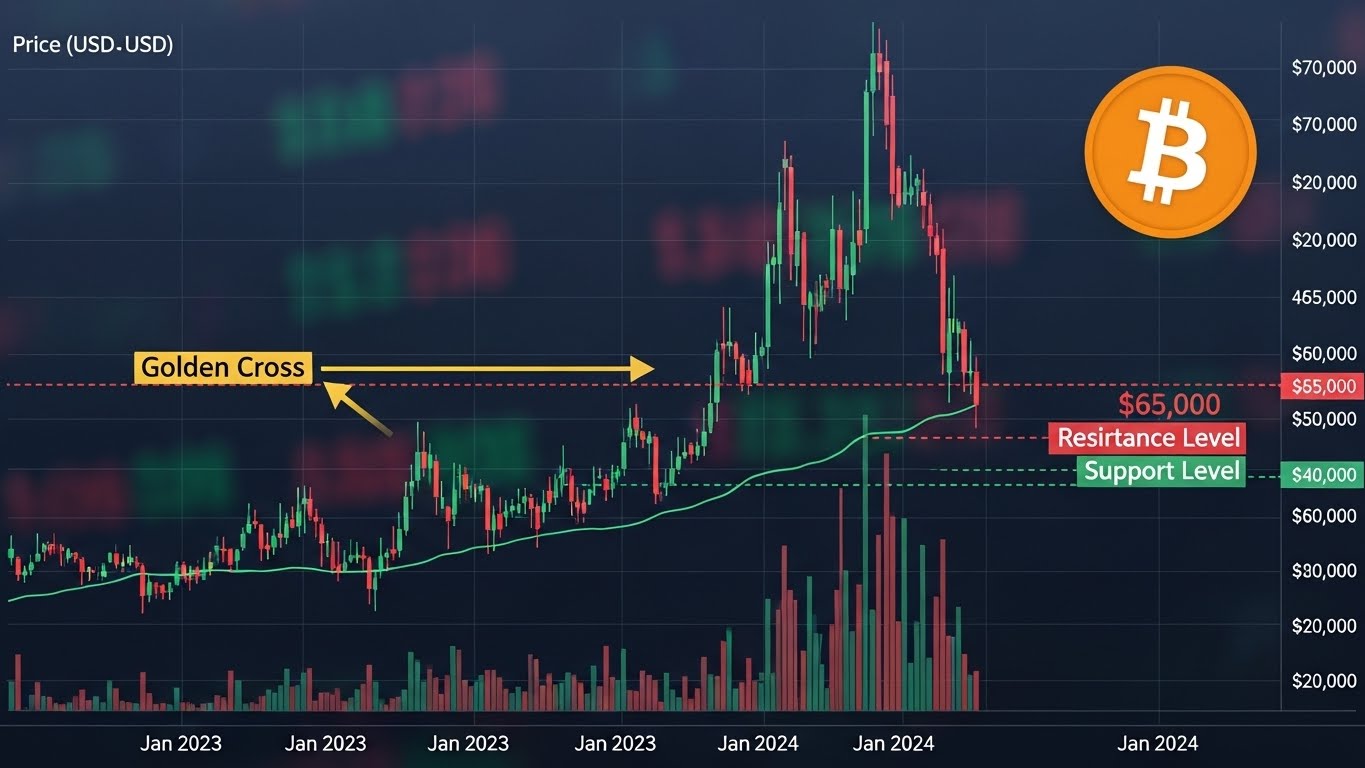
Every Bitcoin price analysis needs a clear map of levels where the market has previously reacted. The exact numbers vary by exchange and timing, but the logic remains consistent: support is where buyers previously proved themselves, and resistance is where sellers previously overwhelmed demand.
The nearest support zone is the area BTC has been defending during consolidation. If price keeps holding above that zone, the market maintains a bullish posture and keeps the $100K breakout scenario alive. If price loses that zone and fails to reclaim it, the market often slides to the next support shelf where bids are thicker.
On the upside, resistance typically forms first at recent swing highs, then at the psychological milestone. For this Bitcoin price analysis, the most important resistance is $100K, but it’s not the only one. The upper $90Ks often act as a “pre-wall” where early profit-taking begins and where bears attempt to stop the advance before the headline level.
Bitcoin Price Analysis: Support Zones That Could Define Next Week
Support is where the breakout narrative survives or collapses. In this Bitcoin price analysis, the first key support is the consolidation base beneath the upper $90Ks. If BTC keeps bouncing from that base and printing higher lows, it signals demand is persistent. If BTC breaks below it and closes weakly, the market may seek a deeper reset.
A deeper reset isn’t necessarily bearish long term. Bitcoin often needs to cool off to build stronger foundations. If a pullback happens, the next support zone becomes crucial. A strong defense there can create the energy needed for a later breakout attempt, sometimes even within the same month.
Bitcoin Price Analysis: Resistance Zones and Breakout Triggers
Resistance is where narratives are tested. In Bitcoin price analysis, the best breakout triggers usually involve more than a single spike. Traders often look for a strong daily close near the top of the range, followed by a continuation move that holds above the breakout level.
For $100K specifically, a convincing breakout may include a clean push through the level, limited rejection wicks, and a pullback that finds buyers near $100K rather than collapsing far below it. If the first push fails, the market may still remain bullish, but the timeline for $100K “next week” becomes less likely.
Bitcoin Price Analysis: Volume, Liquidity, and Volatility Signals
Many traders focus only on price, but a better Bitcoin price analysis includes how price is moving. Liquidity determines whether BTC can travel smoothly or whether it will whip violently. When liquidity is thinner, moves become sharper and more prone to fakeouts. When liquidity is deeper, trends can persist with less drama.
Volatility typically increases near major milestones because traders crowd into the same idea. That doesn’t automatically mean a crash. It means larger swings become normal. A breakout attempt can include a sharp rally, a sharp pullback, and then a renewed push—sometimes within hours. A useful Bitcoin price analysis expects this behavior and avoids treating every dip as “the end” or every pump as “confirmation.”
Another important concept is liquidity pockets. Markets often move from one pocket to the next. If BTC clears one resistance zone, it can accelerate rapidly toward the next because there are fewer orders in between. The same is true on the downside. If a key support breaks, price can drop quickly until the next cluster of bids appears.
Bitcoin Price Analysis: What Healthy Volatility Looks Like
Healthy volatility in Bitcoin price analysis usually means dips are bought with strength and rallies do not instantly reverse. If BTC surges and then consolidates near the highs, that’s often constructive. If BTC surges and then dumps below the breakout zone, that’s a warning sign.
Traders should also watch for “range expansion without progress.” If BTC swings wildly but fails to make higher highs or hold new levels, the market may be exhausting itself. In contrast, steady upward movement with controlled pullbacks suggests the trend has support.
Bitcoin Price Analysis: ETF Demand and Institutional Positioning
One of the biggest structural changes in recent years is the growing influence of institutional access through products like the spot Bitcoin ETF. A modern Bitcoin price analysis can’t ignore that these vehicles can support spot demand in a way that differs from short-term derivatives speculation.
Institutional positioning tends to be less emotional than retail, but it is not passive. Funds rebalance. Allocations shift. Some participants buy strength when a trend confirms, while others sell into strength to lock profits. That means $100K can trigger both buying and selling from institutions depending on mandates and timing.
A key point in this Bitcoin price analysis is that sustained demand tends to create sustained trends. If spot demand remains consistent, BTC is more likely to grind upward and convert resistance into support. If demand is inconsistent and rallies rely mostly on leverage, the market is more vulnerable to sudden liquidations and reversals.
Bitcoin Price Analysis: Why Institutions Often Sell Into Breakouts
It sounds counterintuitive, but in Bitcoin price analysis, big breakouts are often where some institutions reduce risk. If a fund bought earlier, a surge toward $100K may be a natural place to take partial profits or rebalance exposures. That selling pressure doesn’t mean the trend is dead; it means the market must absorb supply before moving higher.
This is another reason acceptance above $100K matters. If BTC can absorb selling near the milestone and still hold the level, it suggests new demand is strong enough to replace profit-taking. That’s how major levels turn into long-term supports.
Bitcoin Price Analysis: Macro Backdrop and Narrative Catalysts
Bitcoin doesn’t trade in a vacuum. A complete Bitcoin price analysis considers the broader macroeconomic outlook, risk appetite, and the narratives that dominate market psychology. When global markets are risk-on, BTC often benefits because investors are more willing to buy volatile assets. When global markets turn risk-off, BTC can face pressure as traders reduce exposure.
Narratives also matter in the short term. Headlines about regulation, adoption, security, or technological change can shift sentiment quickly, especially near major technical levels. Even if the fundamentals haven’t changed, the emotional response can move price temporarily. That’s why this Bitcoin price analysis emphasizes structure and confirmation rather than chasing every headline.

If the broader environment supports risk assets and BTC remains technically strong, $100K becomes more plausible next week. If risk sentiment deteriorates or uncertainty spikes, BTC may struggle to sustain a breakout attempt even if it briefly touches the level.
Bitcoin Price Analysis: The Importance of Timing Near Big Levels
Timing is underestimated in Bitcoin price analysis. BTC can be “bullish” and still fail to break $100K next week because markets often require time to build liquidity and conviction. If BTC spends the week consolidating tightly, that can be bullish even without a breakout. The breakout may simply be delayed until the setup is fully mature.
This is why traders should avoid anchoring to a single date. The market doesn’t owe anyone a breakout on a schedule. A better Bitcoin price analysis treats next week as a window of heightened probability, not a promise.
Bitcoin Price Analysis: Three Realistic Scenarios for Next Week
Scenario planning is the most practical approach in Bitcoin price analysis. Rather than predicting one outcome, you map what needs to happen for each outcome and watch which path the market chooses.
Bitcoin Price Analysis Scenario 1: Clean Break Above $100K and Hold
In the bullish scenario, BTC maintains its consolidation base, prints higher lows, and pushes through the upper $90Ks with strength. A breakout above $100K follows with solid closes, not just intraday spikes. The market then retests $100K as support and buyers defend it. If this happens, the narrative can shift quickly from “will it break?” to “how far can it run?” because confidence rises and sidelined capital often returns.
This Bitcoin price analysis views that retest as the key confirmation. Without it, the move is more vulnerable to reversal.
Bitcoin Price Analysis Scenario 2: Breakout Attempt, Sharp Rejection
In the second scenario, BTC spikes above $100K but fails to hold. Sellers step in aggressively, profit-taking accelerates, and late buyers get trapped. Price falls back below the milestone and drifts toward the consolidation support zone.
This outcome is common in Bitcoin price analysis around major round numbers. It doesn’t automatically signal a bear market. It often signals that the market needs more time, more liquidity, and a cleaner base before trying again.
Bitcoin Price Analysis Scenario 3: Pullback First, Breakout Later
In the third scenario, BTC breaks down from the consolidation range, triggering a pullback to a deeper support zone. That pullback resets leverage and cools sentiment. If buyers defend the lower support and BTC quickly recovers, the market can still set up a breakout attempt later—sometimes with more strength than the first attempt because the base becomes stronger.
This Bitcoin price analysis considers this a healthy possibility, especially if the market has become crowded and overconfident. Pullbacks can be constructive when they end with strong buying and higher-lows structure.
Bitcoin Price Analysis: What Traders and Investors Should Watch
Different strategies require different priorities. A short-term trader may focus on key intraday levels, volatility spikes, and breakout confirmation. A long-term investor may focus on trend structure, adoption narratives, and whether BTC remains above major support zones on higher timeframes.
Still, both groups benefit from the same core lessons from Bitcoin price analysis. Confirmation beats prediction. Support and resistance matter because they reflect real positioning. Risk management matters because BTC can move faster than most assets. And the $100K level matters because it is a psychological event that can trigger both euphoria and fear.
The market will likely be noisy next week. That noise doesn’t mean the trend is broken. It means the market is processing a major milestone. If BTC holds strong supports and continues to build higher lows, the breakout case remains valid even if the exact day shifts.
Conclusion
This Bitcoin price analysis suggests a move above $100K next week is possible, but the outcome depends on whether BTC can convert the milestone into support rather than treating it as a temporary peak. The healthiest bullish path involves steady consolidation, a decisive push through resistance, and acceptance above $100K with controlled pullbacks. The most common risk is rejection—an emotional spike followed by a sharp reversal—especially if the move is driven by leverage rather than sustained demand.
The clearest takeaway from this Bitcoin price analysis is simple: watch the structure. If BTC keeps defending its base and building higher lows, the market is preparing for another push. If BTC loses key support and fails to reclaim it, a pullback becomes more likely, and the $100K breakout may be delayed. Either way, the $100K zone is likely to produce high volatility and high opportunity for disciplined participants.
FAQs
Q: What is the strongest signal that $100K will break next week?
In Bitcoin price analysis, the strongest signal is a series of higher lows beneath resistance combined with strong daily closes near the top of the range. That structure shows buyers are stepping in earlier and sellers are failing to push price down meaningfully.
Q: If BTC hits $100K intraday, is that confirmation of a breakout?
Not necessarily. Bitcoin price analysis typically treats intraday spikes as noise unless the market holds the level and closes strong. Confirmation usually requires acceptance above $100K and a successful retest that turns the milestone into support.
Q: Why do big round numbers like $100K cause sharp reversals?
Bitcoin price analysis explains this through order clustering and psychology. Profit-taking often increases near round numbers, and stop orders can trigger sudden moves. That combination creates volatility and can produce fakeouts in both directions.
Q: How does a spot Bitcoin ETF influence the breakout chances?
A spot Bitcoin ETF can support consistent spot demand, which tends to make trends more durable. In Bitcoin price analysis terms, sustained spot demand helps price absorb selling pressure near resistance and improves the odds of holding above key levels.
Q: What should I watch if BTC rejects $100K?
In Bitcoin price analysis, watch the nearest support zone and how BTC reacts there. A quick recovery and strong bounce can keep the bullish setup intact. A weak bounce and repeated failures to reclaim prior support can signal a deeper pullback or longer consolidation.
See More: Bitcoin Correlates Strongly With Institutional Demand After 7% Rise
