

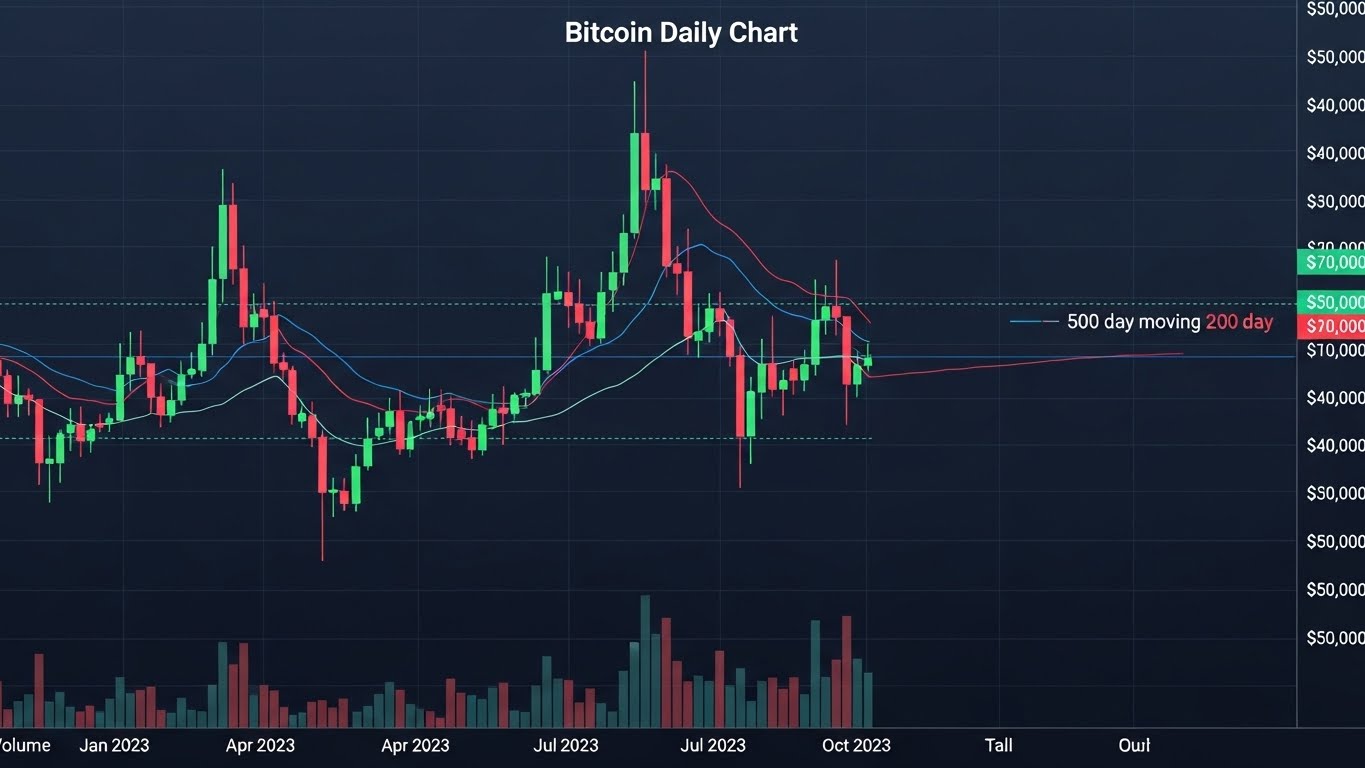
The Bitcoin December 8 daily chart is sending a clear message to traders and investors: the BTC price downtrend has stalled out, at least for now. After days or even weeks of persistent selling, red candles and fading confidence, the market has finally reached a point where the bears are no longer fully in control. Instead of another deep leg lower, Bitcoin is printing smaller candles, longer wicks and a pattern that suggests indecision rather than aggressive downside.
This kind of pause in a Bitcoin price downtrend is important. It can mark the early stages of a bottoming process, a simple consolidation before another wave of selling, or the calm before a strong reversal rally. On December 8, the daily chart is telling a nuanced story: sellers are losing momentum, buyers are quietly defending key support zones and volatility is cooling, even if the overall trend is not yet fully bullish.
In this detailed, easy-to-read analysis, we will break down what it means for a downtrend to stall, how to interpret the Bitcoin daily chart, which technical signals matter most, and what scenarios traders should keep in mind as they plan their next moves. The goal is a human-written, SEO-optimized article that explains everything clearly without overwhelming jargon, while naturally using key phrases like Bitcoin daily chart, BTC price, crypto market, support and resistance, and trend reversal.
Recent Bitcoin price action into December 8
From heavy selling to sideways hesitation
To understand the December 8 daily chart alert, it helps to zoom out and look at what happened before. For a stretch of time leading up to this date, the BTC USD pair was clearly in a downtrend. Daily candles were often red, lower highs and lower lows formed on the chart and each bounce seemed to run out of steam more quickly than the last. This is classic bearish structure, and it tends to drain confidence from short-term traders and late buyers.
However, as the downtrend extended, something changed. The daily candles began to shrink in size. The closes were no longer making aggressive new lows. Long lower wicks started to appear as dips were being bought, even if the price did not explode higher immediately. This shift from decisive downward moves to more sideways, choppy action is often the first sign that sellers are becoming exhausted.
By the time we reach the Bitcoin December 8 daily chart, the once-powerful downtrend now looks tired. The price may still be below key moving averages and major resistance levels, but it is no longer slicing through supports with ease. Instead, it is hovering in a zone where both bulls and bears are testing each other without a clear winner.
What it means for the downtrend to “stall out”
When we say the Bitcoin price downtrend stalls out, we do not mean that the market has suddenly become bullish or that a new uptrend is guaranteed. Rather, it means that the previous pattern of consistent lower lows and strong selling has paused. The market has entered a phase of indecision, where neither side is fully dominant.
On the December 8 daily chart, a stalled downtrend can show up in several ways. The daily candle may appear as a small-bodied bar with wicks on both ends, hinting at a tug-of-war. The price might be bouncing repeatedly off a horizontal support area. Volume may be lower, suggesting that both buyers and sellers are trading more cautiously.
This pause is important because trends rarely reverse in one dramatic move. Often, there is a transitional period where momentum slows, volatility narrows and the chart forms a base or a consolidation range. That is exactly what the Bitcoin December 8 daily chart alert is highlighting: the downtrend’s power has faded, and the market is searching for its next direction.
Reading the Bitcoin December 8 daily chart
Candlestick clues: indecision and rejection wicks
Candlestick patterns are one of the simplest but most effective tools for understanding the Bitcoin daily chart. Around December 8, the most notable feature might be the size and shape of the candles compared to the earlier part of the downtrend. During strong selling, daily candles are often long and mostly filled, with closes near the lows of the day. As the BTC price downtrend stalls, candles shrink, upper and lower shadows become more visible and closes tend to return toward the middle of the candle range. This suggests that even if sellers push the price down intraday, buyers are stepping in and pushing it back up before the close.
Long lower wicks on the December 8 daily candle can be particularly telling. They say that when Bitcoin dips to certain levels, demand increases. Traders who missed earlier entries, or long-term holders looking to accumulate, see those lows as attractive. Even if the candle ends slightly lower than the previous day, the presence of those wicks signals that not all participants agree with the bearish narrative anymore.
Support and resistance zones shaping price behavior
Another essential aspect of the Bitcoin December 8 daily chart is the horizontal structure of support and resistance. When a downtrend stalls, it often happens near a previously established demand zone. This might be a region where the price bounced in the past, an area that saw heavy volume, or a level connected to round numbers that traders watch closely.
On the chart, support is visible as a floor where multiple candles have tested similar lows without breaking significantly lower. Each time the price approaches that level, buyers reappear. The fact that the BTC price has been holding this area in early December is one of the reasons the downtrend has lost momentum.
Resistance, on the other hand, is the ceiling that price must eventually break to confirm a stronger recovery. On or around December 8, the daily chart might show Bitcoin trapped between a solid support below and a series of lower highs and resistance above. This creates a range-bound environment where a stalled downtrend can evolve into either a reversal or a continuation, depending on which side breaks first.
Technical indicators supporting the stall in the downtrend
Moving averages starting to flatten
Moving averages are widely used on the Bitcoin daily chart to identify the direction and strength of trends. In a sharp downtrend, shorter-term moving averages like the 10-day or 20-day line slope clearly downward and often act as dynamic resistance. Price struggles to trade above them for long. As the BTC price downtrend stalls out around December 8, these moving averages may begin to flatten.
Instead of pointing steeply lower, they curve sideways. Price might start to close above shorter-term averages occasionally, even if it remains below longer-term measures such as the 50-day or 200-day line. This subtle change reflects a market where selling pressure is no longer overwhelming. A flattening moving average is not a buy signal by itself, but in combination with a clear support zone and fading downside momentum, it adds weight to the idea that the worst of the current leg lower could be behind us.
Momentum and RSI showing signs of fatigue
Another common tool in Bitcoin technical analysis is the Relative Strength Index, or RSI. During intense selloffs, the RSI often drops into oversold territory, signaling that the market has become stretched to the downside. If the RSI then starts to rise while price makes similar or only slightly lower lows, this can create bullish divergence.
On the December 8 daily chart, an RSI that has stopped making new lows and is beginning to tick higher is a classic sign that the bearish momentum is fading. Even if the BTC USD price itself has not exploded upward yet, momentum indicators tell us that each new push down is weaker than the last. This internal weakening of the downtrend is exactly what traders look for when trying to identify a potential turning point. It does not guarantee a reversal, but it tells you that the prior bearish energy is no longer as dominant.
Bitcoin Volume patterns: selling dries up, interest normalizes
Volume is the fuel of any trend. In a strong Bitcoin downtrend, heavy volume accompanying big red candles often indicates panic, forced liquidation or aggressive shorting. As the decline ages, volume typically shrinks, suggesting that sellers are less eager and that forced exits have slowed.
Around December 8, the daily chart may show lower overall volume compared to the earlier part of the move. This is consistent with a stalling trend. The market is no longer dominated by emotional selling. Instead, a more balanced mix of cautious buyers and cautious sellers is trading within a range.
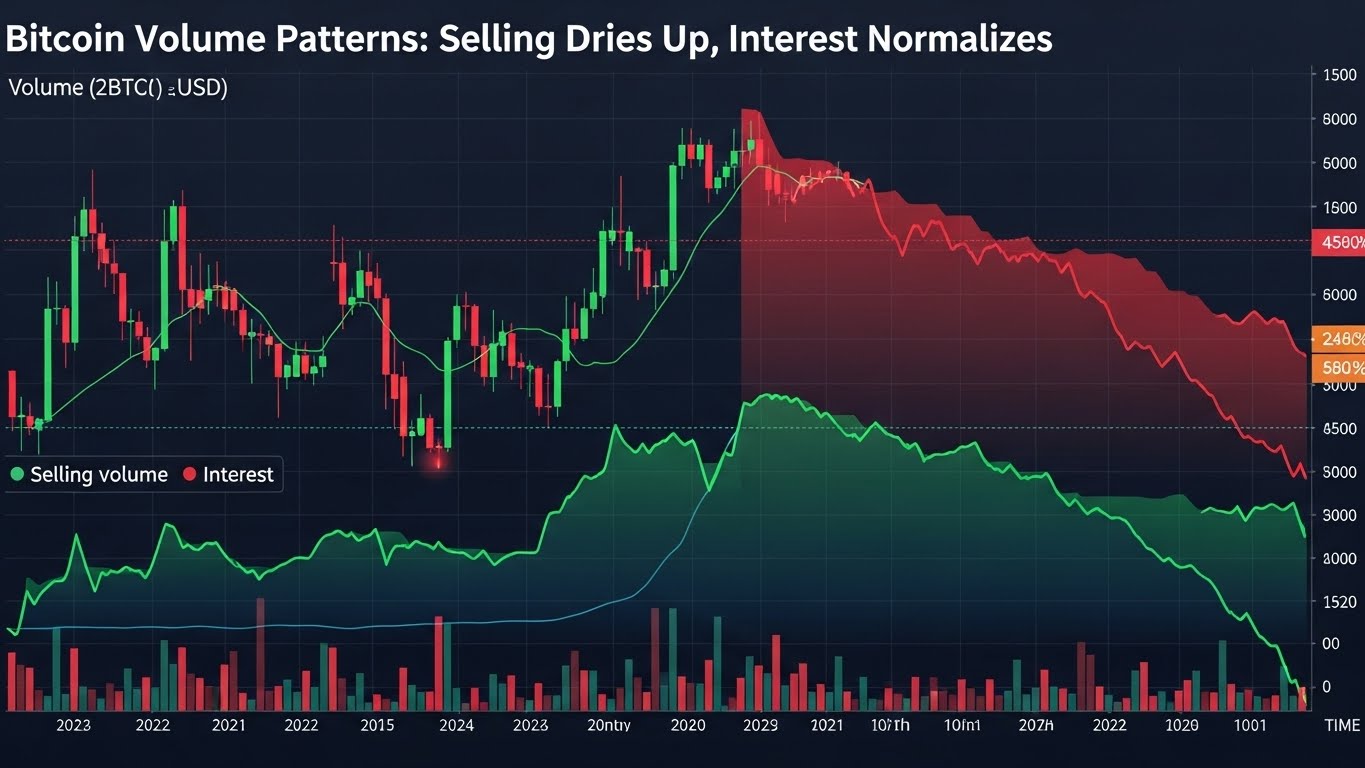
Later, a decisive move out of this range with increased volume can confirm the next major direction. If a breakout above resistance appears with strong volume, it adds credibility to a Bitcoin trend reversal. If a breakdown below support occurs with heavy trading, it suggests the downtrend has resumed.
Possible scenarios after a stalled Bitcoin downtrend
Scenario one: a gradual bullish reversal
One scenario following the Bitcoin December 8 daily chart alert is a gradual bullish reversal. In this path, Bitcoin continues to defend support, prints a series of higher lows and eventually breaks above nearby resistance levels. Over time, moving averages cross or slope upward, and the RSI stabilizes in a healthier range. This kind of reversal usually does not feel dramatic in the beginning.
It often starts with skepticism, choppy price action and frequent pullbacks. However, as the pattern of higher highs and higher lows becomes clearer on the daily chart, more participants accept that the downtrend has ended. In this scenario, the stalled downtrend around December 8 would be remembered as the early warning sign that bears had lost control of the market.
Scenario two: a continuation of the broader bearish trend
Another possibility is that the stalled downtrend is only a pause, not a true turning point. In this case, the sideways structure around December 8 acts as a temporary consolidation or “bear flag” within a larger bear market. Price may trade within the range for some time, giving traders hope that a bottom is forming.
However, if macro news turns negative, liquidity tightens again, or large sellers step back into the market, Bitcoin could eventually break below support on strong volume. That breakdown would invalidate the idea of the stall as a base and confirm that the bears still have more work to do. Recognizing this scenario means respecting risk and not assuming that every pause in a downtrend automatically leads to a sustained recovery.
Scenario three: prolonged consolidation and sideways range
The third scenario is neither clearly bullish nor clearly bearish. Bitcoin might remain stuck in a broad sideways consolidation range for weeks. Price oscillates between support and resistance, frustrating both aggressive bulls and aggressive bears. This can happen when the market is waiting for new information, such as major regulatory updates, macroeconomic events or upcoming Bitcoin halving cycles.
During this phase, the December 8 daily chart stall becomes part of a larger pattern of range-bound trading, where breakouts fail and false moves are common. For patient investors, this can be a time to accumulate slowly or to simply observe. For emotional traders, it can be a period of chop that encourages overtrading and unnecessary losses.
Practical strategies for traders and investors
Putting risk management before prediction
When the Bitcoin daily chart shows a stalled downtrend, it is tempting to jump into trades based on the hope of catching the exact bottom. However, the most important strategy is still risk management, not prediction. Setting clear invalidation levels beneath local support gives structure to your decisions. If the BTC price drops decisively below the zone that has been holding on December 8, it may signal that the stall has failed and that downside risk is rising again. Accepting small, manageable losses is healthier than holding onto an idea that the market is rejecting. Position sizing is another key part of risk management. When the trend is unclear, smaller positions can make sense until the next major move becomes more obvious on the chart.
Using daily chart levels for entries and exits
The December 8 daily chart provides natural levels for potential entries and exits. Support areas where price has bounced multiple times can serve as zones to consider long positions, especially if they align with technical indicators like RSI divergence or flattening moving averages.
Similarly, resistance zones above current price can serve as logical targets for profit-taking or areas where traders may tighten stops. This approach respects the objective information on the chart and avoids emotional decisions based purely on headlines or social media sentiment. By combining support and resistance with a clear understanding of the stalled downtrend, traders can build structured plans instead of reacting impulsively.
Combining technicals with fundamentals and sentiment
Finally, the best Bitcoin trading and investing strategies often combine chart-based signals with a broader view of fundamentals and sentiment. Technicals tell you what the price is doing, while fundamentals and sentiment help explain why. For example, if on-chain data, macroeconomic conditions and institutional interest all look constructive, a stalled downtrend on the daily chart may carry more weight as a potential reversal signal.
If the macro environment looks fragile and negative headlines dominate, the same stalled structure may be more likely to resolve in another leg down. By integrating multiple perspectives, traders and investors are better equipped to interpret the Bitcoin December 8 daily chart alert in context rather than in isolation.
Conclusion
The message from the Bitcoin December 8 daily chart is clear: the price downtrend has stalled out, and the character of the market has changed. Instead of one-way selling and cascading lower lows, Bitcoin is now trading in a more balanced, hesitant manner. Support zones are holding, momentum indicators are showing fatigue in the bears and the battle between bulls and bears has shifted from panic to negotiation.
This does not guarantee a straight-line recovery or a new all-time high. It simply tells us that the intense phase of the current downtrend has likely ended and that the next chapter is about to be written. Whether that chapter is a bullish reversal, a continuation of the broader bearish move or an extended period of sideways consolidation will depend on how price reacts to support and resistance, how volume behaves and how macro and sentiment factors evolve.
For traders and long-term holders, the key is to treat the December 8 daily chart alert as valuable information, not a promise. Respect the signals that the downtrend is losing power, but also respect the risk that the market is still vulnerable to shocks. With a clear strategy, careful risk management and a calm mindset, this stalled downtrend can be navigated thoughtfully instead of fearfully.
FAQs
Q: What does it mean that the Bitcoin December 8 downtrend has “stalled out”?
It means that the strong pattern of lower lows and heavy selling has slowed. The Bitcoin daily chart is now showing smaller candles, more sideways movement and stronger support. Bears are no longer pushing price down with the same intensity, and the market has entered a more balanced and indecisive phase.
Q: Does a stalled downtrend guarantee a trend reversal?
No, a stalled downtrend is not a guarantee of a bullish reversal. It is an early signal that the previous bearish momentum has weakened. The market could still move in three main directions: a sustained recovery, another leg down after consolidation or an extended sideways range. Confirmation usually comes when price breaks decisively above resistance or below support with strong volume.
Q: How can I use the December 8 daily chart levels in my trading?
You can use the support and resistance zones visible around December 8 as reference points for entries, exits and stop-loss levels. Support areas that have held multiple times can serve as potential buying zones if other signals align. Resistance areas can be used as profit targets or places to tighten risk. Always combine these levels with proper risk management.
Q: Which technical indicators help confirm that the downtrend is weakening?
Common indicators include moving averages, RSI and volume. Flattening or turning moving averages, rising RSI after oversold conditions and slowing sell volume all support the idea that the Bitcoin downtrend is losing strength. None of these tools are perfect alone, but together they can paint a clearer picture of trend health.
Q: How should long-term investors react to this daily chart alert?
Long-term investors may see the December 8 daily chart alert as a sign that the worst of the current leg down could be passing. Instead of trying to time every short-term move, they can focus on their broader thesis about Bitcoin’s role as digital gold, a store of value and a key part of the crypto ecosystem. Some may choose to accumulate gradually during periods of consolidation, while keeping an eye on macro trends and major support levels.
