

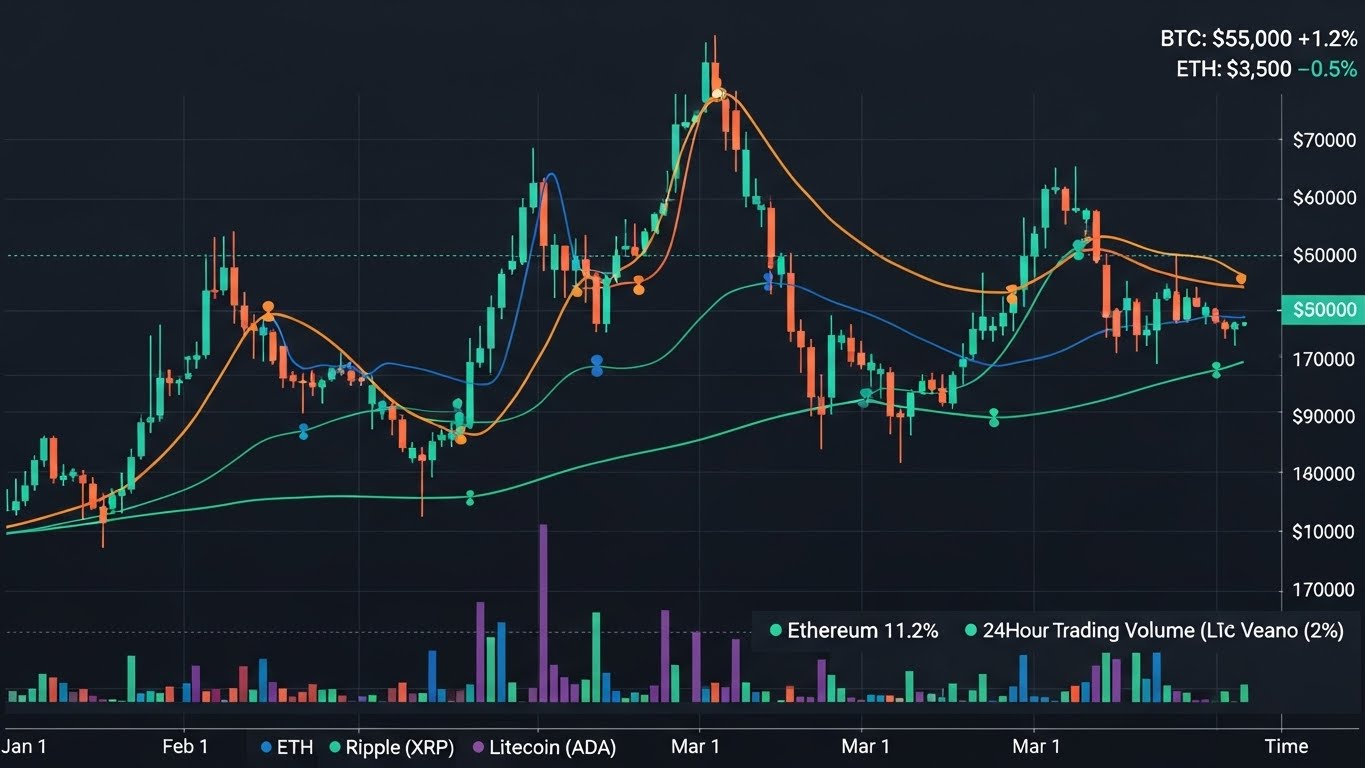
The cryptocurrency market is often described as a battleground between stories and statistics. On one side are powerful narratives: Bitcoin as digital gold, Ethereum as the world computer, meme coins as community revolutions, and new sectors promising to reshape finance or the internet itself. On the other side is reality, shaped by liquidity, macroeconomics, adoption metrics, and human behavior. For anyone trying to understand why Bitcoin and altcoin prices rise and fall, separating narratives from reality is one of the most important — and most difficult — challenges.
Crypto markets move fast, and narratives spread even faster. A single tweet, headline, or viral chart can ignite a rally or spark a sell-off. Yet behind every dramatic price move are deeper forces at work, often invisible to casual observers. While narratives provide the language investors use to explain price action, they are rarely the sole drivers. Instead, price movements emerge from the interaction between belief, capital flows, market structure, and broader economic conditions.
This article explores the tension between narratives versus reality in crypto markets and answers a critical question: what really drives Bitcoin and altcoin prices? By examining historical cycles, investor psychology, macroeconomic forces, and on-chain fundamentals, we aim to clarify how stories influence markets — and when reality ultimately takes control. Understanding this balance can help investors avoid hype-driven mistakes and develop a more grounded view of crypto price behavior.
The Power of Narratives in Crypto Markets
Why Narratives Matter So Much in Crypto
Narratives play an outsized role in cryptocurrency markets compared to traditional finance. This is largely because crypto is still a young and evolving asset class. Without centuries of valuation models or universally accepted frameworks, investors rely heavily on stories to justify why an asset should be worth more tomorrow than it is today.
Bitcoin’s origin story as a response to the global financial crisis gave birth to the digital gold narrative, framing it as a hedge against inflation and monetary debasement. Altcoins followed with their own narratives, from smart contracts and decentralized finance to NFTs, gaming, and artificial intelligence. These stories give meaning to price movements and help investors rationalize risk.
Narratives also reduce complexity. Explaining price action through a simple story is more emotionally satisfying than analyzing liquidity conditions or derivatives markets. As a result, narratives often become the dominant explanation for why Bitcoin and altcoin prices move, even when the reality is far more nuanced.
How Narratives Spread and Gain Momentum
Crypto narratives spread rapidly through social media, influencers, and online communities. Platforms like X, YouTube, and Telegram amplify certain themes until they feel undeniable. Once a narrative gains traction, it can attract speculative capital, creating a feedback loop where rising prices appear to validate the story.
However, this momentum can be fragile. When expectations outrun reality, narratives collapse just as quickly as they form. Understanding this dynamic is essential to grasping why crypto markets are so volatile.
The Reality Behind Bitcoin Price Movements
Bitcoin and Macro Liquidity
Despite popular belief, Bitcoin does not move in isolation. One of the most powerful drivers of Bitcoin price is global liquidity. When central banks inject liquidity into the financial system, risk assets tend to perform well — and Bitcoin is no exception. Conversely, when liquidity tightens, Bitcoin often struggles regardless of how strong its narrative may be.

This reality challenges the idea that Bitcoin’s price is driven purely by ideology or adoption. While long-term believers may focus on scarcity and decentralization, short- to medium-term price action often reflects broader macroeconomic trends such as interest rates, inflation expectations, and currency strength.
Supply, Demand, and Market Structure
Bitcoin’s fixed supply is a core part of its narrative, but supply alone does not determine price. What matters is the interaction between available supply and active demand. Exchange balances, long-term holder behavior, and derivatives positioning all influence how price responds to changes in sentiment.
Market structure also plays a critical role. Leverage, liquidations, and algorithmic trading can amplify moves in either direction. These mechanics operate independently of narratives, yet they often determine whether a price move becomes a trend or a brief spike.
Altcoin Prices: Where Narratives Are Even Stronger
Utility Versus Speculation
Altcoins are particularly narrative-driven because many lack established cash flows or clear valuation models. Instead, their prices are often justified by future potential rather than current utility. This makes them highly sensitive to shifts in sentiment.
For example, during periods when innovation narratives dominate, altcoins tied to emerging sectors can experience explosive growth. However, when market conditions change, these same assets can lose value rapidly, revealing the gap between narrative promise and actual adoption.
Understanding this dynamic helps explain why altcoin prices often outperform Bitcoin during speculative phases and underperform during risk-off environments.
The Role of Bitcoin Dominance
Bitcoin dominance is a key indicator of how capital flows between Bitcoin and altcoins. When confidence in the broader market is high, capital tends to rotate into altcoins in search of higher returns. When uncertainty rises, capital often flows back into Bitcoin or exits the market entirely.
This rotation is less about narratives and more about risk management. While narratives may explain why a particular altcoin is popular, reality determines whether investors are willing to allocate capital to higher-risk assets.
Investor Psychology and Behavioral Forces
Fear, Greed, and Herd Behavior
Human psychology is one of the most underrated drivers of crypto prices. Fear and greed shape decision-making, often overriding rational analysis. When prices rise, investors fear missing out. When prices fall, fear of loss takes over.
Narratives amplify these emotions by providing justification for impulsive behavior. A bullish story encourages greed, while a bearish one reinforces fear. In reality, markets often move first, and narratives are created afterward to explain what already happened.
Confirmation Bias in Crypto Investing

Confirmation bias leads investors to seek information that supports their existing beliefs. In crypto, this often means embracing narratives that align with one’s portfolio. While this can strengthen conviction, it also increases vulnerability to sudden reversals when reality contradicts expectations. Recognizing this bias is crucial for anyone trying to understand what really drives Bitcoin and altcoin prices over time.
On-Chain Data: A Window Into Reality
What On-Chain Metrics Reveal
On-chain data offers a more objective view of market behavior. Metrics such as active addresses, transaction volume, long-term holder supply, and realized profits provide insight into how Bitcoin and altcoins are actually being used.
These indicators often diverge from popular narratives. For instance, price may rise on hype while on-chain activity stagnates, suggesting a speculative bubble. Conversely, growing on-chain usage during price consolidation can signal accumulation and long-term strength.
Long-Term Holders Versus Short-Term Speculators
One of the clearest realities in crypto markets is the distinction between long-term holders and short-term traders. Long-term holders tend to accumulate during periods of pessimism and distribute during euphoric phases. Their behavior often precedes major trend shifts.
Understanding this dynamic helps cut through narrative noise and focus on underlying market health.
Media, Influencers, and Perception
The Media’s Role in Shaping Narratives
Crypto media plays a significant role in reinforcing narratives. Headlines often emphasize dramatic price targets or extreme scenarios, attracting attention but oversimplifying reality. While media coverage can influence short-term sentiment, it rarely drives sustained price trends on its own.
Instead, media narratives tend to follow price action, amplifying moves that are already underway. Recognizing this pattern can help investors avoid chasing headlines.
Influencers and Market Sentiment
Influencers wield considerable power in crypto markets, particularly in smaller altcoins. Their endorsements can temporarily boost prices, but these effects often fade unless supported by real demand and development.
This highlights the difference between narrative-driven pumps and reality-based growth.
When Narratives and Reality Align
Sustainable Bull Markets
The most powerful market phases occur when narratives align with reality. For Bitcoin, this happens when adoption grows, liquidity improves, and macro conditions support risk assets. In such environments, narratives are reinforced by tangible progress.
Altcoins experience similar alignment when products gain users, ecosystems expand, and revenue models emerge. These periods tend to produce more sustainable price appreciation.
The Inevitable Reckoning
When narratives drift too far from reality, markets correct. These corrections can be painful but are necessary to reset expectations. Over time, this process strengthens the ecosystem by rewarding projects with real value and filtering out empty promises.
Conclusion
The debate between narratives versus reality lies at the heart of crypto investing. While narratives shape perception and attract attention, they do not operate in a vacuum. Bitcoin and altcoin prices are ultimately driven by a complex mix of liquidity, macroeconomics, market structure, adoption, and human psychology.
Narratives matter because they influence behavior, but reality always has the final say. Investors who learn to distinguish between the two gain a significant advantage, allowing them to navigate volatility with greater clarity and discipline. In a market as dynamic as crypto, understanding what truly drives prices is not just valuable — it is essential.
FAQs
Q: Do narratives really drive Bitcoin prices?
Narratives influence sentiment, but Bitcoin prices are largely driven by liquidity, macroeconomic factors, and market structure.
Q: Why are altcoin prices more narrative-driven than Bitcoin?
Altcoins often lack established valuation models, making them more sensitive to stories about future potential.
Q: Can strong narratives override weak fundamentals?
Only temporarily. Over time, reality and fundamentals tend to catch up, often leading to corrections.
Q: How can investors separate narrative from reality?
By focusing on on-chain data, macro trends, and long-term adoption rather than headlines and hype.
Q: Are narratives ever useful for investors?
Yes, when combined with fundamentals. Narratives help explain trends, but they should not replace critical analysis.
See More: Altcoin Investment News and Trends Expert Guide to Crypto 2025
