

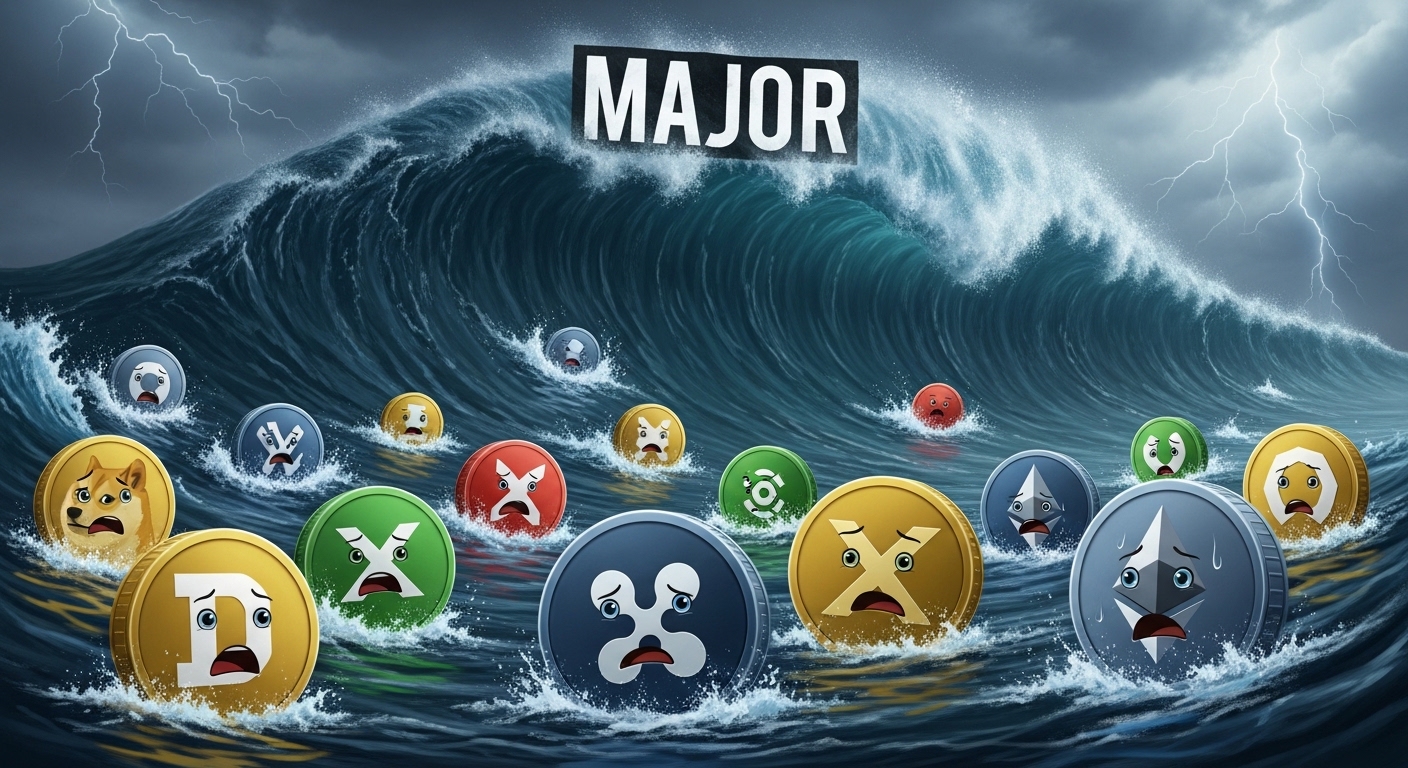
Altcoins Facing Major week of February is shaping up to be one of the most critical periods for the crypto market so far this year. After weeks of aggressive price swings, leveraged trading activity has surged across major exchanges, leaving several altcoins vulnerable to sudden liquidation cascades. When leverage builds up around key price levels, even a modest market move can trigger forced liquidations, rapidly accelerating price action in either direction. This environment creates both danger and opportunity, making it essential to understand which assets are under the most pressure.
Altcoins facing major liquidation risks in the first week of February are not necessarily weak projects. In many cases, they are actively traded tokens with strong narratives, high liquidity, and intense speculative interest. These factors attract leverage, and leverage amplifies volatility. As traders pile into long and short positions simultaneously, the market becomes fragile, with price movements driven less by fundamentals and more by liquidation mechanics.
This article explores three Altcoins Facing Major iquidation risks in the first week of February: Solana (SOL), Hyperliquid (HYPE), and Tron (TRX). Each of these assets is positioned at a critical junction where leverage concentration, market sentiment, and technical structure converge. By understanding why these altcoins are vulnerable, traders and investors can better navigate the volatility ahead.
Liquidation Risk in the Crypto Market
Liquidation risk refers to the likelihood that leveraged positions will be forcibly closed by exchanges when margin requirements are no longer met. In highly volatile markets, this process can happen extremely fast. Once a price move triggers initial liquidations, the resulting buy or sell pressure often pushes price further, causing additional liquidations in a cascading effect.
Altcoins facing major liquidation risks in the first week of February are particularly exposed because leverage levels have increased following recent price consolidation. Traders often interpret consolidation as a signal to increase position size, expecting a breakout. When many traders do this at the same time, liquidation thresholds cluster closely together, increasing the probability of a sharp, sudden move.
Why Liquidation Cascades Accelerate Price Movements
Liquidation cascades occur because forced transactions remove discretion from the market. When an exchange liquidates a position, it executes market orders automatically. These orders do not wait for optimal prices, which can cause price to overshoot key levels before stabilizing.
This phenomenon is especially common in altcoins with high perpetual futures volume. As leverage increases, price movements become less organic and more mechanical. That is why altcoins facing major liquidation risks in the first week of February may experience extreme wicks, fake breakouts, or rapid reversals that catch traders off guard.
Solana (SOL): High Leverage at a Psychological Battleground
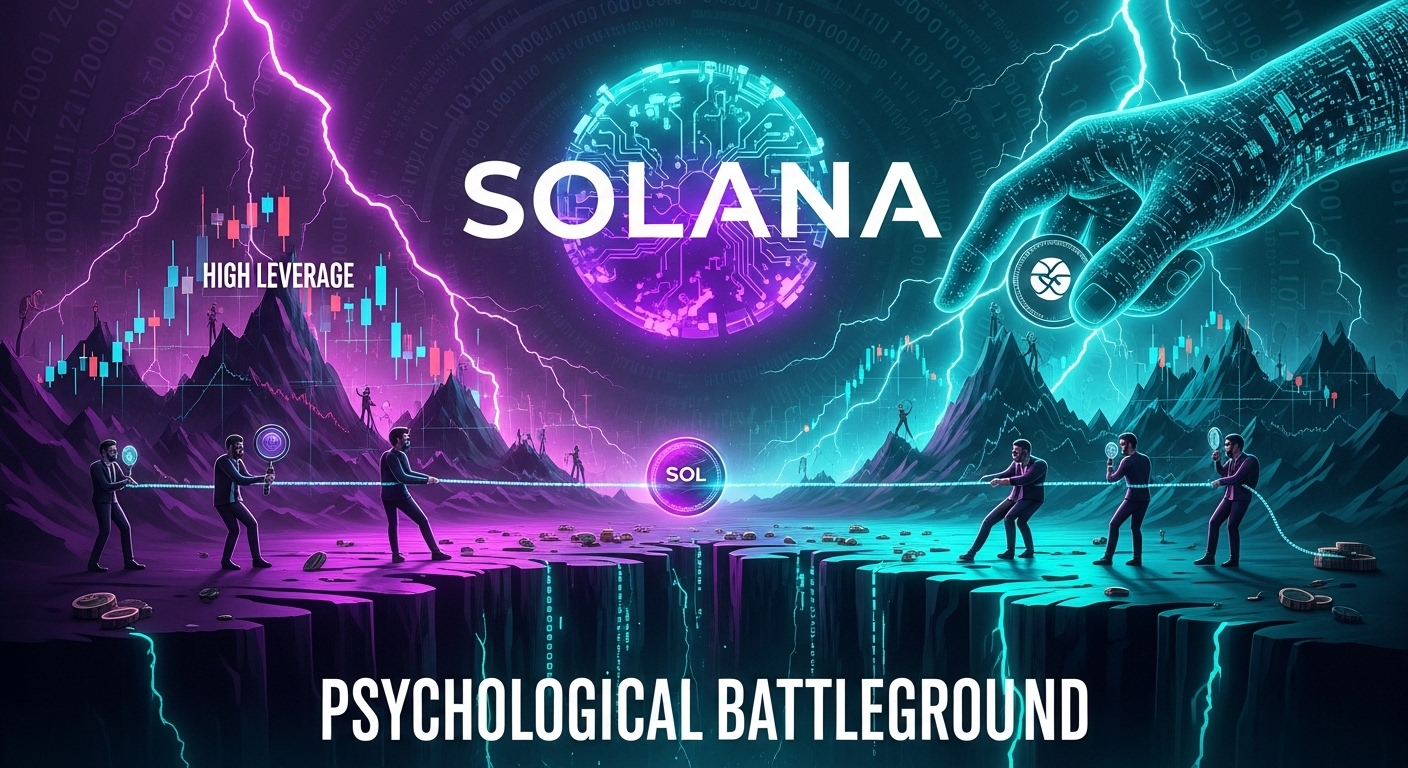
Solana stands out as one of the most prominent altcoins facing major liquidation risks in the first week of February. After an extended period of volatility, SOL is hovering near a psychologically important price zone that has acted as both support and resistance in the past. This area has attracted heavy leveraged interest from both bulls and bears.
Leverage Crowding Around Key Support
When price approaches a widely recognized support level, traders tend to take polarized positions. Long traders view the level as a buying opportunity, while short traders see it as a potential breakdown point. This behavior leads to dense clusters of liquidation thresholds on both sides of the market.
For Solana, this crowding effect means that a relatively small price movement could trigger large-scale liquidations. If price dips slightly below support, long positions may be forced to close rapidly. Conversely, a sudden bounce could liquidate aggressive short positions, leading to a sharp upward squeeze.
Volatility Amplified by Market Sentiment
Solana’s liquidation risk is further amplified by mixed market sentiment. On one hand, broader risk-off conditions make traders cautious. On the other hand, Solana continues to attract attention due to its active ecosystem and strong on-chain activity. This push-and-pull dynamic increases speculative behavior, which in turn raises leverage usage. As a result, SOL remains one of the altcoins facing major liquidation risks in the first week of February, with price action likely to be swift and unforgiving for overleveraged traders.
Hyperliquid (HYPE): Strength That Attracts Risk
Hyperliquid has demonstrated relative strength compared to many other altcoins during recent market turbulence. While this resilience may appear bullish on the surface, it also makes HYPE one of the altcoins facing major liquidation risks in the first week of February. Strength often attracts late-entry leverage, which can become a liability if momentum stalls.
Range Compression and Indecision
HYPE is currently trading within a narrow range following a strong directional move. This type of price behavior often reflects market indecision, where buyers and sellers are evenly matched. During such periods, leverage tends to build as traders position for a breakout.
Range compression increases liquidation risk because stop-losses and liquidation prices are tightly packed. Once price breaks out of the range, it can move quickly as positions are unwound. This makes HYPE particularly vulnerable to sudden volatility spikes in either direction.
Conflicting Signals Increase Uncertainty
Another factor contributing to Hyperliquid’s liquidation risk is the presence of conflicting market signals. While the token has benefited from strong internal momentum and growing interest, external market conditions remain unstable. This combination can lead to rapid sentiment shifts.
When sentiment flips quickly, leveraged positions are often caught on the wrong side of the move. This dynamic reinforces why HYPE is among the altcoins facing major liquidation risks in the first week of February and why traders should expect sharp reactions rather than gradual trends.
Tron (TRX): Sentiment-Driven Leverage Exposure
Tron presents a unique liquidation profile compared to Solana and Hyperliquid. TRX is deeply integrated into daily crypto usage, which provides a strong baseline of demand. However, recent negative sentiment and speculative positioning have increased its exposure to liquidation-driven volatility.
Headline Sensitivity and Reactive Trading
Tron is particularly sensitive to news and narrative shifts. When negative headlines circulate, traders often rush to open short positions, expecting immediate downside. This reactive behavior leads to rapid leverage accumulation on one side of the market.
If price fails to follow through on bearish expectations, these short positions become vulnerable. A modest rebound can force short liquidations, pushing price higher and triggering a chain reaction. This setup places TRX firmly among the altcoins facing major liquidation risks in the first week of February.
Structural Demand Versus Speculative Pressure
Despite negative sentiment, Tron continues to benefit from consistent usage and transaction volume. This underlying demand can act as a stabilizing force, but it can also surprise leveraged traders who underestimate its impact.
When speculative pressure clashes with structural demand, price can move abruptly as the market recalibrates. These recalibrations often happen through liquidation events, reinforcing the risk profile of TRX during periods of elevated leverage.
Why These Altcoins Are Especially Vulnerable This Week
Altcoins facing major liquidation risks in the first week of February share several key characteristics. They are actively traded, widely followed, and heavily utilized in derivatives markets. These traits attract leverage, which magnifies both gains and losses.
In addition, broader market uncertainty has reduced risk tolerance, making traders quicker to exit positions. This environment increases the likelihood of liquidation cascades, as small price movements can trigger outsized reactions.
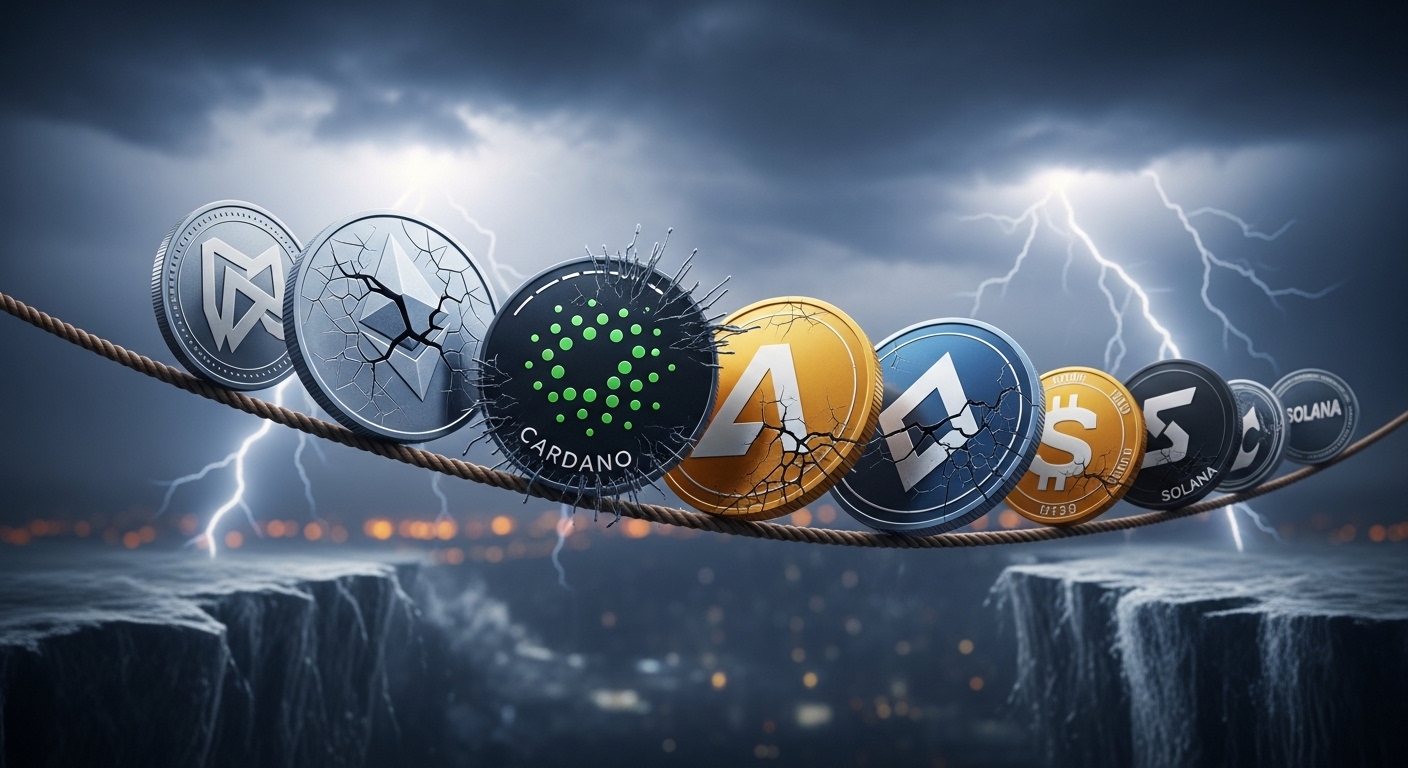
The convergence of technical levels, emotional narratives, and leverage concentration creates a fragile market structure. In such conditions, price movements are often driven more by forced liquidations than by organic buying or selling.
Managing Risk During Liquidation-Heavy Market Conditions
For traders and investors observing altcoins facing major liquidation risks in the first week of February, caution is essential. Liquidation-driven markets tend to behave erratically, with rapid reversals and exaggerated price swings.
Rather than focusing solely on direction, it can be more effective to focus on volatility and liquidity conditions. Understanding where leverage is concentrated helps explain why price behaves unpredictably and why patience is often rewarded during turbulent periods. Avoiding excessive leverage, respecting key price zones, and allowing volatility to settle before committing capital can reduce exposure to sudden liquidation events.
Conclusion
The first week of February is poised to test the resilience of leveraged traders across the crypto market. Altcoins facing major liquidation risks in the first week of February, including Solana, Hyperliquid, and Tron, are positioned at critical inflection points where leverage, sentiment, and technical structure intersect. These conditions create the potential for rapid price movements driven by forced liquidations rather than gradual trend development.
Understanding liquidation mechanics does not guarantee perfect timing, but it provides valuable context for interpreting volatility. In weeks like this, awareness of leverage dynamics can be just as important as traditional technical or fundamental analysis.
FAQs
Q: What causes major liquidation risks in altcoins?
Major liquidation risks arise when large numbers of traders use leverage around the same price levels. When price moves against these positions, forced liquidations can accelerate volatility.
Q: Are liquidation risks always bearish?
No. Liquidation risks can be bullish or bearish. Short liquidations can cause sharp upward moves, while long liquidations can trigger sudden drops.
Q: Why is February’s first week especially risky?
The market is entering February after a period of heightened volatility and uncertainty. This has led to increased leverage usage, making liquidation cascades more likely.
Q: Can spot traders be affected by liquidation events?
Yes. Even traders who do not use leverage can be impacted, as liquidation-driven volatility can cause rapid price swings in the spot market.
Q: How can traders reduce liquidation-related losses?
Reducing leverage, avoiding crowded trades, and respecting volatility can help minimize exposure. Staying patient during uncertain conditions is often the safest approach.
Also Read: Bitcoin Slide Deepens as BTC/USD Squeeze Risk Builds
