

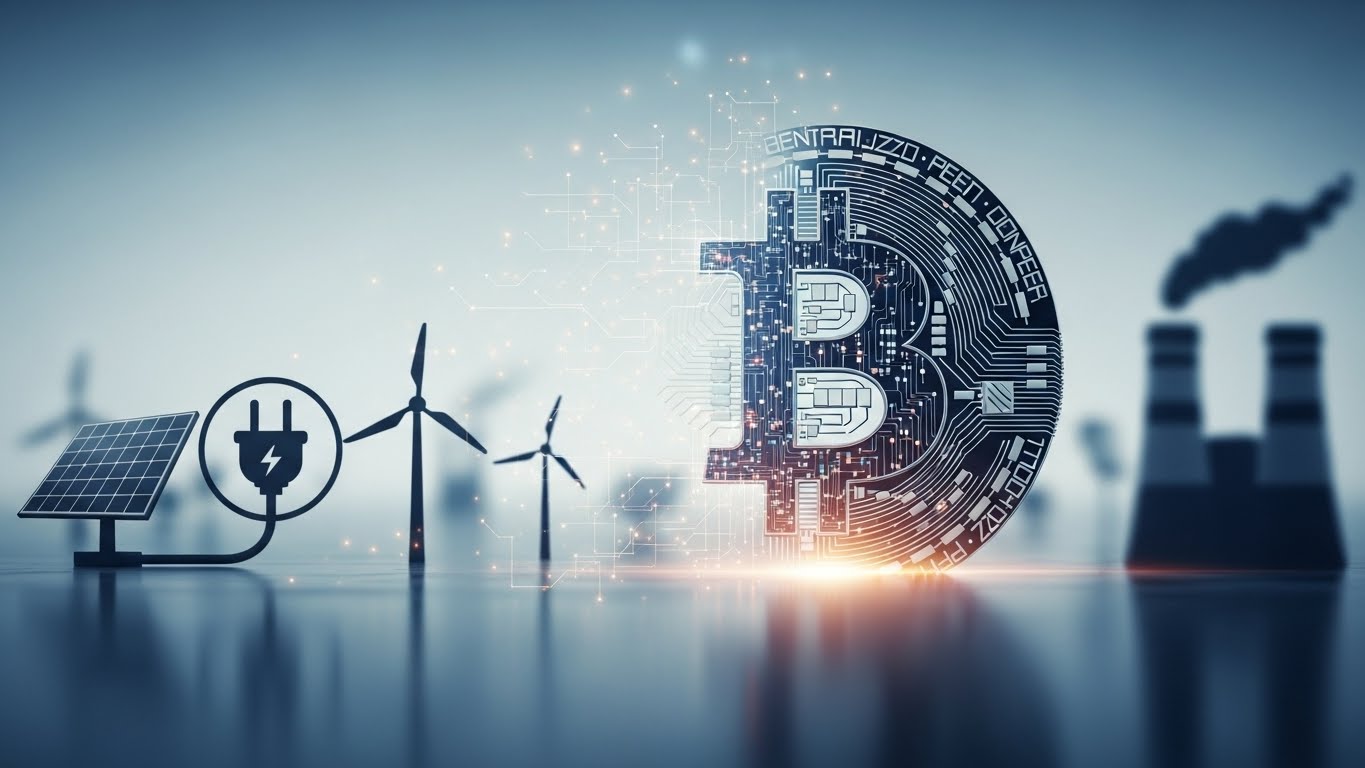
For years, Bitcoin sat at the center of a global controversy over energy consumption. Headlines warned that Bitcoin mining energy use rivaled small nations, critics blamed proof-of-work for environmental damage, and policymakers debated restrictions. Bitcoin became a convenient symbol of technological excess in awe with electricity-hungry servers and carbon emissions. Yet while the debate raged, something quieter—and potentially far more significant—was taking shape in the background.
Artificial intelligence has entered a phase of explosive growth. From generative AI models and large language systems to data-hungry machine learning applications powering businesses, healthcare, and entertainment, AI is now consuming energy at an unprecedented scale. Massive data centers are expanding worldwide, drawing enormous amounts of electricity and placing new strain on power grids. As a result, the old narrative is shifting. Bitcoin is no longer the primary energy threat, but AI is increasingly becoming one.
This article explores how the energy narrative has changed, why Bitcoin’s environmental image is evolving, and how AI’s rapid expansion is reshaping global energy demand. By examining Bitcoin energy consumption, renewable adoption, AI data center growth, and the broader implications for sustainability, we uncover a surprising reality: the energy debate has moved on, and the spotlight is now turning toward artificial intelligence.
The Origins of Bitcoin’s Energy Controversy
Why Bitcoin Was Labeled an Energy Villain
Bitcoin’s proof-of-work consensus mechanism requires miners to perform complex calculations to secure the network. This process consumes electricity, and as Bitcoin’s price rose, mining activity expanded globally. Early studies estimated that Bitcoin mining used more power than entire countries, creating alarming headlines that fueled public concern.
The simplicity of this comparison made Bitcoin an easy target. Critics often ignored context, such as how energy is sourced or how Bitcoin’s energy use compares to traditional financial systems. Still, the narrative stuck. Bitcoin became synonymous with wasteful energy consumption, and environmental criticism became one of the most persistent arguments against cryptocurrency adoption.
Media Amplification and Public Perception
Media coverage played a significant role in shaping the perception of Bitcoin as an environmental threat. Sensational headlines emphasized raw electricity numbers without exploring efficiency improvements or renewable integration. As a result, public discourse focused more on outrage than on analysis.
This narrative, however, began to weaken as better data emerged and the crypto industry matured. The reality of Bitcoin energy usage turned out to be more complex than early reports suggested.
How Bitcoin’s Energy Profile Has Changed
The Shift Toward Renewable Energy
One of the most important developments in the Bitcoin ecosystem has been the rapid shift toward renewable energy. Miners are incentivized to seek the cheapest electricity available, which increasingly comes from hydro, wind, solar, and surplus energy sources. In many regions, Bitcoin mining now acts as a buyer of last resort for otherwise wasted energy.
Studies show that a significant portion of Bitcoin mining is powered by renewables or low-carbon sources. This evolution challenges the outdated assumption that Bitcoin is inherently harmful to the environment. Instead, Bitcoin mining is increasingly aligned with sustainable energy solutions.
Efficiency Gains and Technological Improvements
Bitcoin mining hardware has also become far more efficient. Modern ASIC miners perform more computations using less power than earlier generations. These improvements have reduced the energy required per transaction and increased overall network efficiency.
While Bitcoin still consumes energy, its environmental impact per unit of value secured has improved dramatically. This reality is often overlooked in ongoing debates but is essential to understanding why Bitcoin is no longer the primary energy concern it once appeared to be.
The Rise of Artificial Intelligence and Energy Demand
AI’s Explosive Growth
Artificial intelligence is expanding at a pace rarely seen in technological history. Large language models, image generators, recommendation systems, and real-time analytics now underpin countless digital services. Each of these applications relies on enormous computational power, most of it concentrated in large-scale data centers.
Unlike Bitcoin, which has a relatively predictable and transparent energy profile, AI workloads vary widely and can scale rapidly. Training advanced AI models requires vast amounts of electricity, sometimes consuming as much power as thousands of households over extended periods.
Data Centers and Power Consumption
Modern AI systems depend on high-performance data centers equipped with specialized hardware such as GPUs and accelerators. These facilities operate around the clock, consuming energy not only for computation but also for cooling and infrastructure support.
As AI adoption grows across industries, the number and size of data centers are increasing. This expansion is placing unprecedented demands on electrical grids, particularly in regions already facing energy constraints. The result is a growing recognition that AI energy consumption may soon surpass that of many other digital technologies.
Comparing Bitcoin and AI Energy Use
Bitcoin and AI Energy Use Transparency Versus Opacity
One key difference between Bitcoin and AI lies in transparency. Bitcoin’s energy use is relatively easy to estimate because its network activity is public and consistent. AI energy consumption, by contrast, is fragmented across private companies and proprietary systems, making it harder to measure accurately.

This lack of transparency has allowed AI’s energy footprint to grow with less scrutiny. While Bitcoin was publicly criticized and analyzed, AI quietly scaled behind closed doors, often escaping the same level of environmental accountability.
Purpose and Efficiency
Bitcoin’s energy use serves a single purpose: securing a decentralized monetary network without central authority. Every unit of energy contributes directly to network security. AI energy use, however, supports a wide range of applications, some transformative and others less essential.
This distinction does not inherently justify one over the other, but it highlights an important reality. Bitcoin’s energy use is fixed by design, while AI’s energy demand has no clear upper limit. As AI capabilities expand, so does its appetite for power.
Why the Narrative Is Changing
Regulatory and Policy Shifts
Governments and regulators are beginning to reassess their views on Bitcoin and energy. As data improves and renewable adoption increases, policymakers are recognizing that blanket criticism may be misplaced. Some regions now actively encourage Bitcoin mining as a way to stabilize energy grids and monetize excess power.
At the same time, regulators are starting to question the sustainability of large-scale AI deployments. Concerns about grid stability, emissions, and resource allocation are entering policy discussions, signaling a shift in focus.
Public Awareness and Technological Literacy
Public understanding of energy issues has evolved. As people become more aware of how digital infrastructure works, simplistic narratives lose their appeal. The realization that streaming video, cloud computing, and AI all consume massive amounts of energy is reshaping the conversation.
In this context, the claim that Bitcoin is no longer the energy threat resonates more strongly. Attention is turning toward newer technologies whose impacts are less understood but potentially more significant.
AI and the Future of Global Energy Demand
Competition for Energy Resources
AI’s growth is intensifying competition for energy resources. Data centers often cluster near population centers, increasing strain on local grids. This competition can drive up electricity prices and complicate efforts to transition to renewable energy.
Bitcoin mining, by contrast, is highly mobile. Miners can relocate to areas with surplus energy, reducing competition with residential and industrial users. This flexibility gives Bitcoin a unique advantage in adapting to energy constraints.
Sustainability Challenges Ahead
The sustainability of AI depends on whether its energy demand can be met responsibly. Without significant efficiency gains or renewable integration, AI risks becoming a major contributor to emissions and environmental stress.
This challenge mirrors the early criticism of Bitcoin, but with a crucial difference: AI’s growth trajectory is steeper, and its applications are embedded deeply across the economy. Addressing AI’s energy footprint will require coordinated efforts across technology, policy, and infrastructure.
Rethinking Energy Narratives in Technology
Moving Beyond Simplistic Blame
The story of Bitcoin and energy demonstrates how narratives can lag behind reality. Once a label takes hold, it can persist even as conditions change. Recognizing this pattern is essential as society evaluates new technologies like AI.
Rather than assigning blame, a more productive approach focuses on optimizing energy use, encouraging renewables, and aligning incentives with sustainability goals. Both Bitcoin and AI can play roles in a cleaner energy future if managed responsibly.
Lessons From Bitcoin’s Evolution
Bitcoin’s journey from energy villain to misunderstood infrastructure offers valuable lessons. Transparency, market incentives, and technological innovation can transform how energy is consumed. These lessons could inform how AI systems are designed and regulated moving forward.
By applying what we have learned from Bitcoin, policymakers and technologists may avoid repeating the same mistakes with AI.
Conclusion
The energy debate surrounding technology is evolving, and the spotlight is shifting. Bitcoin is no longer the energy threat it was once portrayed to be. Through renewable adoption, efficiency gains, and transparent design, Bitcoin mining has become more sustainable and, in some cases, beneficial to energy systems.
Meanwhile, artificial intelligence is emerging as the next major energy challenge. Its rapid growth, opaque consumption patterns, and dependence on massive data centers raise important questions about sustainability and resource allocation. As AI becomes more deeply integrated into daily life, its energy footprint will demand serious attention.
Understanding this shift is crucial for informed discussions about technology and the environment. Rather than clinging to outdated narratives, society must confront emerging realities. The future of sustainable innovation depends on recognizing where the real energy challenges lie—and addressing them with clarity, data, and foresight.
FAQs
Q: Is Bitcoin still bad for the environment?
Bitcoin still uses energy, but much of its mining now relies on renewable or low-carbon sources, reducing its environmental impact.
Q: Why is AI becoming an energy concern?
AI systems require massive computational power, leading to rapidly growing energy consumption in large data centers.
Q: Does AI use more energy than Bitcoin?
In many regions and applications, AI-related data centers are already rivaling or surpassing Bitcoin mining in energy use.
Q: Can AI become more energy efficient?
Yes, improvements in hardware, algorithms, and renewable integration can significantly reduce AI’s energy footprint over time.
Q: What can be learned from Bitcoin’s energy evolution?
Bitcoin shows that transparency, market incentives, and innovation can align technology growth with sustainable energy use.
Also More: Bitcoin Price News with Buy Strategy Expert Investment 2025
