

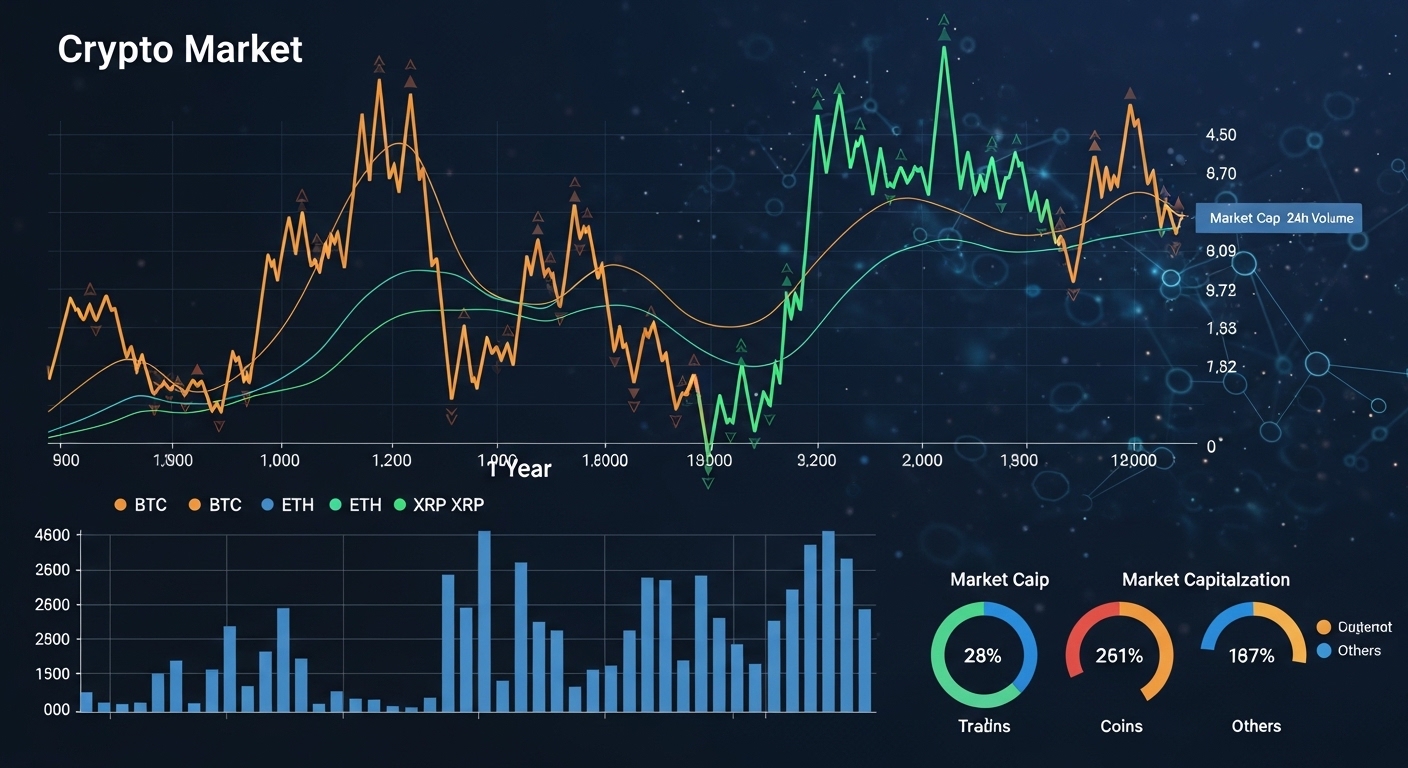
Crypto market performance, they’re often really talking about Bitcoin. That’s not just because Bitcoin is the biggest cryptocurrency by market cap, but because it remains the psychological anchor for the entire digital asset space. When Bitcoin rallies, optimism spreads quickly across exchanges, social feeds, and institutional commentary. When Bitcoin falls, fear tends to cascade into the wider market, pulling down altcoins, thinning liquidity, and changing the tone of headlines overnight. That’s why the Bitcoin dip is never “just another red day.” It becomes a narrative event—one that influences trading behavior, investor confidence, and the next phase of market structure.
A dip can be healthy. It can clear excess leverage, reset overheating sentiment, and create a more sustainable uptrend. But a dip can also signal a deeper shift in risk appetite or macro conditions, especially when it lines up with tightening financial conditions, regulatory pressure, or sudden breaks in market liquidity. The key to understanding crypto market performance is learning to distinguish between a routine pullback and a structural decline—without getting lost in noise, panic, or overconfident predictions.
In this article, you’ll get a detailed, human-readable breakdown of the Bitcoin dip explained through the lenses that actually move markets: liquidity, leverage, on-chain signals, institutional flows, and macroeconomic forces. Along the way, you’ll see how related factors like market volatility, support and resistance, risk management, and investor sentiment interact to shape the next move. The goal isn’t to push hype or fear—it’s to give you clarity and a framework so you can interpret dips with more confidence and less emotion.
What a “Bitcoin Dip” Really Means for Crypto Market Performance
The term “dip” is thrown around constantly, but it isn’t always used accurately. In strong bull markets, a dip might refer to a short-term pullback—often a decline that feels dramatic intraday but remains modest on a multi-week chart. In weaker environments, a dip can be the first stage of a broader trend reversal. From the standpoint of crypto market performance, the meaning of a Bitcoin dip depends on context: the preceding trend, the speed of the drop, the structure of the order book, and how other market segments react.
A dip is usually defined by three characteristics. First, it’s a move downward that occurs within a larger narrative—whether that narrative is bullish, bearish, or uncertain. Second, it tends to cause a visible reaction in liquidity and positioning, which shows up in exchange data, derivatives markets, and on-chain flows. Third, it creates a moment of decision where traders and investors reassess value, risk, and future expectations. This is why the Bitcoin dip explained cannot be reduced to one cause. Bitcoin is influenced by multiple overlapping forces, and a dip often happens when several of those forces line up in the same direction.
For readers tracking crypto market performance, it’s also important to remember that Bitcoin doesn’t trade in isolation. A dip in BTC often changes correlations across crypto. Many altcoins function like leveraged beta on Bitcoin, meaning they can fall harder during dips and recover faster during rebounds. This relationship can intensify volatility and create the impression that “the whole market is crashing” even when Bitcoin is experiencing a normal correction.
The Core Drivers Behind the Bitcoin Dip Explained
Liquidity: The Hidden Engine of Crypto Market Performance
Liquidity is one of the most overlooked factors in crypto market performance, yet it’s often the difference between a tidy pullback and a sharp, messy sell-off. In liquid markets, large orders can be absorbed without dramatically moving price. In thin markets, even moderate selling can push price down quickly, triggering stop-losses and liquidation cascades that amplify the move.

Bitcoin liquidity is affected by time zones, exchange activity, market maker risk appetite, and broader financial conditions. When liquidity is robust, dips tend to be smoother and recovery can be faster. When liquidity dries up, the market becomes jumpy. Price gaps, sudden wicks, and violent intraday swings become more common. In those moments, the Bitcoin dip explained often boils down to a simple reality: there weren’t enough buyers at each price level to absorb sellers without a steep decline. Liquidity also ties directly to confidence. If participants sense that order books are thin, they may hesitate to “buy the dip,” fearing further downside. That hesitation becomes self-fulfilling and weakens crypto market performance even more.
Leverage and Liquidations: Why Small Drops Become Big Moves
Bitcoin’s derivatives market plays an outsized role in shaping short-term price action. When leverage builds up—particularly in crowded long positions—price becomes sensitive. A dip can start modestly, but as it triggers liquidation thresholds, forced selling accelerates the move. This is a major reason the Bitcoin dip explained often includes references to liquidation events.
In leveraged environments, the market isn’t just responding to fear or news; it’s responding to mechanical pressure. Liquidations don’t care about fundamentals. They sell because the position can no longer be maintained. That forced selling pushes price down, which can force more liquidations in a chain reaction. This creates the kind of sharp downward candles that make headlines and dominate discussions about crypto market performance. Leverage can also distort sentiment. Traders may interpret a liquidation-driven move as “something must be wrong,” even if the underlying cause is simply too much leverage on one side of the market.
Investor Sentiment: Fear, Greed, and Narrative Shifts
Sentiment is the emotional layer that sits on top of market structure. In crypto, sentiment can shift quickly because the market trades 24/7 and reacts instantly to social media narratives. The same dip can be interpreted as a healthy reset or a sign of collapse depending on the prevailing mood. That’s why crypto market performance can feel irrational at times—it’s often driven by the collective psychology of participants.
When optimism is high, dips are treated as buying opportunities, and buyers step in earlier. When fear is high, even small declines can cause panic selling. A strong way to understand the Bitcoin dip explained is to watch how the market talks about it. If the narrative shifts from “this is a pullback” to “this is the end,” you’ll often see more volatility and weaker rebounds. Sentiment also impacts related phrases like risk-on assets, flight to safety, and market confidence. When the market turns risk-off, investors prefer cash or lower-volatility instruments, and crypto can suffer as capital rotates away.
Macro Forces: How the Economy Influences Crypto Market Performance
Interest Rates and the Dollar: Bitcoin as a Risk Asset
Even though Bitcoin has a long-term narrative as a potential hedge or alternative monetary asset, it often trades like a high-volatility risk asset in the short term. That means macro conditions matter. When interest rates rise, risk assets can face pressure because capital becomes more expensive and investors can earn safer yields elsewhere. When the U.S. dollar strengthens, global liquidity conditions can tighten, often weighing on speculative markets.
This is one of the most practical ways to view the Bitcoin dip explained: if the macro environment becomes less friendly to risk-taking, crypto market performance can weaken even without crypto-specific bad news. Bitcoin’s sensitivity to macro conditions doesn’t invalidate the long-term thesis for those who believe in it; it simply reflects the reality that capital flows respond to incentives.
Inflation Expectations and “Liquidity Cycles”
Bitcoin is heavily influenced by liquidity cycles—periods when money is abundant and risk-taking expands, followed by periods when liquidity contracts and caution dominates. Inflation expectations, central bank policy, and overall market stress shape these cycles. If investors believe policy will remain tight or that inflation is sticky, they may reduce exposure to assets perceived as speculative.
In liquidity contractions, the market tends to punish weak hands and overleveraged positions. This is why crypto market performance can look strong for months and then suddenly weaken when the broader cycle changes. A dip in that context isn’t random; it’s part of a larger adjustment where the market reprices risk.
On-Chain Signals: What Blockchain Data Can Reveal About the Dip
Exchange Flows: Are Coins Moving to Sell or to Hold?
On-chain analysis is not magic, but it can add context to crypto market performance. One useful lens is exchange flows. If more Bitcoin is moving onto exchanges, it can suggest increased intent to sell, since exchanges are where most spot selling happens. If Bitcoin is flowing off exchanges into long-term storage, it may indicate accumulation or reduced sell pressure.
In a Bitcoin dip explained framework, exchange inflows during a downturn can reinforce bearish pressure, especially if they coincide with negative news or rising fear. Outflows during a dip can be interpreted as buyers stepping in for long-term positioning, though timing matters. On-chain signals are best used as supporting evidence, not as a standalone prediction tool.
Long-Term Holders vs. Short-Term Holders
Another major component of on-chain analysis is the behavior of holder cohorts. Long-term holders tend to be less reactive, while short-term holders often respond quickly to price action. Dips can become sharper when short-term holders panic and sell, especially if they entered near local highs.
If long-term holders remain steady while short-term holders capitulate, the dip may represent a transfer of coins from weaker hands to stronger hands—often a sign of healthier crypto market performance over time. If long-term holders also begin distributing aggressively, the market may be facing a deeper shift.
Market Structure: Support, Resistance, and the Mechanics of a Dip
Why Support Levels Matter Even Without Hype
Support and resistance are not mystical lines; they are reflections of where market participants previously made decisions. A support level can hold because buyers remember it as a value zone or because it aligns with large resting bids. It can also fail if those buyers disappear or if sellers become dominant.
In the Bitcoin dip explained context, watching how Bitcoin behaves around key support levels helps you judge whether the move is a normal pullback or something more. If support holds and price stabilizes with improving volume, it can indicate healthy dip-buying. If support breaks and turns into resistance, it can signal deterioration in crypto market performance.
Volatility Compression and Expansion
Bitcoin tends to alternate between periods of quiet consolidation and periods of intense volatility. Dips often occur when volatility expands after a compressed phase. That’s why a “sudden” dip may have been building beneath the surface for weeks through tightening ranges, rising leverage, and fragile liquidity.
Understanding volatility regimes helps you respond more rationally. In high-volatility phases, sharp dips can happen without fundamentally changing the longer-term structure. In low-volatility phases, even a moderate move can feel shocking because the market has been calm. Either way, volatility is a central piece of crypto market performance, and the Bitcoin dip explained becomes clearer when you interpret it as part of a broader volatility cycle.
How the Bitcoin Dip Impacts Altcoins and the Wider Crypto Market
Bitcoin’s influence radiates outward. When Bitcoin dips, altcoins often drop faster due to thinner liquidity and higher speculative positioning. This creates a second wave of selling pressure that can worsen overall crypto market performance, especially in mid-cap and small-cap tokens where order books are weaker.
However, the relationship isn’t always identical. Sometimes a Bitcoin dip triggers rotation, where capital moves into large-cap altcoins perceived as relatively safer, or into stablecoins. In other cases, certain sectors can show resilience if they have independent catalysts. Still, as a general rule, Bitcoin remains the market’s gravity. When it stumbles, most of the ecosystem feels it.

The Bitcoin dip explained also includes the psychological impact on altcoin holders. Many investors tolerate altcoin volatility when Bitcoin is trending upward, but lose patience when Bitcoin turns shaky. This can accelerate drawdowns and create a “risk-off within crypto” effect, where market participants retreat toward Bitcoin dominance or stablecoin safety.
Risk Management During a Dip: Staying Rational in Crypto Market Performance
Risk management isn’t only for professionals; it’s the difference between survival and emotional decision-making. During a dip, the market’s biggest threat is not always the price movement itself, but the impulsive actions it triggers. That’s why understanding crypto market performance should include understanding yourself.
In fast downturns, many participants buy too early without a plan, or panic sell at the worst time. A calmer approach is to treat dips as information. Is the dip driven by leverage flushes or macro fear? Is volume rising, or is the sell-off fading? Are key levels holding? These questions matter more than dramatic predictions.
The Bitcoin dip explained becomes manageable when you shift your mindset from reacting to every candle to observing market structure. Even long-term investors benefit from knowing whether a dip is likely to be choppy and extended or quick and mean-reverting. And traders benefit from remembering that protecting capital is a strategy, not a failure.
What Could Happen Next: Scenarios for Crypto Market Performance
Markets move in scenarios, not certainties. After a dip, Bitcoin typically enters one of a few broad pathways. One pathway is stabilization followed by recovery, often driven by renewed spot buying and reduced leverage. Another pathway is sideways consolidation, where the market rebuilds liquidity and tests both support and resistance without committing to a trend. A third pathway is continued downside, usually if macro conditions worsen, risk appetite fades, or key technical levels break decisively.
The best way to interpret the Bitcoin dip explained is to watch for confirmation rather than prediction. Confirmation can show up as improving market breadth, reduced funding pressure, stronger spot demand, and price acceptance above previously lost levels. If those signals fail to appear, weakness may persist and crypto market performance can remain under pressure. No matter which scenario plays out, one truth remains: Bitcoin’s dips are part of its identity. Volatility is not a side effect in crypto; it is a feature of a young, global, highly liquid, and sentiment-driven market.
Conclusion
The Bitcoin dip explained isn’t a single story. Sometimes it’s liquidity thinning and leverage unwinding. Sometimes it’s macro tightening, shifting risk appetite, or a sudden sentiment flip. Often it’s a combination of these forces happening at once. Understanding crypto market performance means recognizing how those layers interact: order books and liquidations create the immediate move, sentiment amplifies it, and macro conditions decide how long it lasts.
The practical takeaway is simple: don’t let dips dictate your decisions by emotion alone. Use them to gather information about the market’s structure, the strength of buyers and sellers, and the broader environment. Whether you’re a long-term holder, a swing trader, or a curious observer, you’ll be better prepared when you treat Bitcoin dips as signals—not sirens.
FAQs
Q: Is a Bitcoin dip always bearish for crypto market performance?
Not always. A dip can be a healthy correction that resets leverage and cools overheated sentiment. If support holds and buying returns, crypto market performance can strengthen afterward.
Q: What’s the most common reason behind a sudden Bitcoin dip?
A frequent trigger is leverage unwinding in derivatives markets. Liquidations can turn a small drop into a sharp move, which is a key part of the Bitcoin dip explained.
Q: How do macroeconomic conditions affect Bitcoin dips?
Rising interest rates, a stronger dollar, or tightening liquidity can reduce risk appetite. In those environments, crypto market performance often weakens, making dips more likely or more severe.
Q: Why do altcoins usually fall more than Bitcoin during dips?
Altcoins typically have thinner liquidity and higher speculative positioning. When Bitcoin dips, traders often reduce risk quickly, causing altcoins to drop harder and faster.
Q: Should investors “buy the dip” every time Bitcoin falls?
Only if it fits your strategy and risk tolerance. The smartest approach is to evaluate why the dip is happening, watch market structure, and avoid impulsive entries—especially in high volatility.
See More: Bitcoin Price Plunge ETF Flows Not Panic
