


Bitcoin balance you never earned, bought, or transferred. For a moment, it feels unreal—like winning a lottery you never entered. But that excitement quickly turns into confusion, fear, and legal uncertainty. This exact scenario unfolded during Bithumb’s massive crypto error, when users were mistakenly credited with huge amounts of Bitcoin due to an internal operational mistake.
The incident triggered widespread debate across the crypto community, not just because of the scale of the error, but because it raised one of the most uncomfortable questions in digital finance: can you keep Bitcoin sent by mistake? Unlike traditional banking systems, cryptocurrency operates on irreversible transactions, decentralized infrastructure, and a mix of evolving regulations. When a mistake happens, the outcome is rarely simple.
This article takes a deep dive into the Bithumb incident, explains how Bitcoin sent by mistake is treated legally and ethically, and explores what actually happens if someone tries to keep mistaken crypto funds. By the end, you’ll understand why “free Bitcoin” is almost never free—and why acting fast and responsibly matters more than you might think.
Bithumb’s Massive Crypto Error
Bithumb’s error occurred during a routine internal process related to a promotional reward distribution. Instead of issuing a small incentive, the system mistakenly credited certain users with extraordinarily large Bitcoin balances. The numbers were so extreme that they immediately stood out as unrealistic, even in a volatile crypto market.
This was not a cyberattack or a wallet breach. It was a pure operational failure, meaning the exchange’s internal systems misfired. Once the error was detected, Bithumb quickly restricted withdrawals and trading on affected accounts and began reversing the incorrect balances. While the exchange managed to recover most of the Bitcoin, the incident left behind market disruption, panic selling, and serious legal questions. The situation highlighted how even major exchanges with advanced infrastructure are vulnerable to human and system errors—and how quickly those mistakes can ripple through the market.
Why the Bitcoin Price Dropped on Bithumb
One of the most striking outcomes of the incident was the sudden drop in Bitcoin’s price on Bithumb compared to global markets. This wasn’t a global Bitcoin crash; it was a localized exchange imbalance caused by users attempting to sell mistakenly credited Bitcoin all at once.

When large volumes of Bitcoin hit a single exchange’s order book unexpectedly, liquidity dries up. Buyers can’t absorb the sell pressure fast enough, and prices plunge. This kind of event demonstrates how fragile short-term price stability can be when operational errors collide with automated trading systems. The broader crypto market remained relatively stable, reinforcing the idea that exchange-specific incidents can distort prices without reflecting Bitcoin’s true market value.
Can You Keep Bitcoin Sent by Mistake? The Legal Reality
The idea of keeping Bitcoin sent by mistake might seem tempting, especially given the irreversible nature of blockchain transactions. However, technical irreversibility does not equal legal ownership. In most jurisdictions, receiving money or assets by mistake falls under legal doctrines related to unjust enrichment. Simply put, if you receive value that you were not entitled to and you know—or reasonably should know—it was a mistake, the law generally requires you to return it.
Bitcoin is not exempt from this principle. Even though the blockchain itself cannot reverse a transaction, courts and regulators can still require repayment or impose penalties if someone knowingly keeps mistaken crypto funds. The Bithumb case reinforces this reality. Users who attempted to keep or trade the mistakenly credited Bitcoin faced account freezes, investigations, and potential legal exposure. The law focuses less on how the Bitcoin moved and more on whether you had a legitimate right to it.
Exchange Accounts vs Personal Wallets
Whether you can keep Bitcoin sent by mistake often depends on where you received it. When Bitcoin appears in an exchange account, it usually exists as an internal ledger entry. Exchanges maintain custody and control over these balances, allowing them to freeze accounts, reverse credits, or block withdrawals. This makes it extremely difficult for users to claim ownership over mistakenly credited Bitcoin.
In contrast, Bitcoin sent directly to a personal wallet is harder to recover technically. However, even in these cases, the legal obligation may still exist. The sender can pursue recovery through legal channels, and courts may require the recipient to repay the value—even if the Bitcoin itself cannot be returned on-chain. So while self-custody changes the mechanics, it does not eliminate responsibility.
What Happens If You Spend or Sell Mistaken Bitcoin
This is where risk escalates quickly. Selling or transferring Bitcoin sent by mistake can transform a civil issue into something far more serious.
Once you act on mistaken funds—especially after realizing they weren’t meant for you—it becomes difficult to argue good faith. Authorities may view the action as knowingly benefiting from an error. In exchange environments, transaction histories, identity verification, and IP logs make it easy to trace activity.
In the Bithumb incident, some users reportedly sold the Bitcoin before restrictions were fully in place, contributing to the price crash. Even if profits were realized, that does not eliminate liability. In many cases, users can still be required to repay the equivalent value, regardless of what asset the Bitcoin was converted into.
Why Crypto Exchanges Act So Fast in These Situations
Exchanges operate under increasing regulatory pressure and cannot afford prolonged uncertainty during major incidents. When a massive crypto error occurs, the priorities are immediate containment, asset recovery, and damage control.
Account freezes, withdrawal suspensions, and transaction reversals are not optional—they are essential tools for preventing further losses. These measures also protect innocent users from broader market harm caused by sudden liquidity shocks. Bithumb’s response followed this pattern, demonstrating how centralized exchanges maintain powerful controls despite crypto’s decentralized reputation.
The Role of Regulation in Crypto Mistake Cases
As governments tighten oversight of digital asset platforms, the consequences of operational mistakes grow more severe. Modern crypto regulations increasingly emphasize consumer protection, market stability, and accountability. This regulatory environment makes it far less likely that users can quietly keep Bitcoin sent by mistake. Exchanges are required to document incidents, cooperate with authorities, and demonstrate corrective action. Users who exploit errors risk long-term consequences that extend beyond a single exchange account. The Bithumb incident may ultimately serve as a case study for future compliance standards and operational safeguards.
Why “Finders Keepers” Doesn’t Work in Crypto
Crypto culture sometimes promotes the idea that code is law and possession equals ownership. In reality, this philosophy collapses when mistakes occur. Keeping Bitcoin sent by mistake is rarely defensible when intent, knowledge, and fairness are considered. Courts look at behavior, not just technology. If you know the Bitcoin wasn’t meant for you, keeping it becomes difficult to justify—no matter how decentralized the system appears. The myth of consequence-free crypto windfalls is fading as exchanges mature and regulations strengthen.
What You Should Do If You Receive Bitcoin Sent by Mistake
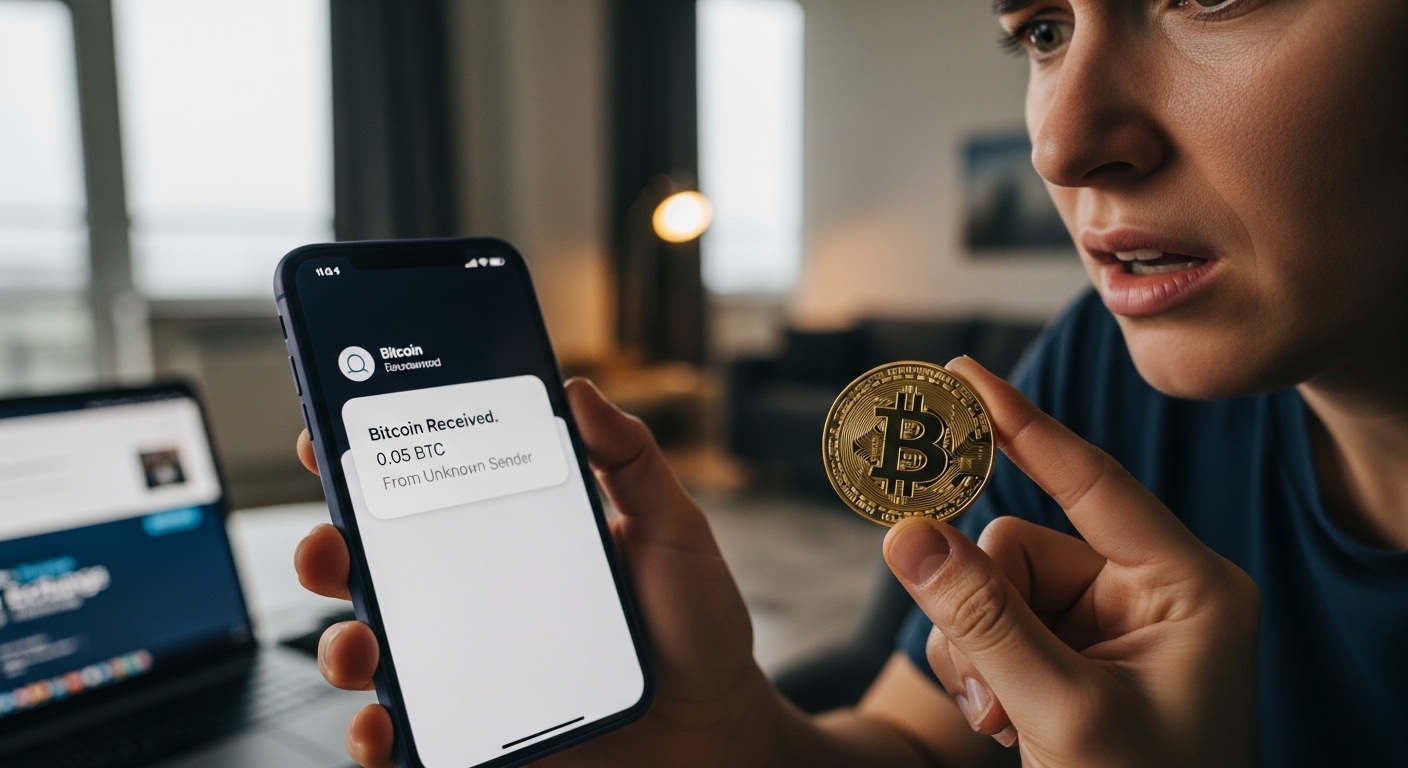
The safest response is also the simplest: do nothing and report it immediately. Document what you received, when it appeared, and notify the exchange or sender. Avoid moving the funds or attempting to profit. Acting responsibly not only reduces legal risk but also protects your account from permanent suspension or investigation. In many cases, cooperation leads to faster resolution and minimal impact on your crypto activity.
Why Operational Errors Are Crypto’s Hidden Risk
The Bithumb incident wasn’t about hacking or blockchain failure—it was about human systems interacting with automated finance. As crypto platforms grow more complex, the risk of internal mistakes increases. Promotions, rewards, cross-currency accounting, and automation all introduce opportunities for error. The difference is scale: in crypto, a single mistake can instantly affect billions in value. For users, the lesson is clear. Sudden, unexplained gains should always be treated with caution.
Conclusion
Bithumb’s massive crypto error revealed an uncomfortable truth about digital assets: unexpected Bitcoin is more likely a liability than a reward. While blockchain technology may be irreversible, legal responsibility is not. Trying to keep Bitcoin sent by mistake exposes users to account freezes, repayment demands, and potential legal consequences. Whether the mistake happens on an exchange or in a personal wallet, ownership is determined by entitlement—not by chance. In crypto, the smartest move is rarely the most exciting one. When something looks too good to be true, it almost always is.
FAQs
Q: Can you legally keep Bitcoin sent by mistake?
In most cases, no. If you know the Bitcoin was sent in error, keeping it can violate unjust enrichment laws and lead to legal action.
Q: What if the Bitcoin was sent to my personal wallet?
While the transaction can’t be reversed on-chain, legal obligations may still require you to return the value or compensate the sender.
Q: Can an exchange reverse mistaken Bitcoin deposits?
Yes. Exchanges can freeze accounts, reverse internal ledger credits, and block withdrawals when a mistake is detected.
Q: What happens if I already sold the Bitcoin?
Selling mistaken Bitcoin does not eliminate liability. You may still be required to repay the equivalent value.
Q: What is the safest response to receiving Bitcoin by mistake?
Do not move the funds. Document everything and notify the exchange or sender immediately to avoid legal and account-related consequences.
See More: Crypto Market Update Bitcoin Price Ends Week Higher
