


Bitcoin is once again at the center of a familiar tug-of-war: long-term believers see every dip as a buying opportunity, while short-term traders watch key chart levels like hawks, ready to hit sell the moment momentum flips. Right now, that battlefield looks uncomfortably close to $96,000. With geopolitical tension and shifting macro signals stirring the broader risk assets complex, Bitcoin is at risk of dropping under $96,000—an area many traders view as a psychological and technical line in the sand.
The market’s mood has been sensitive to headlines tied to U.S.-Iran rhetoric, because geopolitical uncertainty tends to trigger risk-off behavior. When investors get nervous, they often rotate toward the U.S. dollar, short-term Treasuries, and traditional defensive plays. That shift can drain liquidity from speculative corners of the market, including crypto. Even when Bitcoin is marketed as digital gold, its day-to-day price action still behaves more like a high-beta asset that reacts to liquidity conditions, volatility, and sentiment.
At the same time, crypto isn’t trading in a vacuum. Bitcoin’s ability to hold above $96,000 can be influenced by the same forces moving equities, oil, and bond yields. Oil’s swings matter because energy spikes can push inflation expectations higher, which can keep interest rates elevated—an environment that typically pressures growth stocks and crypto. Recent market coverage has highlighted how U.S.-Iran developments have been moving oil prices and reshaping risk appetite.
This article breaks down why Bitcoin at risk of dropping under $96,000 is more than just a dramatic headline. It’s a lens into how macro fear, geopolitics, and market structure collide—and what that means for anyone exposed to BTC, from short-term traders to long-horizon investors.
Why the $96,000 level matters for Bitcoin right now
Bitcoin traders obsess over “round numbers” for a reason. Levels like $100,000 and $96,000 aren’t magical, but they often become magnets for liquidity. Large clusters of stop losses, take-profit orders, and leveraged positions tend to stack around widely watched areas. As a result, once price approaches a key level, the market can accelerate faster than expected in either direction.
When Bitcoin is at risk of dropping under $96,000, it signals that buyers may be losing the ability to defend a widely recognized support zone. The more times a support level gets tested, the more fragile it can become, because buyers who previously stepped in may have already deployed capital. If that “bid wall” thins out while sellers stay aggressive, the breakdown can be sharp.
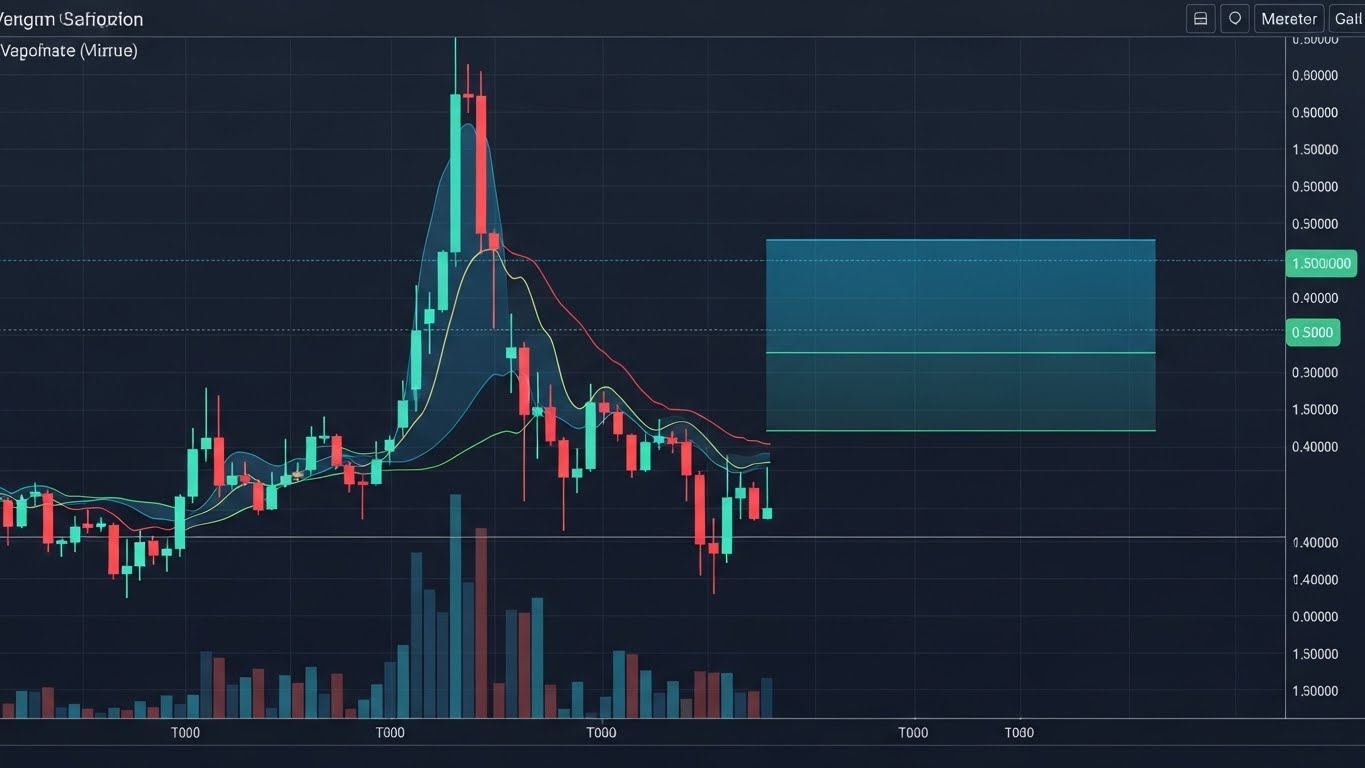
There’s also an important psychological element. Many market participants treat $96,000 as a “line” separating healthy consolidation from the start of a deeper pullback. If Bitcoin loses that area, traders often shift from buying dips to selling rallies, changing the market’s microstructure in real time.
Support, liquidity, and the mechanics of a breakdown
A breakdown under a level like $96,000 is rarely a slow, polite process. It often happens through a mix of liquidations, cascading stop orders, and a rapid repricing of perpetual futures. If the market is crowded with leverage, a relatively small drop can force liquidations that push price even lower, creating a self-reinforcing move.
This is why Bitcoin at risk of dropping under $96,000 isn’t only about “chart lines.” It’s about positioning. When traders are heavily long, the market becomes vulnerable to a squeeze lower. When traders are overly short, the market becomes vulnerable to a squeeze higher. The tension near $96,000 suggests the market is probing for imbalance.
How $96,000 fits into broader Bitcoin market structure
Bitcoin has spent long stretches of its history moving in cycles: expansion phases driven by liquidity and narrative, followed by contractions driven by tightening conditions and fear. In that context, $96,000 matters because it’s not just an intraday threshold—it’s a zone that can influence weekly sentiment and trend perception.
If Bitcoin holds above $96,000, bulls can argue that the market is consolidating before the next attempt toward major resistance. If Bitcoin breaks below $96,000 and fails to reclaim it quickly, the narrative often shifts toward “distribution” and downside continuation.
How U.S.-Iran rhetoric can pressure risk assets, including Bitcoin
Geopolitics influences markets through uncertainty. When investors can’t confidently model outcomes—whether it’s supply disruptions, sanctions, military escalation, or diplomatic breakthroughs—they demand a higher risk premium. That often shows up as volatility spikes, higher demand for cash-like instruments, and reduced appetite for speculative positioning.
Recent reporting has described how shifts in U.S.-Iran expectations have moved oil prices, as market participants reacted to changing perceptions of escalation risk. While oil and Bitcoin are very different markets, they can still be linked through the macro chain reaction: oil moves inflation expectations, inflation influences yields, yields influence liquidity, and liquidity influences assets like Bitcoin.
Why “risk-off” hurts crypto in the short term
In risk-off regimes, traders reduce exposure to volatile assets. Crypto is typically one of the first allocations cut because it trades 24/7, is highly liquid, and is easy to hedge or unwind quickly. That’s why headlines that increase geopolitical stress can coincide with sudden drops in Bitcoin—even if the long-term investment thesis remains unchanged.
If U.S.-Iran rhetoric intensifies, the market can price in higher tail risk. That can strengthen the U.S. dollar and lift demand for Treasuries, which often pressures crypto market sentiment. If rhetoric eases, risk appetite can rebound just as quickly, which is why Bitcoin sometimes whipsaws around geopolitical headlines.
Oil, inflation expectations, and Bitcoin’s sensitivity to yields
Oil is a key transmission channel. When oil spikes on conflict fears, investors worry about renewed inflation. That matters because higher inflation can reduce the likelihood of rate cuts, or keep financial conditions tighter for longer. Tight conditions tend to compress valuations across risk assets.
On days when oil drops because tensions appear to de-escalate, markets often relax and rotate back into risk. Coverage this week has pointed to oil falling as geopolitical fears cooled, reflecting how quickly sentiment can shift. Bitcoin traders watch these cross-asset cues closely, because they often foreshadow shifts in crypto flows.
Bitcoin technical outlook near $96,000
Technical analysis doesn’t predict the future, but it helps describe how traders are likely to behave under pressure. The $96,000 area is a focal point because it often lines up with clusters of previous consolidation, moving averages, or high-volume nodes on many traders’ charts. Broader crypto analysis has also emphasized how major levels can shape the ongoing tug-of-war between bulls and bears.
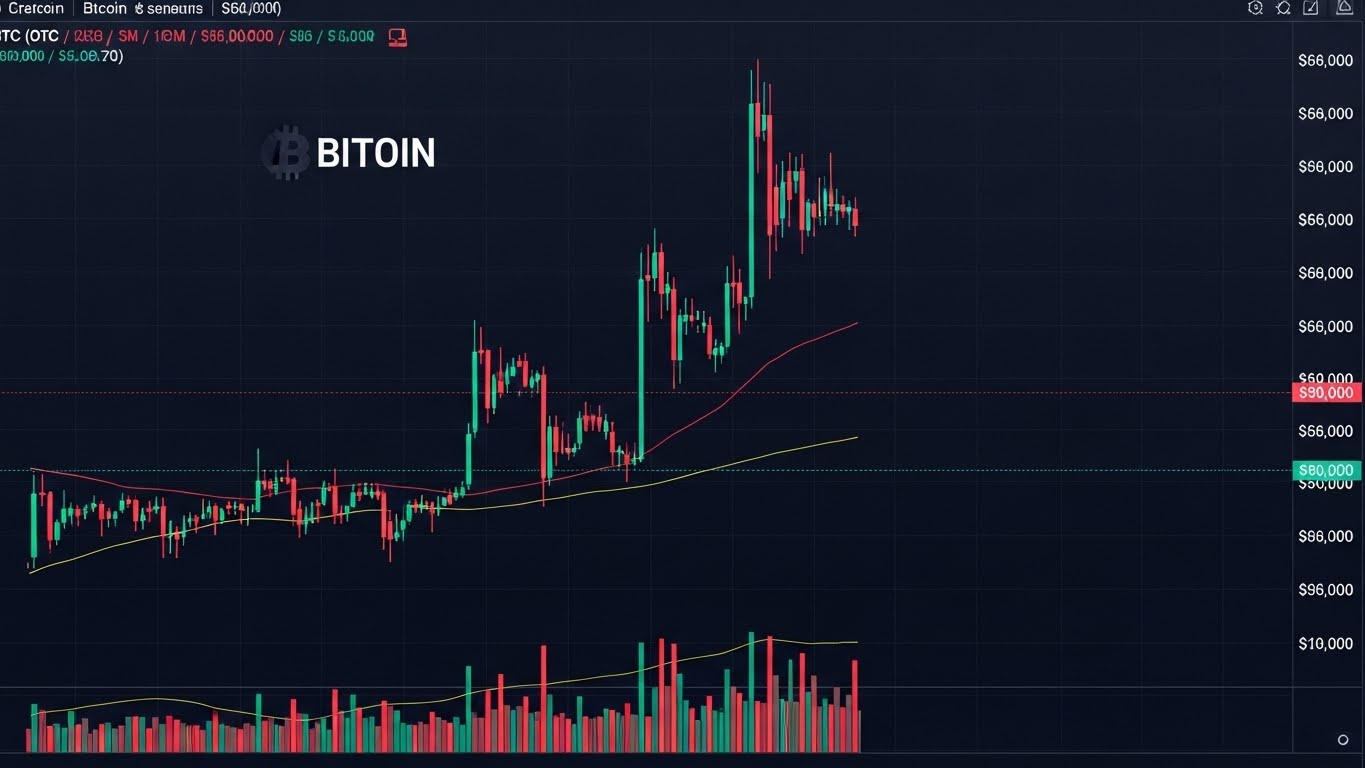
When Bitcoin is at risk of dropping under $96,000, traders typically focus on three questions. Are buyers stepping in with conviction? Are sellers showing follow-through? And if a breakdown happens, can BTC reclaim the level quickly?
The “hold and bounce” scenario
In a bullish scenario, Bitcoin dips toward $96,000, triggers some short-term fear, but then buyers absorb supply and push BTC back above key intraday levels. That often creates a “spring” effect: late sellers get trapped, shorts pile in, and price squeezes upward.
If this happens, Bitcoin can regain momentum as traders interpret the defense of $96,000 as proof that demand remains strong. In that environment, the conversation shifts from Bitcoin at risk of dropping under $96,000 to Bitcoin preparing for a higher range.
The “break and retest” scenario
In a more neutral-to-bearish scenario, Bitcoin breaks under $96,000, rebounds to test it from below, and then fails. That pattern can be painful because it transforms former support into resistance. Traders who bought the dip often use the retest to exit, adding selling pressure.
This is one of the most common ways a market transitions from consolidation into a deeper drawdown. If you see multiple rejections at or just below $96,000, it usually signals that sellers have gained control of that zone.
The “flush” scenario driven by leverage
If leverage is elevated, the market can experience a rapid flush. A sharp drop under $96,000 can trigger liquidations, widening spreads and accelerating downside. The key point here is speed: the move can overshoot “fair value” briefly, then rebound, leaving traders shocked by the volatility.
That’s why professional risk management often focuses less on being “right” about direction and more on controlling exposure during fast market transitions.
On-chain and derivatives signals traders watch during geopolitical stress
When Bitcoin is at risk of dropping under $96,000, many traders look beyond price to understand what kind of participants are driving the move. On-chain activity and derivatives data can help distinguish between panic selling, profit-taking, and strategic accumulation.
Funding rates and perpetual futures positioning
In perpetual futures markets, funding rates can act like a sentiment gauge. When funding becomes strongly positive, it suggests leveraged longs are crowded. When funding flips negative, it can indicate bearish positioning or defensive hedging.
Around headline-driven volatility, funding can swing quickly. If Bitcoin dips toward $96,000 and funding collapses, it may mean long leverage is being flushed out—sometimes a necessary reset before a rebound.
Open interest and liquidation risk
Open interest shows how much leveraged exposure is still in the system. If open interest is high and price starts falling, the market becomes vulnerable to liquidation cascades. If open interest drops sharply during a selloff, it can signal that the forced selling has already happened, reducing near-term downside pressure.
This is one reason Bitcoin can look weakest at the exact moment it is setting up a bounce. The market often bottoms when the final wave of forced sellers is exhausted.
Spot demand, ETF flows, and “real” buying
Spot buying matters because it’s typically less fragile than leveraged futures positioning. If spot demand remains steady while leverage unwinds, Bitcoin can stabilize even in a risk-off environment.
Broader market reporting has highlighted how BTC can react to flows around institutional products, including periods of sizable ETF outflows that coincide with risk-off moves. Even if you’re not trading ETFs directly, these flows can influence the broader market narrative and liquidity.
Why Bitcoin still trades like a risk asset despite the “digital gold” narrative
Bitcoin’s branding as digital gold is compelling, especially over long time horizons. But in the short run, Bitcoin often trades like a liquidity-driven asset that responds to macro stress. That doesn’t mean the thesis is “wrong.” It means adoption and market structure are still evolving.
Gold’s role as a crisis hedge was built over centuries. Bitcoin is still young. In a sudden geopolitical shock, many investors choose what they know: dollars and short-term government debt. Bitcoin can still perform well in prolonged regimes of monetary debasement or structural distrust, but headline-driven panic tends to produce risk-off selling first.
This is why Bitcoin at risk of dropping under $96,000 can happen even if the long-term narrative remains intact. The market’s time horizon matters.
What could happen next if Bitcoin drops under $96,000
A drop under $96,000 isn’t automatically catastrophic. Markets break levels all the time, reclaim them, and move on. The key is how Bitcoin behaves after the break.
If Bitcoin slices under $96,000 and quickly reclaims it, the move can look like a liquidity sweep rather than a trend reversal. If Bitcoin breaks and stays below, the market can shift toward a lower trading range until a new base forms.
Geopolitical headlines can accelerate either outcome. If U.S.-Iran rhetoric escalates and pushes broader markets into risk-off mode, Bitcoin can struggle to find demand quickly. If rhetoric cools and oil remains contained, risk appetite can return and support a rebound.
How traders and investors can think about risk without panic
The most damaging mistakes in crypto often come from emotional decision-making. When Bitcoin is at risk of dropping under $96,000, it helps to separate time horizons.
Short-term traders care about volatility, structure, and momentum. They often reduce position sizes during headline risk because unexpected news can gap the market. Long-term investors care more about adoption, scarcity, and macro regime shifts, and they may use volatility as a rebalancing opportunity.
Either way, discipline matters. A market that can swing thousands of dollars in hours demands a plan that works even when headlines hit at inconvenient times.
Conclusion
Bitcoin at risk of dropping under $96,000 is ultimately a story about fragile sentiment at a crucial level, amplified by U.S.-Iran rhetoric that can quickly flip markets between risk-on and risk-off. The $96,000 zone matters because it concentrates liquidity, psychology, and positioning. If buyers defend it, Bitcoin can stabilize and attempt a broader recovery. If sellers break it and hold control, BTC could spend time building a new base at lower levels before the next sustained move.
In the near term, watch how geopolitics affects oil, the dollar, and yields, because those cross-asset signals often show up in Bitcoin’s tape. And remember: volatility is not unusual in crypto—it’s the price of admission.
FAQs
Q: Why is Bitcoin at risk of dropping under $96,000 specifically?
Bitcoin is at risk of dropping under $96,000 because that area is widely watched as a support zone where liquidity clusters. When price repeatedly tests a level, it can weaken buyer defense, especially during risk-off headlines.
Q: How does U.S.-Iran rhetoric affect Bitcoin if crypto is decentralized?
Decentralization doesn’t prevent macro-driven selling. U.S.-Iran rhetoric can push investors toward risk-off positioning, strengthening the dollar and reducing speculative exposure, which can pressure Bitcoin in the short term.
Q: Does a drop below $96,000 mean the bull market is over?
Not necessarily. A dip below $96,000 could be a temporary liquidity sweep or a deeper correction depending on follow-through. The key signal is whether Bitcoin quickly reclaims $96,000 or turns it into resistance.
Q: What indicators should I watch during geopolitical volatility?
Traders often monitor Treasury yields, the U.S. dollar, oil prices, derivatives funding rates, open interest, and liquidation activity. These factors help explain whether moves are driven by panic, leverage, or genuine shifts in demand.
Q: Is Bitcoin a safe haven like gold during conflicts?
Bitcoin can behave like a long-term hedge for some investors, but in sudden shocks it often trades like a risk asset and may sell off first. Over longer periods, outcomes depend on liquidity conditions, adoption, and macro policy responses.
Also More: Bitcoin News BTC Moves Closer to the $100K Breakout
